Why Flat Roof Repair Is So Expensive?

Roofing 28.02.23
flat roof second

Request a FREE QUOTE

If you’d like to discuss a project you have we’d love to help.

Contact us today for a free no-obligation quote.

Get a quote

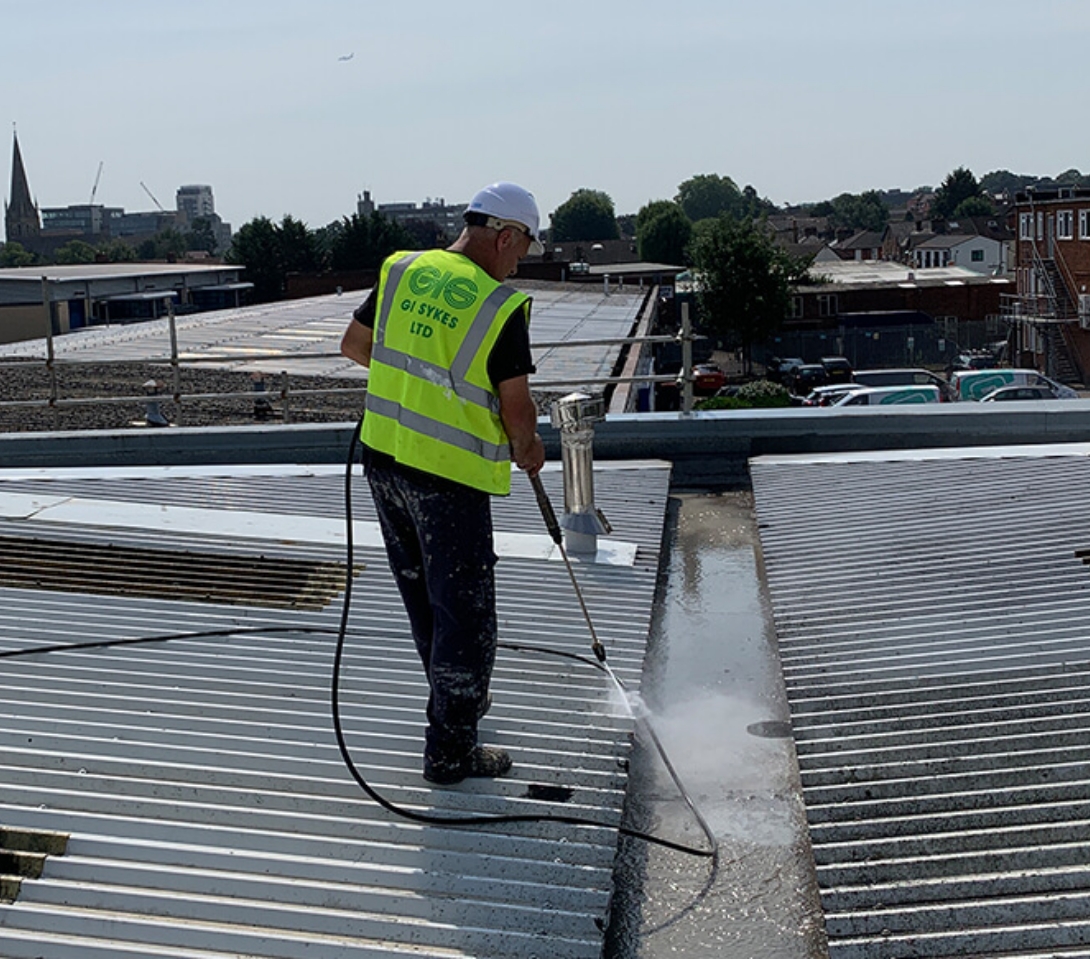
If you’re looking into repairing a flat roof, you probably have a few questions about it. The usual queries we get at GI Sykes are things like: ‘how long does flat roof repair take?’ and: ‘how do I know if I need to repair my flat roof?’. But the question we’re asked the most is ‘is repairing a flat roof expensive?’

Well, how long is a piece of string?

We’re joking, of course – but the reality is, estimating the cost of a flat roof repair means understanding just what the problem is and the extent of the work that needs to be done. It also depends on what you consider expensive – for some businesses, a couple of thousand pounds is a small amount to find; for others, it’s going to be tight. 

So, while we can’t give you a specific answer in this blog, we can outline the factors we use when pricing a roof repair. That way, you can a) understand our quote when we send it to you and b) make sure any other quotes you get includes everything to avoid any nasty ‘hidden’ extras.

Let’s get to it!

Flat Roofing Repairs: An Overview

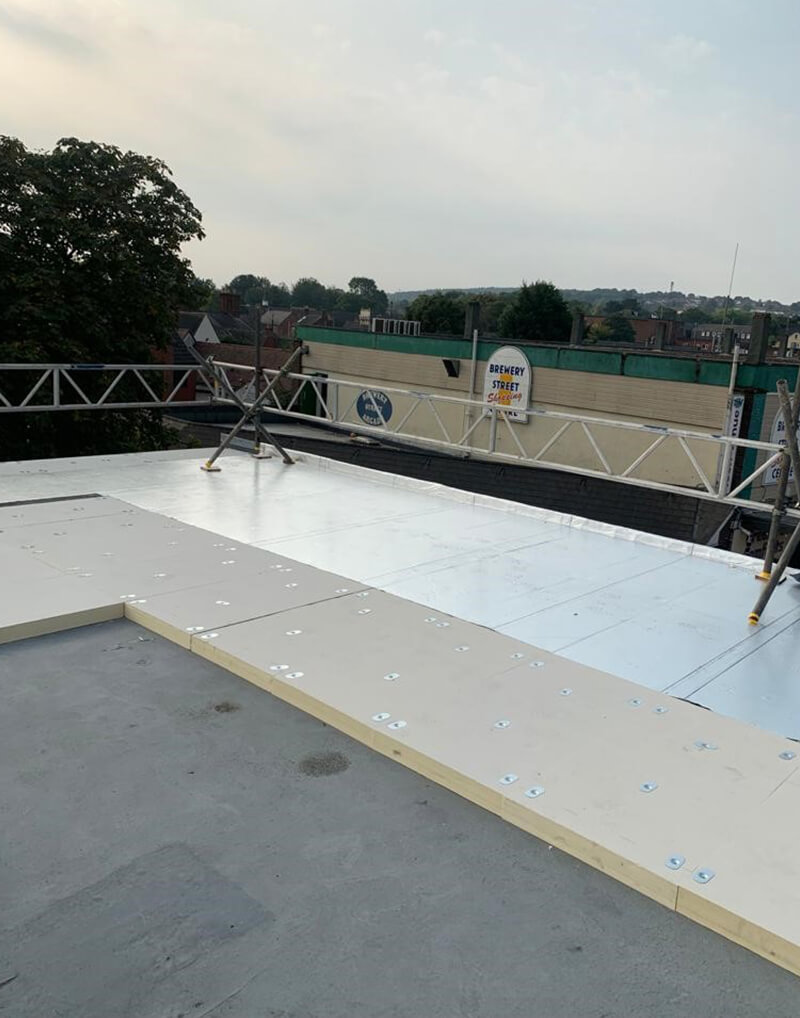
Repairing a flat roof can mean anything from a quick patching job to a whole roof coating – and obviously, these carry very different costs. Below you’ll find a rundown of the common issues we carry out roof repairs on.

Alligatoring

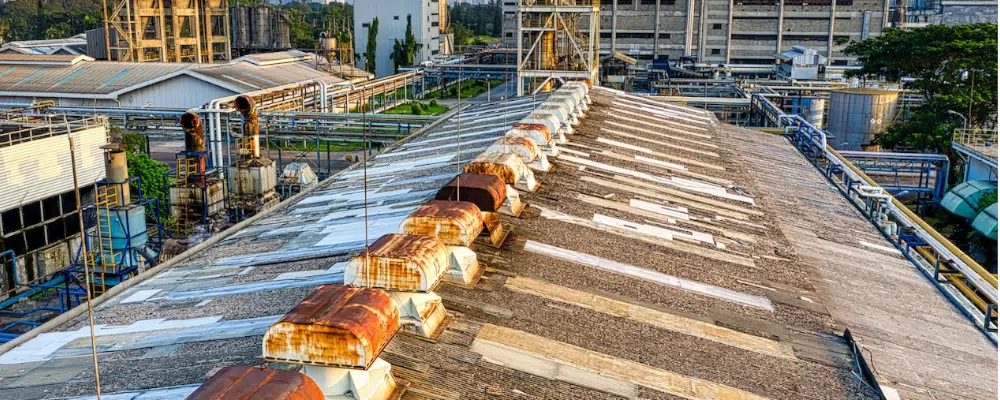
Alligatoring is a term used to describe one of the most common problems experienced with flat roofing. It’s when the asphalt used to coat your roof’s membrane starts to age. Over time, the asphalt loses its elasticity and starts to dry out, and as it does so, it begins to resemble the skin of an alligator. And while this might be a fashion statement on a handbag, it spells big trouble for your roof.

You see, asphalt is what keeps your roof watertight, so once that’s compromised, you are more likely to find other problems arise, like leaks.

Leaks & Water Ingress

You probably don’t need a blog to tell you that if water is coming through your roof, you need to get it repaired. So we won’t. But we will explain why it’s happening and what it means if you delay sorting it. 

Leaks happen because your roof coating has been jeopardised. That may be because of a tear, it may be because of total coating failure, or you might have a missing flashing. Whatever the reason, fixing the cause means you don’t risk more substantial problems with the structure of your roof or the ceiling below. Water seeping in can cause the wooden beams to rot, the plaster to come away and mould to form – all things you want to avoid.

Blistering

Bubbles or blisters in your flat roof mean that air has become trapped between the layers of the membrane. These blisters don’t pose an immediate threat, but the coating can crack over time, allowing water in. If you only have a few small blisters, you can keep an eye on their development and delay your flat roof repair for a short time; however, if there are lots of bubbles or they’re large, you should address the issue promptly.

Ponding & Pooling Water

If your roof has puddles that take a while to dry up following rain, you might have what’s known as ponding. It means that your flat roof is no longer completely flat but has areas where it has sunk. Water collects here rather than running off and, depending on how deep they are, can take a long time to dry out. 

Standing water on your flat roof can affect the integrity of the coating, add to the weight load of your roof, it can freeze and cause splits.


So, What Makes Repairing A Flat Roof Cost So Much?

Once the issue (or issues) has been identified, we will look at what we need to do to repair your roof. There are some things we’ll require for all jobs, and some are more specific. The factors we include for all flat roof repairs are;

Scaffolding

Most roofing work needs safe access and platforms for contractors to work from. Scaffolding adds to the cost of your project, but it also adds to its safety. 

Materials

It’s no secret that construction materials have been subjected to some rather eye-watering price increases over the last couple of years. Low stock, supply chain disruptions and increases in shipping, energy costs and fuel have meant that some products have gone up by 20% since 2020. 

Your flat roof repair cost will depend heavily on what materials we need. However, thankfully, a lot of the materials we use for roofing have started to drop in price, but things like timber are still fluctuating.

Quality

One factor that makes repairing a flat roof a costly venture is the quality of the contractor you use. You can probably find someone willing to carry out the work for a lesser price, but with so many rogue traders cashing in on people’s desire to cut costs, there’s a chance you end up with a roof repair that won’t last – or worse still, that never happens.

We all know the horror stories of customers handing over hefty deposits for work that doesn’t get done. And it’s sadly all too common. 

GI Sykes has been around for half a decade – we’re certainly not going anywhere! We employ all of our staff rather than use sub-contractors; each is highly experienced and trained in their trade. We wholeheartedly stand by the quality of our workmanship and guarantee it, so you know that your roof repair is an investment that will see you right for years to come.

Plant & Equipment

Like our people, we only use the most effective and reliable machinery, which is regularly serviced and maintained. It ensures the safety of the operatives, the safety of your building and delivers a better job. 

Insurance

If you own a company, you’ll know that commercial insurance is an essential cost of business. We carry the highest levels of insurance, which protects you just as much as us when we’re working on your premises. 


Flat Roof Repair: Expensive, But Cheaper Than Flat Roof Replacement!

So there you have it, some of the reasons why repairing a flat roof costs what it does. But before you dismiss your roofing issue as one you can ignore, have a quick Google for the cost of roof replacement – it’s a whole lot MORE expensive!

If you want to talk to us about any issues you have with your flat roof, please get in touch. We can arrange a no-obligation consultation so you can find out exactly what it’ll cost to have it repaired.

Latest Articles

Previous
Next

3 Things To Consider When Choosing Your New Industrial Flooring

Building Construction 14.02.23
walkways 2

Request a FREE QUOTE

If you’d like to discuss a project you have we’d love to help.

Contact us today for a free no-obligation quote.

Get a quote

Many businesses don’t realise they’ve got the wrong industrial flooring fitted until something goes wrong. Wear and tear, damage and uneven surfaces create a hazardous working environment. Leaving you and your business exposed to risk.

Whether your industrial space is a factory, manufacturing unit or engineering facility, your floors will be subjected to heavy footfall bringing with it dirt, bacteria and dust. As well as accidental spillages of liquids, such as oil, can be difficult to clean and cause irreversible damage.

That’s why your industrial flooring needs to match the specific requirements of your business. The correct flooring should be tough, hygienic and safe. Ensuring your investment lasts for longer, creating an easy-to-clean space and helping to prevent slips, trips and falls.

The 3 Most Important Things To Consider When Investing In Industrial Flooring


1. The Function Of Your Space

What happens within your space will have a direct bearing on the type of industrial flooring you should choose. Does it need to prioritise hygiene? Will it be supporting the weight of heavy machinery? Do lots of liquids get used?

The types of industrial flooring available are…

  • Epoxy Resin (including self-levelling)

An epoxy floor will give you exceptional durability, is easy to maintain and can be enhanced with non-slip and decorative finishes. Epoxy resin has incredible strength and can withstand high impact, making it a brilliant choice for busy and hygienic working environments.

  • PU Resin

Polyurethane resin is a softer substance than epoxy, but it is still extremely heavy-duty and hard-wearing. PU resin flooring has great chemical and organic acid resistance to corrosion, and is a superb choice for spaces where leakage or spillage of these substances might be expected.

  • Polished Concrete

Often used in areas where there is heavy equipment, polished concrete flooring is almost impossible to damage because of its incredible strength. The sealed finish is resistant to chemical corrosion, and its smooth surface makes it easy to keep clean.

  • Vinyl

Vinyl flooring comes in many designs, colours and finishes enabling you to add some character and style to your industrial flooring. It’s easy to install, durable, waterproof and slip-resistant. Making it a good option for commercial safety flooring where footfall is high and regular cleaning products are used.

  • Rubber

The properties of rubber flooring make it more cushioned than other options and an ideal industrial flooring solution if people are standing for long periods of time. It’s easy to clean, antimicrobial, sustainable and offers a good grip to help people stay on their feet.


2. How Much Maintenance Will Your New Industrial Flooring Need?

Every type of industrial flooring will need regular maintenance to keep it in tip-top condition. Helping to ensure they remain safe, functional and looking great.

The type of maintenance required will depend on the flooring you’ve installed, but all flooring will benefit from regular sweeping and mopping, using the recommended detergent, to keep dirt and debris at bay.

If your flooring had a sealant or anti-slip coating applied, it’s important this is reapplied as advised to prevent corrosion and staining, and potential safety risks.

Regular upkeep of your industrial flooring will help it last for longer, but on average…

  • PU resin flooring lasts 10 years.
  • Epoxy resin flooring lasts 10-20 years.
  • Vinyl flooring lasts 10-20 years.
  • Rubber flooring lasts 20 years.
  • Polished concrete flooring lasts up to 100 years!

3. Do You Need Zones?

The large open space of industrial spaces often needs to be divided into different zones, and depending on the use of a zone you may require different types of industrial flooring.

For example, if you have a manufacturing zone with heavy machinery, you might consider polished concrete for its super weight-bearing strength. Whereas, softer rubber flooring may be a better choice for a packaging zone where employees stand beside a conveyor for long periods of time. Or a bright-coloured vinyl could illuminate an area with little to no natural light.

Industrial flooring can also be used effectively to make a clear visual definition between zones, highlight hazardous areas and create walkways. You can read more about that in our blog post about walkways and internal line marking here…


Other Things To Consider

Affordability

The cost of your industrial flooring will depend on the type you choose and the space it has to cover. If you’re on a tight budget vinyl flooring is a cost-effective option, however it’s worth remembering that it may need to be replaced sooner than more expensive flooring solutions such as rubber or polished concrete.

Disruption

If your industrial space is a new build, this shouldn’t be an issue, but when business is already up and running, you probably won’t have the option to shut down for long in order to have your new flooring installed. To overcome this rubber and vinyl could be laid in sections, whereas polished concrete, epoxy and PU resin flooring should be poured in its entirety to prevent joint lines.

How quickly your industrial flooring will take to be able to walk on depends on its type…

  • Epoxy and PU resins – typically 12-24 hours.
  • Vinyl and rubber – approx. 24 hours.
  • Polished concrete – up to 48 hours after the concrete pour.

Health & Safety

When you’re selecting your industrial flooring, you need to ensure that it meets the necessary health and safety standards and requirements. This will help to protect you should anything go wrong.

Non-slip options or additional coatings are a fantastic choice to help prevent avoidable accidents, and antimicrobial solutions can help to keep nasty bugs and bacteria from spreading. Ensuring a happy, healthy and productive workforce.

For more information on antibacterial coatings click here…

Selecting Specialist Flooring Experts Will Ensure Your Industrial Flooring Is Up To Standard

Don’t be floored by flooring!

We’re here to help.

With over 50 years of commercial contracting experience, knowledge and skills, GI Sykes knows a thing or two about industrial flooring.

We’ll make sure that you select the right product for your property, and our expert team of flooring specialists will install it to the highest standard to give you total peace of mind for years to come.

For a FREE consultation and quotation for your industrial flooring, please get in touch.

Latest Articles

Previous
Next

Do You Need Fireproof Cladding?

Cladding 28.01.23
cladding coatings 1

Request a FREE QUOTE

If you’d like to discuss a project you have we’d love to help.

Contact us today for a free no-obligation quote.

Get a quote

We can’t stress the importance of fireproof cladding enough. If you own or maintain a building, then understanding what fireproof cladding is, how it can prevent a disaster and what you should do in an emergency is your responsibility.

It was in June 2017 that a heart-stopping tragedy shook the country. 72 people died in the fire at Grenfell Tower, and the cladding that had been recently installed on the building was at the heart of the investigation into what caused the disaster.

Suddenly, tenants and building owners were starkly aware of the significance of cladding; until then, it had previously been considered an aesthetic choice with insulating benefits.

If you’re still unsure about cladding and whether your property needs fireproof cladding or not, read this blog to arm yourself with vital information. 

Cladding vs Fireproof Cladding

You might have thought cladding was cladding – that there’s no distinction between types. But you’d be wrong. There are 7 types of cladding, some are combustible, and some aren’t. Here’s a brief overview of the types and their main benefits.

Timber

Timber cladding sounds like a recipe for disaster, doesn’t it? Well, thankfully, the timber used in cladding is treated with chemicals to make it flame retardant. 

Wood has natural insulating properties, making it a good choice for improving a building’s energy efficiency, and it has a lovely natural look to it. However, timber cladding isn’t suited to buildings over 2 stories – and given the increases in the cost of lumber recently, it’s also not the most cost-effective solution.

Glass

Glass cladding has a sophisticated, modern look to it – perfect if you’re after a high-end finish to your building. There are two types of glass cladding; rainscreen and curtain walling. 

Rainscreen is one of the most popular cladding choices in the UK and provides excellent insulation to a building. The glass panels are fixed to a frame which leaves a cavity between the wall of your building and the cladding – and while the glass cladding itself is fire resistant, the cavity poses a risk. 

At the Tall Building Fire Safety Conference, held in May 2022, professor of fire science Guillermo Rein, revealed that his study had shown that rainscreen systems had a more substantial fire risk. 

Rainscreen’s risks can be reduced with proper installation, the use of fire-resistant materials in the cavity, as well as fire-stopping courses.


uPVC

uPVC is an appealing cladding option because it’s so easy to maintain and is the most affordable on the market. In addition, it has brilliant thermal capabilities that can help reduce your energy costs.

While uPVC cladding is considered combustible (quickly catches fire), it doesn’t add to the spread of flames. The panels will warp and melt but ultimately don’t contribute to the fire. 

Stone

Stone cladding is often chosen based on its aesthetic appeal. Like glass, it denotes a particular ‘look’ that some building owners want. The type of stone cladding that you can have depends on several factors, including the structure of your building and its height. 

Stone is a natural insulator, so it will keep your building warm during cold weather. However, it’s also the most expensive cladding type on the market. 

And if you’re wondering if it’s a fireproof cladding option, the answer is yes. Stone cladding is 100% non-combustible.


Fibre Cement

Fibre cement cladding is one of the most used cladding types. This fireproof cladding combines cement and cellulose fibres to create a sturdy, durable surface that’s widely used in both domestic and commercial cladding projects. 

It’s very low-maintenance, is a brilliant moderator for the temperature in your building and best of all, it is fire resistant so it will not burn in a fire.

Metal

Metal cladding is usually seen on commercial buildings as it’s easy to install, cheap to maintain and adds a layer of protection to your building.

The different types of metal used are;

  • Aluminium
  • Zinc
  • Steel
  • Copper

Metal cladding is non-combustible and resists ignition, even in high temperatures. 


Composite

Composite cladding is made from recycled wood and polymers, which bond to form a strong weather-resistant material that’s suited to prolonged use outside. Composite cladding comes in many different colours and provides excellent insulation for heat and sound. 

And despite the plastic content of composite decking, some cladding brands are treated with specialist fire-retardant additives.

What Are The Fire Regulations?

So now you know the general information about the types of cladding, it might be helpful to understand the fire regulations and ratings that are used. 

Building regulations in relation to cladding changed in 2018 when the Government banned the use of combustible cladding on public buildings like schools and hospitals, as well as care homes, student halls and refurbs over 18m (over 2 stories, roughly). The changes to the regulations are still an ongoing conversation, with some suggestions that the height restriction may be lowered to 11m in the future. 

Understanding the requirements of fireproof cladding can be tricky, and often is a stipulation of your building insurance. If your building has the wrong type of cladding, your insurer can refuse cover.

The materials used in your cladding will each have a fire rating, which is used to determine their safety value.

Fire Ratings Explained

In the UK, we use the British standard for testing, BS EN 13501-1: Fire classification of construction products and building elements. 

Materials are categorised using three factors; 

  • The reaction to fire, which is shown as a letter from A – F.
  • Smoke propagation (how much smoke it produces in the first 10 minutes of burning), which is shown with the letter s and a number between 1 – 3.
  • The likelihood of dropping particles, shown by the letter d and a number between 1 – 3.

So the rating of your cladding will be displayed like this: B, s2, d1.

Reaction To Fire

A1, A2 – Materials that are non-combustible.

B, C, D – Limited contribution to a fire.

E, F – Significant contribution to a fire

Smokiness

S1 – Little to no smoke

S2 – A small amount of smoke

S3 – Lots of smoke

Falling Embers & Particles

D1 – No dropping particles

D2 – Some falling particles

D3 – Many dropping particles

Fireproof Cladding: Getting It Right

It’s a lot to understand and take in, isn’t it? And when the risks are so high, you’ll want to get it right. At GI Sykes, we have over 55 years of construction experience and can help you understand fireproof cladding. We provide both intumescent steel coatings and certified fire protection coatings to enhance the fire safety of your building. 

Latest Articles

Previous
Next

Is It Time For Building Maintenance?

Building Repairs 14.01.23
commercial spraying done

Request a FREE QUOTE

If you’d like to discuss a project you have we’d love to help.

Contact us today for a free no-obligation quote.

Get a quote


The start of the year is always a good time to check to see if you require any building maintenance. It’s not necessarily the time of year, but more the mindset of getting things up to standard for the next 12 months. 

An annual review of your property means that you can see what needs doing immediately, what needs doing soon and what can wait. You can plan your building maintenance budget and schedule accordingly rather than letting things take you by surprise. It pays to be proactive with repairs. 

So, what should you look for to see if your premises needs a little TLC?

The Roof

A good building maintenance check takes account of every aspect of your property, including the roof. You’re firstly looking for obvious signs of damage or disrepair – leaks, holes or missing parts. If all looks in good order, you need to look a little closer to be sure. 

Blisters

If you see raised bumps in your roof membrane, you may have roof blistering. It’s where a pocket of air forms between the layers of your roofing materials, usually because the membrane has lost its adhesion. They might look harmless enough, but if left, these blisters can split and let in moisture which can compromise the integrity of the roof.

Pooling Water

If you see standing water on your flat roof, it may be an indication that there’s a problem with the surface of your roof. Puddles, or pools, form when the rain rolls into a sunken area on your roof. If you’re checking your roof after a period of sunshine, look for circles of dirt and debris, as these show the areas where water pools.


Tears & Cracks

Rips in the membrane covering your roof can allow water, dirt and organic matter to get into the structure of your roof. Over time, even a small leak can mean considerable water ingress that can rot wood, damage ceilings and result in the need for much larger repair work.

The Exterior

Your building maintenance will include examining the outside of your property. In the first instance, you’re looking for things that can affect the structure of the building – cracks in the walls, patches of mould, rusting metalwork. Beyond that, you want to keep an eye on the aesthetic stuff too. Dull, faded cladding and signage can negatively impact the perception of your business, so getting that looking neat and tidy will deliver great rewards.

Unkempt Cladding

Check your cladding for dinks or cracks. Small knocks are fine, but more serious ones will need attention. If the coating on your cladding is compromised, you run the risk of rust forming and weakening your protective cladding.

There are a few options available to you if you decide that your cladding needs repairing. Cladding cleaning will remove all the dirt and grime that has accumulated on it, leaving it looking bright and clean. If the colour is looking faded or you fancy a change, cladding spraying is a quick and effective way to restore vibrance to your exterior.

Lastly, if you spot rusty edges to your cladding, then cut-edge corrosion repair will help prevent more significant damage from occurring.


Gutters

Your gutters will collect all sorts of matter over the months. Clearing them is an essential building maintenance task because if they get too compacted, water will begin to overflow down the sides of your premises.

Gutter cleaning for a commercial building is very different from clearing your gutters at home. The height and length of the gutters mean the job carries some risk and is usually best left to those with the right equipment, training and experience.

Graffiti

Sadly, an expanse of clean wall, shutter or cladding is too much temptation for some, and graffiti is the result. 

Unless it’s a Banksy, you probably don’t want to keep your new ‘art’ in place, so scrubbing it off will form part of your regular property maintenance. But did you know that we can treat your surface with an anti-graffiti coating that means future street art won’t be a problem?

The Interior

Now to the inside of your property. Your building maintenance regime should include all aspects of the inside of your warehouse, office or retail unit. 

Check that all the electrical sockets are safe, that your furniture isn’t broken and that your windows are in good working order. You probably already have scheduled fire drills, but check your fire alarm system, check the dates on all extinguishers and fire blankets and go through the First Aid kit to get rid of out-of-date medical supplies. Now, that’s not technically building maintenance, but it goes hand-in-hand with a safety check, so it works as a great reminder.

Dated Decor

While you’re pottering around, ensuring your building is safe and secure, you might notice that the paintwork looks a little tired. A spruce-up of common areas can do more than just improve the look of your building, it can boost morale too. Showing that you care about the environment that your staff or tenants work in makes them feel valued and cared for.

Commercial painting and decorating is a simple way to elevate your business profile while demonstrating your positive attitude to your workforce. 

Missing Tiles

Inspect your suspended ceiling for damaged or missing tiles. They are cost-effective and easy to replace, so you can have a lovely-looking ceiling in no time. 

However, if there’s extensive damage or you think your ceiling needs replacing, it’s worth doing sooner rather than later. If there is a risk of falling tiles, speak to a professional suspended ceiling contractor who can advise you on the best course of action.

The Floor

Lastly, we’re looking down at our feet and checking over the floor. Building maintenance includes all of your floor space, including outside. Look for potholes in your car park, missing anti-slip tread on steps, and fraying or worn carpet. Anything that presents a slip hazard needs to be at the top of your to-do list.

Poor Flooring
If your flooring isn’t holding up to the high traffic that it’s enduring, then switching to an Epoxy resin floor will save you time and money in subsequent building maintenance checks. The durable resin coats your concrete floor and lasts for up to 10 years. It’s impact resistant, repels chemicals and, as it’s so smooth, it is incredibly easy to keep clean.

Epoxy floors come in many colours, so you can even match your flooring to your branding!

Missing Markings

Check that all of your safety markings are still visible. Line markings are essential in warehouses and environments where there are vehicles and pedestrians, so ensuring they’re intact and clear is vital. If not, book a contractor to come and redo the lines as soon as possible.

Building Maintenance: Your Annual Responsibility

If you’ve not planned a building maintenance check for the next year, now is the time. Get yourself a clipboard and start looking closely at all of the things we have outlined – we promise that by being proactive with repairs and maintenance, you’ll save yourself stress and cash in the long run. 

And if you want to pass the obligation onto a professional team who can ensure every aspect is thought of, then talk to us about our property maintenance services. We can create a package that spreads the cost, so you get high-quality maintenance without a huge bill.

Latest Articles

Previous
Next

Could Suspended Ceilings Work Well For Your Commercial Building?

Building Construction 21.12.22
industrila painting

Request a FREE QUOTE

If you’d like to discuss a project you have we’d love to help.

Contact us today for a free no-obligation quote.

Get a quote

Been looking up suspended ceilings? Wondering if they’d work well in your commercial building? Well, you’re in the right place to find out. In this blog, we’ll see what makes suspended ceilings ideally suited for workspaces and what other options are available.

What Is A Suspended Ceiling? 

First things first, what is a suspended ceiling? Even if you don’t know, you will have walked under hundreds of them throughout your life – they’re in most retail, education, healthcare and office environments. 

Suspended ceilings, also known as dropped ceilings and false ceilings, are most commonly made from a metal frame that forms a grid. Tiles are placed into each square to create a secondary ceiling that sits below the surface above.

The Benefits Of Suspended Ceilings

There’s good reason as to why most commercial buildings opt for a suspended ceiling… Because there are so many benefits. If you’re looking to refurb your commercial property and are thinking about ceilings, you’ll want to look at this list.

Quick Installation

If you’ve been updating your office, warehouse or retail unit, then time is of the essence when getting things finished. And that’s where a suspended ceiling can help keep your project to task. A whole ceiling can be finished quickly, making it one of the most convenient options when refitting or renovating a property.

Good At Concealing

That gap between the concrete ceiling and the suspended tiles isn’t dead space. It’s ideal for hiding the plethora of ducts, cables and pipes that a commercial building usually has. With a suspended ceiling, those ducts, cables and pipes are not only tucked away out of sight, with some suspended ceilings, they’re also freely accessible should you need to replace or repair them.


Flexibility With Design & Lighting

That same cavity above your ceiling tiles means you can design your lighting to suit the use of the space below. Need extra lighting above your checkouts? No problem. Want specific areas zoned? Then use different coloured tiles to give a clear indication. And the best bit is that is really simple to change at a later date!

Sound Proofing

Sound can really travel in big, open spaces, so if you have a space with an upstairs neighbour or your building has multiple floors, you’ll benefit from a ceiling that can help reduce noise. The gap between the top of the room and the ceiling tiles will help to lessen noise, but if you want maximum peace, then acoustic pads or panels can be added.

Acoustic pads and panels have been designed to block noise travelling through ceiling tiles. They’re ideal for open offices, units in shared spaces and workspaces that need a greater level of quiet and calm.

Affordable

Suspended ceilings are the most affordable option on the market. The materials aren’t expensive, and installation is quick, so it is a surprisingly cost-effective ceiling solution. 

Fire Resistant 

Ceiling tiles must adhere to British legislation and provide fire protection. Most tiles offer passive fire protection (they help delay the spread of fire) for between 30 – 60 minutes. You can opt for tiles and ceiling treatments that have a longer burn time if you want additional peace of mind.

A Lighter Space

A white suspended ceiling is excellent at bouncing light around a space, so if your room is a bit on the dark side, then a suspended ceiling can help brighten it up.

A suspended ceiling can have up to 0.86 light reflectance, which means the tiles can reflect 86% of all light back into a room. This can help reduce your lighting costs, as well as create a more tranquil environment with a better distribution of natural light.

Improve Energy Efficiency

Speaking of reducing bills, did you know that a suspended ceiling can also help bring down your heating costs too? There are two ways it can help; firstly, the lower ceiling means that you’re heating less space overall, so you reduce the heat needed to keep your property warm. 

The second is by adding ceiling insulation. Available as pads that are placed above the ceiling tile, these encapsulated wads of fibre stop your heat from escaping upwards. If you want to get better control of your energy bills (and let’s face it, who doesn’t?), adding an insulating layer is a good idea.

What Are The Different Types Of Suspended Ceiling Available?

Concealed Grid

This is when the metal framework sits behind tiles that meet edge-to-edge. The finished look is more high-end, with a continuous expanse of uninterrupted ceiling. 

Gypsum Board

Gypsum board – also known as plasterboard – is used in suspended ceilings when a smooth finish is preferred. It can be plastered to give a seamless finish.

Exposed Grid

This is the most inexpensive type of false ceiling. We install a metal grid and place ceiling tiles on the cross-hatched metal. When you look at the ceiling, you’ll see a tile framed by metal.

So, Could Suspended Ceilings Work For Your Commercial Building?

Based on the above, it’s hard to see how any other option can deliver as many benefits whilst also being so cost-effective. If your business premises needs a neat, tidy ceiling that helps to create a safe place for your ducts and cables, provides flexible lighting configuration, a great range of colour options, adds thermal efficiency AND improves your fire protection, then suspended ceilings should be your first choice. 

At GI Sykes, we have decades of experience installing suspended ceilings for all manner of commercial properties. Our specialist team can get your new ceiling up and ready with minimal disruption to your day. Just get in touch to arrange a no-obligation quote, and we’ll be happy to help you decide if a suspended ceiling is right for you.

Latest Articles

Previous
Next

Is Window Spraying Worth The Cost?

Building Repairs 07.12.22
Is Window Spraying Worth The Cost 3

Request a FREE QUOTE

If you’d like to discuss a project you have we’d love to help.

Contact us today for a free no-obligation quote.

Get a quote

window spraying

If you own or manage a commercial, industrial or retail property, chances are, you’re no stranger to building maintenance and renovation. With every need that arises, you have to weigh up the value of the work vs the cost. So, if you’re considering updating your window frames, you’ve probably asked yourself; is window spraying worthwhile?

In this blog, we’ll share all the reasons why we think window spraying is a good investment, as well as cover when window spraying isn’t the right solution for you.

What Is Window Spraying?

First things first, what do we mean by window spraying? Well, it’s not the actual window we are referring to, but the frame. Using professional equipment and specialist paint, we can spray paint your window frames to any colour of your choice. 

Window spraying can be carried out on the three main types of window frame;

  • uPVC
  • Aluminium
  • Timber

The process is simple and quick, and leaves your windows looking flawless. But what calls for window spraying – and is it worth investing in?

Your Window Frames Are Ugly

To some, a window frame is a window frame, and it doesn’t matter what it looks like. To others, a faded, greying, or chipped window edging looks ugly and unkempt. If you lean towards the first opinion, here’s why we think leaving your window frames to decline is a bad idea:

Appearance Matters

While you might think no one cares about grubby windows, it’s been proven otherwise. A study found that shop exteriors that were well maintained directly impacted the intentions of customers. And it stands to reason – no matter if your customer base is business to business or business to consumer – you’ll make a better first impression if your exterior is looking tidy.

And window frames usually make up a significant part of that first impression.

A Slow Decline

If your window frames are missing chunks of paint or the surface feels rough to the touch, then they’re not adequately protected. Since your frames have to endure all weather, you can expect that, over time, the top layer or coating will start to degrade. Once that happens, you run the risk of significant damage occurring if left untreated. And trust us, when you’re comparing the cost of window spraying to total replacement, we know what comes in more favourably…

Match Your Brand

The colours available for window spraying mean that you can have window frames that complement the colour of your building (no more boring white!). Or, if you’re looking to really steer into your branding profile, you can have your window frames sprayed in your brand colours.


What’s The Worst That Could Happen?

Well, the world won’t end if you don’t opt for window frame spraying. But that’s not to say that there aren’t some pretty frustrating – and expensive – outcomes if you don’t take care of your windows.

Protect Your Frames From The Elements

While your window frames have been designed to withstand sun, wind and rain, it doesn’t mean that they’re impervious to damage caused by long-term exposure to the glorious British weather.

Frames can last anywhere between 10 – 50 years before they need replacing. You’ll start to notice signs of wear, and you shouldn’t ignore these signs. Make sure to include your windows in your regular maintenance check-up, and look for; 

  • Fading colour
  • Discolouration in white frames
  • Peeling
  • Chipped paint
  • Rust
  • Bubbling paint

These tend to be minor issues that can be repaired and restored by spraying your window frames. However, if your windows are warped or cracked, then you may be too late to save money with restoration work. You may have to bite the bullet and fork out for replacements. 

If you ignore the minor issues, they can become bigger issues. And if you ignore those bigger problems? Well, you run the risk of damp infiltrating your building – and damp in your walls is pretty catastrophic.

It makes sense to stay on top of upkeep with regular maintenance and invest in something that can add years to the lifespan of your window frames. And that something is window spraying.

Window Spraying Is Worth The Cost

In the face of compelling evidence, we think window frame spraying is worth the cost. Not only can you protect and extend the lifespan of your window frames, but you can also add colour and flair to your property. Even if you don’t fancy making a splash with vibrant window frames, you can still smarten up your building with a more traditional shade. Black or white are timeless, while anthracite has become the contemporary colour of choice.

How Much Does Window Spraying Cost?

So, we’ve established that it’s worth the cost – but what is that? Well, we can’t give an exact figure since every quote is different. We have to account for various factors that affect the cost, which include:

  • The current condition of your windows – the more degraded your window frames are, the more prep work we will need to do.
  • How many frames you want spraying – obviously, the more frames you have, the more you’ll pay
  • Where they are located – windows above ground level mean using scaffolding, which adds to the cost.
  • Colour choice – some colours cost more, particularly if they’re less common.

But since it’s helpful to have an idea of what the outlay may be, a ballpark amount is around £150 – £200 per window.

All of our work is carried out to a professional standard. Once complete, you won’t be able to tell that your window frames have been sprayed. The end result is totally smooth with a flawless finish. We also guarantee our window spraying work for 10 years, so you can have peace of mind that your newly painted frames will look good for years to come.

It’s Not Just Window Spraying

We don’t just spray window frames! We can help you with your doors, roller shutters, shop facias and even cladding. If you want to know more about our on-site spraying services, including window spraying, then just get in touch to arrange a free quote.

Latest Articles

Previous
Next

3 Signs It’s Time For A Commercial Refurbishment

Building Repairs 28.11.22
dilapidations 2

Request a FREE QUOTE

If you’d like to discuss a project you have we’d love to help.

Contact us today for a free no-obligation quote.

Get a quote

Commercial refurbishment can bring a new lease of life to not only your premises but to your workforce too. It’s much more than just updating a colour scheme or replacing broken furniture. When done properly, a refurb can invigorate your business, helping to boost morale, profile, and, ultimately, profits. 

But how do you know when your building needs commercial refurbishment? Here are 3 signs that tell you it might be time to call in the experts…

Sign 1: Tired Exterior

If you walk into your property each day cringing at the faded, damaged cladding then it’s probably time you took action. Cladding is a workhorse, protecting your building from the perils of the Great British weather and over time, it’ll start to show signs of wear and tear.

The most common issues we see with exteriors are; 

Milky, faded paintwork – Maybe you had a sign-up that’s been removed or an area that was covered by a tree that’s come down. You’ll notice a huge difference in the colour of your paint, with exposed cladding or walls looking dull, faded and sometimes, covered in a milky residue. This is the result of oxidation and exposure to UV light, and it can make your building look unkempt and poorly managed.

Rust – Rust is another form of oxidation. Oxidation is a chemical reaction between oxygen, water and metal. Rust corrodes the metal surface, weakening it. If left untreated, rust can completely deteriorate metal, leaving holes and cracks that expose the vulnerable surface beneath.

Dented, damaged cladding – There’s nothing quite like the sinking feeling as you hear the crunch of metal on metal. If you’ve ever seen a vehicle reverse into a cladded building, you’ll remember the squealing, scraping sound or the hollow thud as damage occurs. While a dent might seem harmless enough, cracks in the protective coating that covers your cladding could be compromised, leading to bigger problems…like rust.

Cleaning or recoating your cladding is a relatively simple job for the experts. Armed with professional equipment and scaffolding, we can aid your commercial refurbishment by getting your cladding looking good as new in no time. If you want to know more about how we can clean, repair or recoat your cladding, take a look at the information here.


Sign 2: Dated Interior

While retro style is all the rage on the catwalks, it’s not so hot for your interiors (unless that’s your intentional aesthetic!). If the inside of your property is wearing paint from decades gone by, it might be time to sharpen up your image and invest in professional painting and decorating.

A new coat of paint isn’t just about freshening up your interiors, it can actually have a positive impact on your business as a whole. How, you ask? Well, in our experience, these are the hidden benefits of a commercial refurbishment of your building’s interior:

Improved Perception – A clean, well-maintained office, warehouse or retail unit makes people feel like you’re invested in them. Whether that’s your clients, customers or staff, when you show that you’re prepared to spend money on their comfort, they’ll repay you with loyalty and pride in their work or purchase.

A More Productive Environment – Much like a Marie Kondo-esque declutter at home, a commercial refurbishment gives you a reason to sort through your premises. Most businesses have a cupboard or drawer filled with old tech, broken chairs and reams of old paperwork. This is an opportunity to sort through everything to make better use of your space. That goes for the layout of your space too – is there a way to make your environment work better? Can you create zones or workstations that improve flow and productivity?

Get On Brand – Your branding goes much further than just the logo on the outside of your building. Bring elements of your brand into your decor, and you’re really starting to build a business presence. It’ll be noted by your employees, clients and suppliers and can do no end of good for your company profile.

We have a huge team of talented commercial painters and decorators who can help you make the most of your commercial refurbishment project. Use our expertise to shake up your workplace – a change is as good as a rest, after all!


Sign 3: A Leaky Roof

Well, water dripping into your property isn’t a subtle sign, it’s more of a big flashing neon one saying ‘get this fixed’. Commercial refurbishment encompasses repairing and maintaining your roof, so here’s what to look for;

Leaks – Well, duh. A leak in your ceiling is a pretty good indicator that something is amiss with your roof. Damage to your roofing can lead to water ingress, and, if left, can result in water seeping through to your ceiling. It’s pretty dire if it gets to this stage since you’ll need to pay out for repairs to much more than just the roof membrane. 

Bubbling – If you notice small domes appearing on your flat roof, it’s time to get specialist help. It means that air is creeping under the membrane, which means bigger problems are likely to happen. 

Splits & Cracks – Heat, frost, torrential rain, hurricane winds – your roof sees it all. It’s no surprise, then, that the membrane can develop cracks and splits. If caught early, these can be patched and repaired so you can delay the huge cost of roof replacement. 

There are more signs to look out for, and they’re covered in more detail in this blog, so if you’re worried about your roof, have a read and call us to get your roof problems under control.


Have You Seen Any Signs That It’s Time For A Commercial Refurbishment?

If any of the above are signs that you’ve noticed in and around your building, then it may be time to start planning your commercial refurbishment. It might sound like a mammoth undertaking, but at GI Sykes, we have a vast team of specialists who can make the process look easy. Whether you want to tackle your refurb in stages or take on the whole lot, we can create a strategy that suits you, your business and your budget. 

Talk to us about your commercial refurbishment requirements, we’re happy to offer advice and guidance with no obligation.

Latest Articles

Previous
Next

Industrial Floor Coating Contractors Could Revolutionise Your Warehouse. Here’s How.

Building Repairs 14.11.22
walkways 2

Request a FREE QUOTE

If you’d like to discuss a project you have we’d love to help.

Contact us today for a free no-obligation quote.

Get a quote


Industrial floor coating contractors have a superpower. And like all good superpowers, it’s not obvious at first glance – the real moment of truth happens when you take a long look at what potential has been unleashed. 

It might sound grandiose to talk about industrial floor coating contractors in such glowing terms, but trust us, some of our clients have revolutionised how they use their warehousing thanks to the hard work of our team. And they think we’re super.

So, how can a humble floor coating change the way you utilise your space? Read on to find out…

Revolution 1: A Safer Floor

Workplace safety should be front and centre of your risk assessments. A worn, slippery floor is a hazard that will eventually result in an accident. And besides the pain and suffering caused to the poor person who takes a tumble on your floor, the resulting paperwork and possible lawsuit (those ‘no win, no fee’ lawyers are like vultures) could cost you dearly.

So what can you do to prevent slips, trips and falls in your warehouse? Instruct industrial floor coating contractors to install epoxy floor coatings. This solution is quick, cost-effective and, above all, safe. We’ve applied epoxy floor coatings to all kinds of commercial and industrial buildings, from hospitals to warehouses, and every time we have delivered an outstanding finish that enhances the safety and appearance of a building.

Here’s how epoxy floor coatings can change your warehouse for the better: 

Excellent Durability

Epoxy resin offers incredible resistance to wear and tear. So if your warehouse has high-traffic areas, this floor coating can withstand continual use. There are different types of resin flooring, but every single one is guaranteed to last you through the years. A one-off investment will give you peace of mind day in, day out.

Level Out Uneven Floors

Did you know that you can use self-levelling epoxy floor coating to even out cracked and damaged concrete surfaces? Our team of industrial floor coating contractors will apply the coating, ensuring that it fills any dips and crevices, so all that’s left is a pristine, smooth floor that no longer has dangerous areas.

Easy Maintenance

The smooth finish of your new epoxy floor coating is really easy to maintain. Sweeping and mopping should be carried out regularly, but because there are no cracks or holes in the surface, you won’t find dirt, grime and bacteria lingering. And if you need a long-lasting sanitary option, at GI Sykes, we can install an antimicrobial coating that keeps your space hygienic and clean. 

Want to know more about the wonders of epoxy floor coatings? Read this blog.


Revolution 2: A Space That Works For You

Your warehouse may well be a lovely spacious working environment, but without organisation, it can become unproductive and unsafe. But how can you organise and arrange your warehouse without heavy investment in partition walls? How about floor markings?

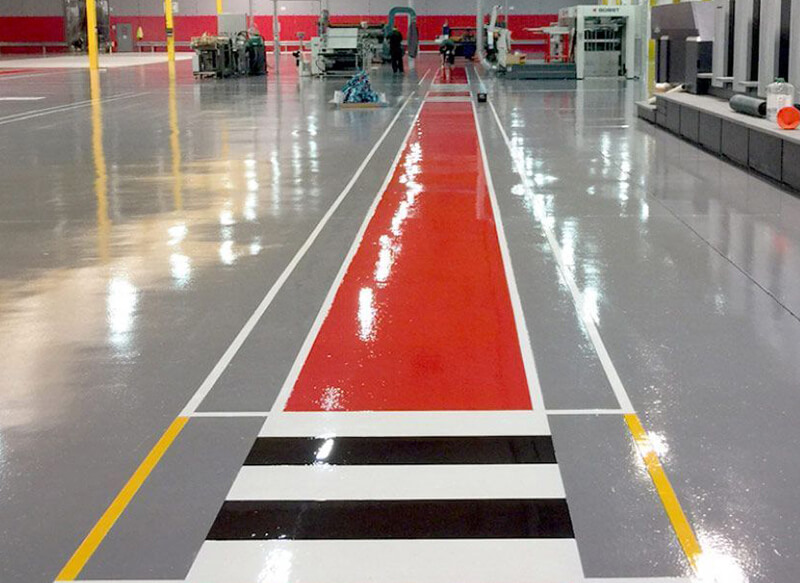
Professional industrial floor coating contractors can help you delineate zones and areas within your warehouse using coloured floor coatings. These are just some of the most commonly used demarcations we have created using line marking and walkways.

Walkways

If your warehouse is a shared space between pedestrians and machinery, then a clearly marked walkway is essential. Not only does it keep your people safe from moving vehicles, but it’s also helpful for directing the flow of traffic. 

Designated Zones

Coloured flooring quickly and easily identifies zones within your warehouse. Have a packing team that operates independently from a returns team? Create specific spaces that have a clear boundary for a productive and streamlined workspace.

Visual Cues

If you have areas that require the use of PPE or have a particular hazard, such as water or loud noise, you can use markings to show this. Yellow hatching is often used to flag dangers, but you can use red to show that a hard hat or ear defenders are needed to enter. The key to creating a safe warehouse is simplicity and clarity, and our industrial floor coating contractors can help you plan your space.


Revolution 3: Professional Image

Ok, you might think that how your warehouse looks is less important than how it functions, and to a degree, you’re right. If your space is safe and well-organised you’re doing alright. But there is plenty of evidence to suggest that a clean, tidy and good-looking work environment boosts productivity and morale. And who doesn’t want a more effective team?

Picture this; your top client decides to visit your warehouse. They want to see where the magic happens. But instead of being wowed by your diligent and hard-working team, they’re rather put off by your tatty flooring and grubby-looking space.

All that can be avoided by investing in an industrial floor coating. Contractors can easily repair, replace or install a hard-wearing floor coating in just a few days, so you don’t have to worry about disruption, either.

What about a spanking new floor helps your business, then?

People Power

By keeping your warehouse looking neat and tidy, you’re showing your team that you respect and value them. You don’t expect them to work in an environment that feels uncared for and badly maintained – and you’re willing in spend money creating a comfortable, safe space.

Brand Image

Marketing 101 is projecting the image you want your clients to believe. If you want to be seen as a professional business that takes itself seriously, then having premises that reflect that is key. A run-down building with a scuffed-up, flaky floor gives the wrong impression, and when fixing it is so easy and affordable, why would you?

Added Value

If you ever plan to sell your business, or even if you’re just keen to maximise its worth for your own gain, ensuring that it functions and looks as good as possible should be high on your agenda. Potential investors want to see a business that takes account of the safety of its people. They also want to see a warehouse that is cared for and unlikely to cost them money to maintain.


Industrial Floor Coating Contractors: Starting The Revolution

That’s just three ways our industrial floor coating contractors could revolutionise your warehouse. There’s more, too – from slip-resistant coatings to anti-static systems – we can pretty much deliver whatever your warehouse needs. 

And it doesn’t have to stop with your flooring either. Just take a look at our website; you’ll find we can take care of your cladding, your roof and your guttering too. Want to chat specifics? Get in touch for a free quote today.

Latest Articles

Previous
Next

Got a Project in mind?

If you’d like to discuss a project you have we’d love to help.

Contact us today for a free no-obligation quote.

Get a quote