On-Site Paint Spraying – Is It Worth The Cost?

Spraying Services 28.03.23
ceiling spraying 2

Request a FREE QUOTE

If you’d like to discuss a project you have we’d love to help.

Contact us today for a free no-obligation quote.
Get a quote

On-Site Paint Spraying

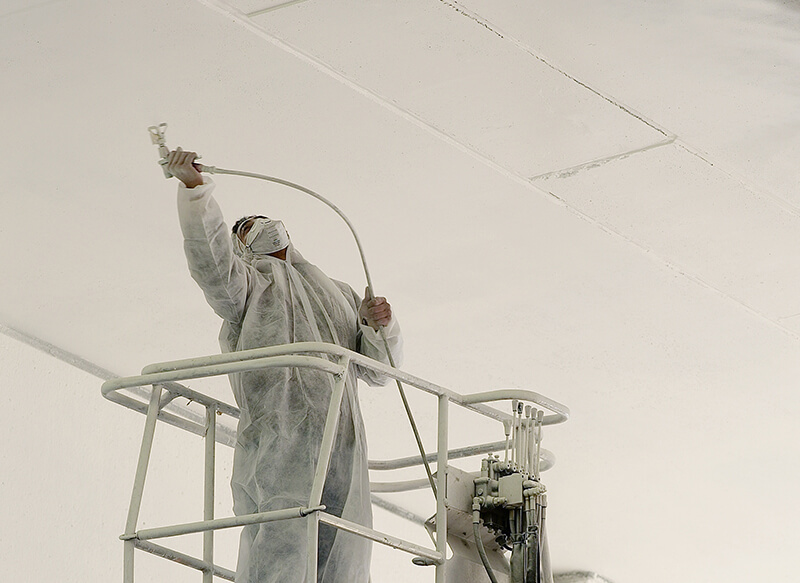
On-site paint spraying is exactly what it says on the tin – It’s a professional spray service carried out at your residential, commercial or industrial premises.

Whether your space needs a spruce up due to wear and tear, damage or vandalism, on-site spray painting will help to make your walls, ceilings, fixtures and fittings look like new again.

First impressions count, and often you don’t get a second chance to make a good one.

Maintaining and improving the look of your property with a re-paint can help your business to make a great one from the get-go. Helping to make tenants, customers and employees feel comfortable in their surroundings and more likely to stick around.

The Benefits Of On-Site Paint Spraying

By using high-quality coatings, on-site paint spraying can revive your tired-looking premises by giving them a top-quality refresh.

The top 4 benefits of paint spraying are…

1. It’s Quick

On-site paint spraying can cover extensive areas quickly. Saving you time and money, and causing minimal disruption to your business.

2. It’s Accessible

The nozzle on the paint sprayer allows for excellent precision to reach every nook and cranny. Giving you a seamless finish throughout your property.

3. It’s Even

A paint sprayer jets out fine droplets of paint to give your building a smooth, even and flawless finish from top to bottom.

4. It’s Affordable

On-site paint spraying will revitalise your premises and is an affordable alternative to a costly refurbishment or renovation.


Who Should Consider On-Site Paint Spraying?

From supermarkets to offices, retail units to student halls, manufacturing plants to flats, warehouses to restaurants and everything in between, you can consider on-site paint spraying for almost all industrial, retail, residential or commercial buildings.

Whether you require an internal or external paint job, professional paint spraying can give pretty much anything a new lease of life.

Other than walls and ceilings, a specialist paint contractor will be able to spray…

  • Cladding
  • Shutters
  • Window casings
  • Steelwork
  • Shop frontages
  • Soffits
  • Doors
  • Roofs
  • Radiators

Can’t see what you’re looking for? Just ask. Chances are on-site paint spraying can cover it!
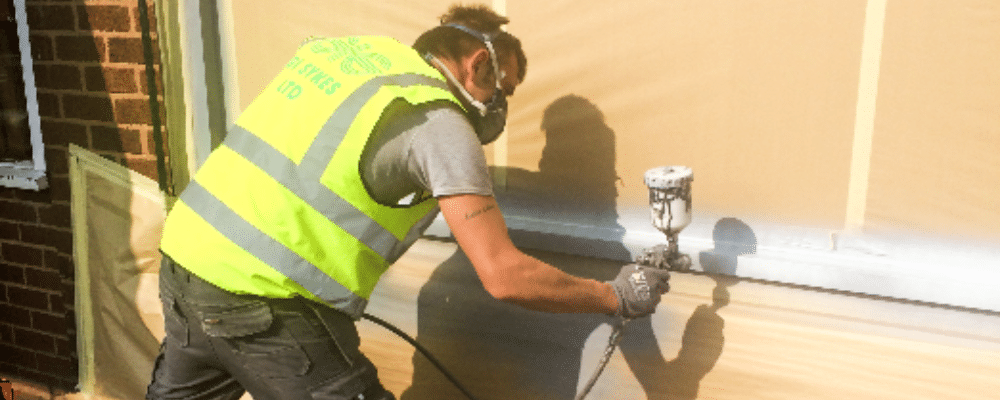
On-Site Paint Spraying

Are There Any Downsides?

Not really, but if we’re going to be picky…

Because of the way a sprayer turns the paint into a mist, it can linger in the air, so to avoid droplets landing on things you don’t want painted, it’ll have to be masked and a protective layer put down to cover the floor. Your contractor will do this for you, though so you’ve got nothing to worry about.

To achieve flawless full coverage, sprayers often use more paint than brushes and rollers. The cost of this won’t come as a shock, though, as an experienced sprayer will factor this into your quote before the job starts, so you know exactly how much it will cost.

If you’re planning an external spray, the weather may affect how your job progresses, as wind and rain can affect the direction and evenness of the paint mist. If needed, your contractor may temporarily put your job on hold to ensure the weather doesn’t affect the finish.

What To Look For In A Contractor

As with any preferred contractor, when you’re looking to appoint a professional to take care of your on-site paint spraying you need to check them out first.

To help you decide who’s right for you, follow these five steps…

  1. Ask for recommendations from people you trust who have had similar work done to a high standard.
  2. Find out if the contractor has trade-related accreditation and if it’s up-to-date.
  3. Check out their reviews and ask to see examples of previous work. A good contractor will have nothing to hide.
  4. Get a few quotes and compare like for like, ensuring they include everything you need.
  5. Don’t just go for the cheapest option. Often a contractor who refuses to cut corners will be more expensive.

Choosing a reputable contractor reduces the potential for things to go wrong, helping to protect your investment and give you peace of mind.

Is It Worth The Cost?

Can you afford to close your business completely for a total refurbishment? Do you want a quick turnaround to get new, paying tenants in? Could a quick lick of paint freshen things up to pull in new customers?

On-site paint spraying is a much cheaper option to revitalise your property than a total revamp, and it’s one of the best ways to get things looking new again with minimal disruption.

If you want a finish you can be proud to show off, paint spraying will give you just that.

Call or email us today, and we can let you know if on-site paint spraying is the best option to bring your building back to life.

Latest Articles

Previous
Next

Your Building Insulation Needs An Upgrade. Here’s Why.

Building Construction 14.03.23
planned maintenance 2

Request a FREE QUOTE

If you’d like to discuss a project you have we’d love to help.

Contact us today for a free no-obligation quote.

Get a quote

Building insulation. Hardly the most exciting purchase you can make, is it? But in actual fact, the right building insulation can make significant improvements to your office, warehouse or commercial property – some saving you money. Now, that’s more exciting, right?

So let’s talk building insulation and why upgrading yours could be the best thing you do all year…

What Is Building Insulation?

In case you’re not savvy with all things property related, we’ll cover what building insulation is before we get to why you might need an upgrade on it.

Insulating a building means including a thermal layer to minimise the transfer of heat from inside the property to the outside. Insulation has been used since the 1930s and as you can imagine, has improved over the decades. 

Nowadays, building insulation comes in a variety of materials, each offering differing benefits. They include; 

Spray foam insulation

Spray foam insulation is probably the most versatile building insulation on the market. It starts as a liquid which is sprayed onto the area that needs insulating, where it expands and hardens. Its rigid form makes it more consistent than other forms of insulation, and it can even repel water.


Insulation board

Insulation boards are the most common type of building insulation used. They are solid blocks of either Polyisocyanurate (PIR) or Polyurethane (PUR), and they provide excellent thermal efficiency.


Blanket

Blanket insulation, also known as roll or batt, is just as common as insulation board. Rather than having a rigid form, batt and roll is soft and flexible (it’s like a blanket, hence the name). Made from fibreglass, mineral wool and even sheep’s wool, it’s the cheapest insulation solution available and is favoured among loft insulation DIY-ers.

Multifoil

Multifoil has a clue in the name – this type of insulation uses layers of foil to trap and reflect heat back into a space. Some types of multifoil also have a fibre core or bubble structure to maximise their capabilities. Multifoil is the thinnest insulation solution on the market, making is ideal for places where space is tight.

Acoustic

Now, not all insulation is for keeping warmth in – some is designed to reduce sound travel. Acoustic insulation is a dense material made from fibreglass and mineral wool which absorbs soundwaves, helping to soundproof a room. Some thermal insulation materials, like sheep’s wool, are also good at soundproofing too.

Common Building Insulation Problems

So, what are the common problems we see with building insulation? 

Age

Insulation will degrade over the years, so if your building’s insulation was installed over 10 years ago, it might be starting to fail. It won’t be as effective as maintaining the heat so you’ll be paying more in energy bills.

Damp

Roof leaks, pipe leaks, and condensation caused by air gaps – these are just some of the reasons why your insulation might be wet. Needless to say, soggy insulation isn’t going to be much good at keeping your building warm, and worse still, it could cause mould growth. If left, mould can be harmful to your building’s occupants.

Damage

Pests like rats and mice love to make a home in your warm, soft insulation. If, following an inspection, you spot droppings or patchy insulation in some areas, you’re going to need to replace it all.

Hazardous Materials

If your building is really old and hasn’t had an insulation upgrade, you might still have asbestos insulation. Asbestos was the golden child of the construction industry for decades, with the 60s and 70s seeing over 170,000 tonnes imported to the UK. It was used as insulation for walls, lofts and pipes, as well as in roofing sheets and floor tiles. And then, it was discovered that it was the reason for the huge occurrence of cancer among those who used the material regularly. Asbestos was banned in 1999, but it is still present in thousands of buildings throughout the country.

The Benefits Of Upgrading Your Building Insulation

The key benefit to upgrading your building insulation is much improved thermal efficiency. New insulation can reduce your energy costs by up to 25%, so it can pay for itself in a short time.

But it’s not all about keeping warm – the soundproofing qualities are also highly useful. Whether you want to reduce infiltrating noise from outside or you want to prevent your disruptive work from annoying your neighbouring buildings, building insulation offers a brilliant solution.

Let’s not forget the safety aspect. If you own one of those buildings with asbestos insulation, it could be causing serious long-term harm. Anyone removing asbestos must be licensed to do so, so make sure you do your homework when collecting quotes.

And that’s still not all – cutting your heating use down reduces your carbon footprint.

How Long Does Upgrading Your Building Insulation Take?

Closing your business or building while your insulation is replaced might be one of the reasons you put it off – after all, it’s costing enough to have it upgraded, you really can’t afford to shut down too. 

Well, you can relax. Upgrading your building’s insulation can take a couple of days, but we can work around your business as much as possible so any disruption is minimised. We can even carry out your project over weekends or when your property isn’t being used. At GI Sykes, our flexibility and professionalism is one of the reasons we’re a preferred contractor for many property owners and building managers.

And How Much Does It Cost?

The cost of upgrading your insulation is dependent on many factors, such as the size of your building, the type of insulation you want and where the insulation is being installed. 

We are one of the UK’s leading specialists in spray foam insulation with decades of experience behind us. Our skilled team of insulation contractors take pride in their work, so you know that your investment will keep your energy costs lower for many years to come.

If you would like to know an exact cost, we’d be delighted to provide a no-obligation quote. We will make recommendations based on your building, your requirements and your budget and are happy to answer all of your questions. 

To arrange this, just get in touch by calling 01384 891341 or visiting our website.

Latest Articles

Previous
Next

Got a Project in mind?

If you’d like to discuss a project you have we’d love to help.

Contact us today for a free no-obligation quote.

Get a quote