Why Flat Roof Repair Is So Expensive?

Roofing 28.02.23
flat roof second

Request a FREE QUOTE

If you’d like to discuss a project you have we’d love to help.

Contact us today for a free no-obligation quote.

Get a quote

If you’re looking into repairing a flat roof, you probably have a few questions about it. The usual queries we get at GI Sykes are things like: ‘how long does flat roof repair take?’ and: ‘how do I know if I need to repair my flat roof?’. But the question we’re asked the most is ‘is repairing a flat roof expensive?’

Well, how long is a piece of string?

We’re joking, of course – but the reality is, estimating the cost of a flat roof repair means understanding just what the problem is and the extent of the work that needs to be done. It also depends on what you consider expensive – for some businesses, a couple of thousand pounds is a small amount to find; for others, it’s going to be tight. 

So, while we can’t give you a specific answer in this blog, we can outline the factors we use when pricing a roof repair. That way, you can a) understand our quote when we send it to you and b) make sure any other quotes you get includes everything to avoid any nasty ‘hidden’ extras.

Let’s get to it!

Flat Roofing Repairs: An Overview

Repairing a flat roof can mean anything from a quick patching job to a whole roof coating – and obviously, these carry very different costs. Below you’ll find a rundown of the common issues we carry out roof repairs on.

Alligatoring

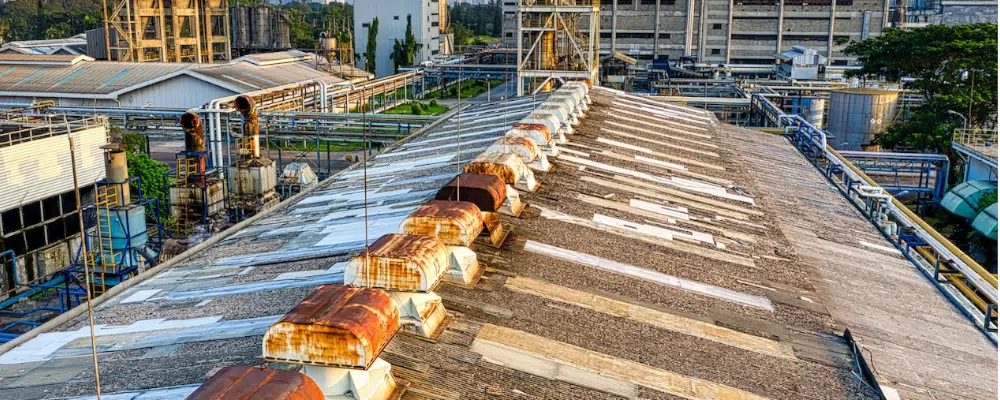
Alligatoring is a term used to describe one of the most common problems experienced with flat roofing. It’s when the asphalt used to coat your roof’s membrane starts to age. Over time, the asphalt loses its elasticity and starts to dry out, and as it does so, it begins to resemble the skin of an alligator. And while this might be a fashion statement on a handbag, it spells big trouble for your roof.

You see, asphalt is what keeps your roof watertight, so once that’s compromised, you are more likely to find other problems arise, like leaks.

Leaks & Water Ingress

You probably don’t need a blog to tell you that if water is coming through your roof, you need to get it repaired. So we won’t. But we will explain why it’s happening and what it means if you delay sorting it. 

Leaks happen because your roof coating has been jeopardised. That may be because of a tear, it may be because of total coating failure, or you might have a missing flashing. Whatever the reason, fixing the cause means you don’t risk more substantial problems with the structure of your roof or the ceiling below. Water seeping in can cause the wooden beams to rot, the plaster to come away and mould to form – all things you want to avoid.

Blistering

Bubbles or blisters in your flat roof mean that air has become trapped between the layers of the membrane. These blisters don’t pose an immediate threat, but the coating can crack over time, allowing water in. If you only have a few small blisters, you can keep an eye on their development and delay your flat roof repair for a short time; however, if there are lots of bubbles or they’re large, you should address the issue promptly.

Ponding & Pooling Water

If your roof has puddles that take a while to dry up following rain, you might have what’s known as ponding. It means that your flat roof is no longer completely flat but has areas where it has sunk. Water collects here rather than running off and, depending on how deep they are, can take a long time to dry out. 

Standing water on your flat roof can affect the integrity of the coating, add to the weight load of your roof, it can freeze and cause splits.


So, What Makes Repairing A Flat Roof Cost So Much?

Once the issue (or issues) has been identified, we will look at what we need to do to repair your roof. There are some things we’ll require for all jobs, and some are more specific. The factors we include for all flat roof repairs are;

Scaffolding

Most roofing work needs safe access and platforms for contractors to work from. Scaffolding adds to the cost of your project, but it also adds to its safety. 

Materials

It’s no secret that construction materials have been subjected to some rather eye-watering price increases over the last couple of years. Low stock, supply chain disruptions and increases in shipping, energy costs and fuel have meant that some products have gone up by 20% since 2020. 

Your flat roof repair cost will depend heavily on what materials we need. However, thankfully, a lot of the materials we use for roofing have started to drop in price, but things like timber are still fluctuating.

Quality

One factor that makes repairing a flat roof a costly venture is the quality of the contractor you use. You can probably find someone willing to carry out the work for a lesser price, but with so many rogue traders cashing in on people’s desire to cut costs, there’s a chance you end up with a roof repair that won’t last – or worse still, that never happens.

We all know the horror stories of customers handing over hefty deposits for work that doesn’t get done. And it’s sadly all too common. 

GI Sykes has been around for half a decade – we’re certainly not going anywhere! We employ all of our staff rather than use sub-contractors; each is highly experienced and trained in their trade. We wholeheartedly stand by the quality of our workmanship and guarantee it, so you know that your roof repair is an investment that will see you right for years to come.

Plant & Equipment

Like our people, we only use the most effective and reliable machinery, which is regularly serviced and maintained. It ensures the safety of the operatives, the safety of your building and delivers a better job. 

Insurance

If you own a company, you’ll know that commercial insurance is an essential cost of business. We carry the highest levels of insurance, which protects you just as much as us when we’re working on your premises. 


Flat Roof Repair: Expensive, But Cheaper Than Flat Roof Replacement!

So there you have it, some of the reasons why repairing a flat roof costs what it does. But before you dismiss your roofing issue as one you can ignore, have a quick Google for the cost of roof replacement – it’s a whole lot MORE expensive!

If you want to talk to us about any issues you have with your flat roof, please get in touch. We can arrange a no-obligation consultation so you can find out exactly what it’ll cost to have it repaired.

Latest Articles

Previous
Next

3 Things To Consider When Choosing Your New Industrial Flooring

Building Construction 14.02.23
walkways 2

Request a FREE QUOTE

If you’d like to discuss a project you have we’d love to help.

Contact us today for a free no-obligation quote.

Get a quote

Many businesses don’t realise they’ve got the wrong industrial flooring fitted until something goes wrong. Wear and tear, damage and uneven surfaces create a hazardous working environment. Leaving you and your business exposed to risk.

Whether your industrial space is a factory, manufacturing unit or engineering facility, your floors will be subjected to heavy footfall bringing with it dirt, bacteria and dust. As well as accidental spillages of liquids, such as oil, can be difficult to clean and cause irreversible damage.

That’s why your industrial flooring needs to match the specific requirements of your business. The correct flooring should be tough, hygienic and safe. Ensuring your investment lasts for longer, creating an easy-to-clean space and helping to prevent slips, trips and falls.

The 3 Most Important Things To Consider When Investing In Industrial Flooring


1. The Function Of Your Space

What happens within your space will have a direct bearing on the type of industrial flooring you should choose. Does it need to prioritise hygiene? Will it be supporting the weight of heavy machinery? Do lots of liquids get used?

The types of industrial flooring available are…

  • Epoxy Resin (including self-levelling)

An epoxy floor will give you exceptional durability, is easy to maintain and can be enhanced with non-slip and decorative finishes. Epoxy resin has incredible strength and can withstand high impact, making it a brilliant choice for busy and hygienic working environments.

  • PU Resin

Polyurethane resin is a softer substance than epoxy, but it is still extremely heavy-duty and hard-wearing. PU resin flooring has great chemical and organic acid resistance to corrosion, and is a superb choice for spaces where leakage or spillage of these substances might be expected.

  • Polished Concrete

Often used in areas where there is heavy equipment, polished concrete flooring is almost impossible to damage because of its incredible strength. The sealed finish is resistant to chemical corrosion, and its smooth surface makes it easy to keep clean.

  • Vinyl

Vinyl flooring comes in many designs, colours and finishes enabling you to add some character and style to your industrial flooring. It’s easy to install, durable, waterproof and slip-resistant. Making it a good option for commercial safety flooring where footfall is high and regular cleaning products are used.

  • Rubber

The properties of rubber flooring make it more cushioned than other options and an ideal industrial flooring solution if people are standing for long periods of time. It’s easy to clean, antimicrobial, sustainable and offers a good grip to help people stay on their feet.


2. How Much Maintenance Will Your New Industrial Flooring Need?

Every type of industrial flooring will need regular maintenance to keep it in tip-top condition. Helping to ensure they remain safe, functional and looking great.

The type of maintenance required will depend on the flooring you’ve installed, but all flooring will benefit from regular sweeping and mopping, using the recommended detergent, to keep dirt and debris at bay.

If your flooring had a sealant or anti-slip coating applied, it’s important this is reapplied as advised to prevent corrosion and staining, and potential safety risks.

Regular upkeep of your industrial flooring will help it last for longer, but on average…

  • PU resin flooring lasts 10 years.
  • Epoxy resin flooring lasts 10-20 years.
  • Vinyl flooring lasts 10-20 years.
  • Rubber flooring lasts 20 years.
  • Polished concrete flooring lasts up to 100 years!

3. Do You Need Zones?

The large open space of industrial spaces often needs to be divided into different zones, and depending on the use of a zone you may require different types of industrial flooring.

For example, if you have a manufacturing zone with heavy machinery, you might consider polished concrete for its super weight-bearing strength. Whereas, softer rubber flooring may be a better choice for a packaging zone where employees stand beside a conveyor for long periods of time. Or a bright-coloured vinyl could illuminate an area with little to no natural light.

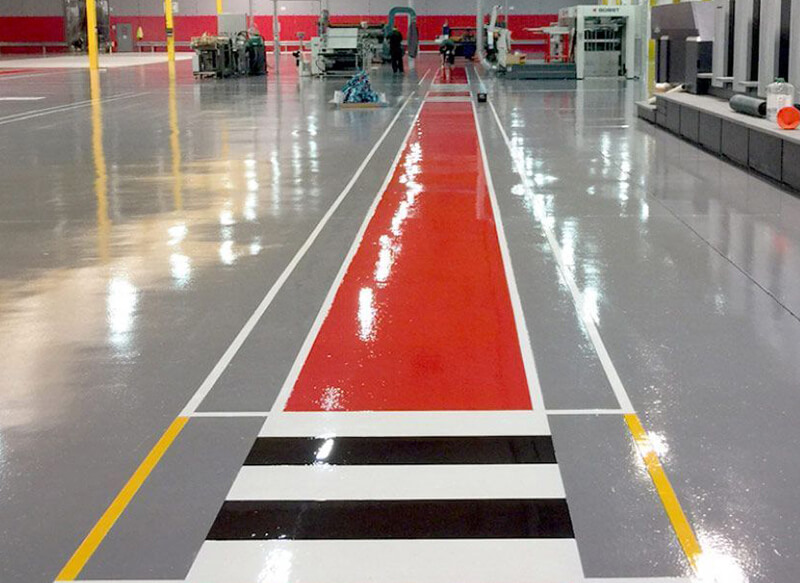
Industrial flooring can also be used effectively to make a clear visual definition between zones, highlight hazardous areas and create walkways. You can read more about that in our blog post about walkways and internal line marking here…


Other Things To Consider

Affordability

The cost of your industrial flooring will depend on the type you choose and the space it has to cover. If you’re on a tight budget vinyl flooring is a cost-effective option, however it’s worth remembering that it may need to be replaced sooner than more expensive flooring solutions such as rubber or polished concrete.

Disruption

If your industrial space is a new build, this shouldn’t be an issue, but when business is already up and running, you probably won’t have the option to shut down for long in order to have your new flooring installed. To overcome this rubber and vinyl could be laid in sections, whereas polished concrete, epoxy and PU resin flooring should be poured in its entirety to prevent joint lines.

How quickly your industrial flooring will take to be able to walk on depends on its type…

  • Epoxy and PU resins – typically 12-24 hours.
  • Vinyl and rubber – approx. 24 hours.
  • Polished concrete – up to 48 hours after the concrete pour.

Health & Safety

When you’re selecting your industrial flooring, you need to ensure that it meets the necessary health and safety standards and requirements. This will help to protect you should anything go wrong.

Non-slip options or additional coatings are a fantastic choice to help prevent avoidable accidents, and antimicrobial solutions can help to keep nasty bugs and bacteria from spreading. Ensuring a happy, healthy and productive workforce.

For more information on antibacterial coatings click here…

Selecting Specialist Flooring Experts Will Ensure Your Industrial Flooring Is Up To Standard

Don’t be floored by flooring!

We’re here to help.

With over 50 years of commercial contracting experience, knowledge and skills, GI Sykes knows a thing or two about industrial flooring.

We’ll make sure that you select the right product for your property, and our expert team of flooring specialists will install it to the highest standard to give you total peace of mind for years to come.

For a FREE consultation and quotation for your industrial flooring, please get in touch.

Latest Articles

Previous
Next

Got a Project in mind?

If you’d like to discuss a project you have we’d love to help.

Contact us today for a free no-obligation quote.

Get a quote