Commercial Decorating 101: Everything You Need To Know

Building Repairs 28.05.23
industrila painting

Request a FREE QUOTE

If you’d like to discuss a project you have we’d love to help.

Contact us today for a free no-obligation quote.

Get a quote


Is your building looking a bit tired from the outside? Or maybe it’s the interiors that need a bit of a makeover. 

Either way, commercial decorating will be high on your agenda. Commercial decor is similar to domestic decor; it just tends to be on a larger scale and uses more industrial materials. 

But what does commercial decorating include? And what should you be asking for?

You’re about to find out.

Commercial Decorating: The Whole Building

Commercial decorating covers the inside and outside of the building; at GI Sykes, we’ve got you covered. 

But why should you bother? Why is commercial decorating so important?

It’s simple. If you own the business that runs from your property, how you portray your business through the aesthetic of the building will have an effect on both your employees and any visiting customers. 

No one wants to work in a shabby office block; we want to feel comfortable – and even proud – of where we work. And for potential and existing customers, a clean, smart and stylish business hub says much about how you run things. 

And if you’re simply the property owner? The people who rent your spaces will expect and may even pay more for a building that gives them a professional and upmarket appearance.  

Every building will need different tasks undertaken to achieve the desired result. For example, a warehouse will require very different aesthetics than a retail business. So next, we’ll explore some of the typical services that commercial decorators tend to offer.  

Interior Commercial Decorating

Let’s start inside the building. Here is a list of some of the aspects commercial decorators can tackle.

Walls And Ceilings

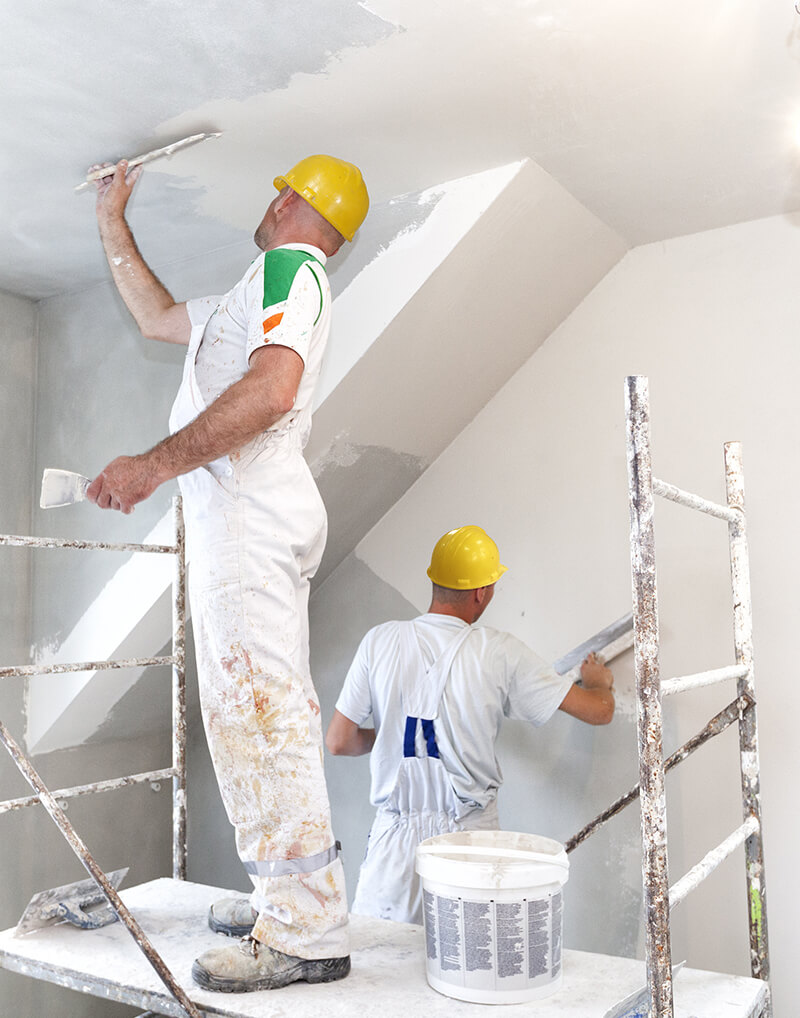
When you want to revamp the walls and ceilings of a building, you’re looking at a huge job. Undertaking the whole thing yourself is unlikely to be something you have the time or experience for. (Think about all of that cutting in!)

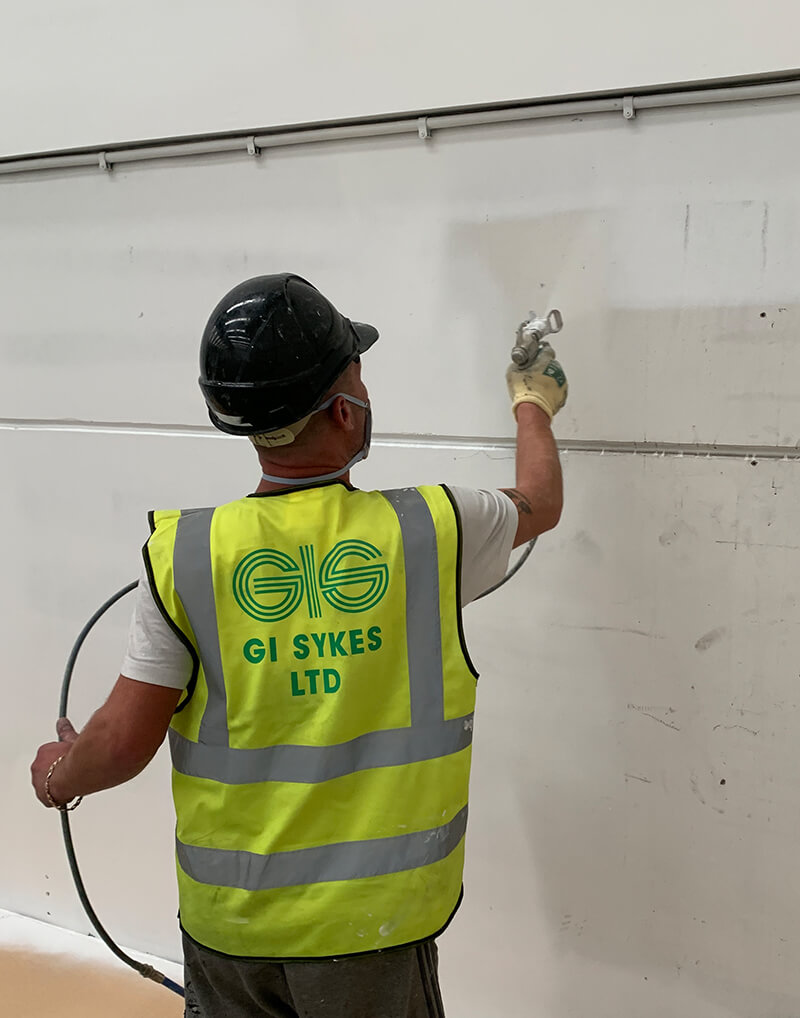
Whether the decorating is driven by a rebrand or tired walls and ceilings that need a bit of love, commercial decorators can deliver an exceptionally pristine finish that will inspire employees and give potential customers a good impression. 

Not sure what colour to choose? There’s a huge choice of shades to browse. And if you’ve got something specific in mind, we can even mix colours to your requirements. Either way, commercial decorators like GI Sykes can offer professional advice and guidance on colours and finishes. 

Stairways

Decorating business premises is a world away from decorating your house. 

Often, your building will feature numerous multi-storey stairwells, and these can begin to look worn quickly due to the sheer amount of footfall they experience daily. And, on a more practical level, they are extremely tricky to decorate because of their size, height and awkward angles. 

Commercial decorators have extensive experience in tackling stairwells and know how to work safely to achieve the look you’re going for. Their expertise also lends itself to providing a fast and seamless finish, and they will be able to advise you on various durable paints that work well in high-traffic areas, meaning your stairwells will look great for longer.


Doors And Woodwork

Doors and woodwork shouldn’t go ignored and can greatly impact how your building looks. 

If it’s a new look you’re after, simply changing the colour can work wonders. Or if a rebrand is on the table, doors and woodwork can be painted (or stripped) to match the colour scheme and transform the building from drab to modern.

And it doesn’t just stop at wooden doors; we can revamp steel and aluminium doors and frames too. 

Exterior Commercial Decorating

How your building looks from the outside speaks volumes. Here are some ways commercial decorators can improve the appearance of your building’s exterior.

Window Frames

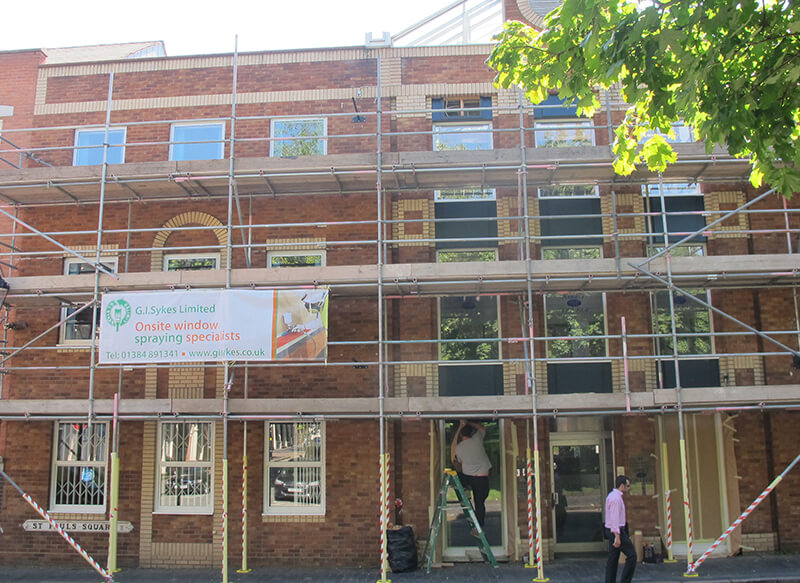
For worn and discoloured window frames that look dull and in poor condition, GI Sykes can give them a new lease of life.

Spraying the window frames of your property can improve how it looks externally and also help to protect against weathering. Whether it’s a rebrand and a change of colour, or just a touch-up to keep your building looking fresh, spraying the window frames is a relatively small job that reaps big rewards. 

Cladding

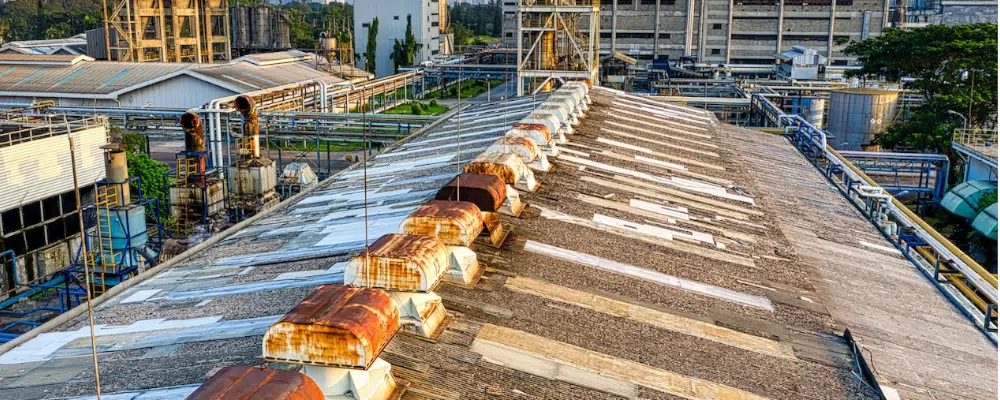
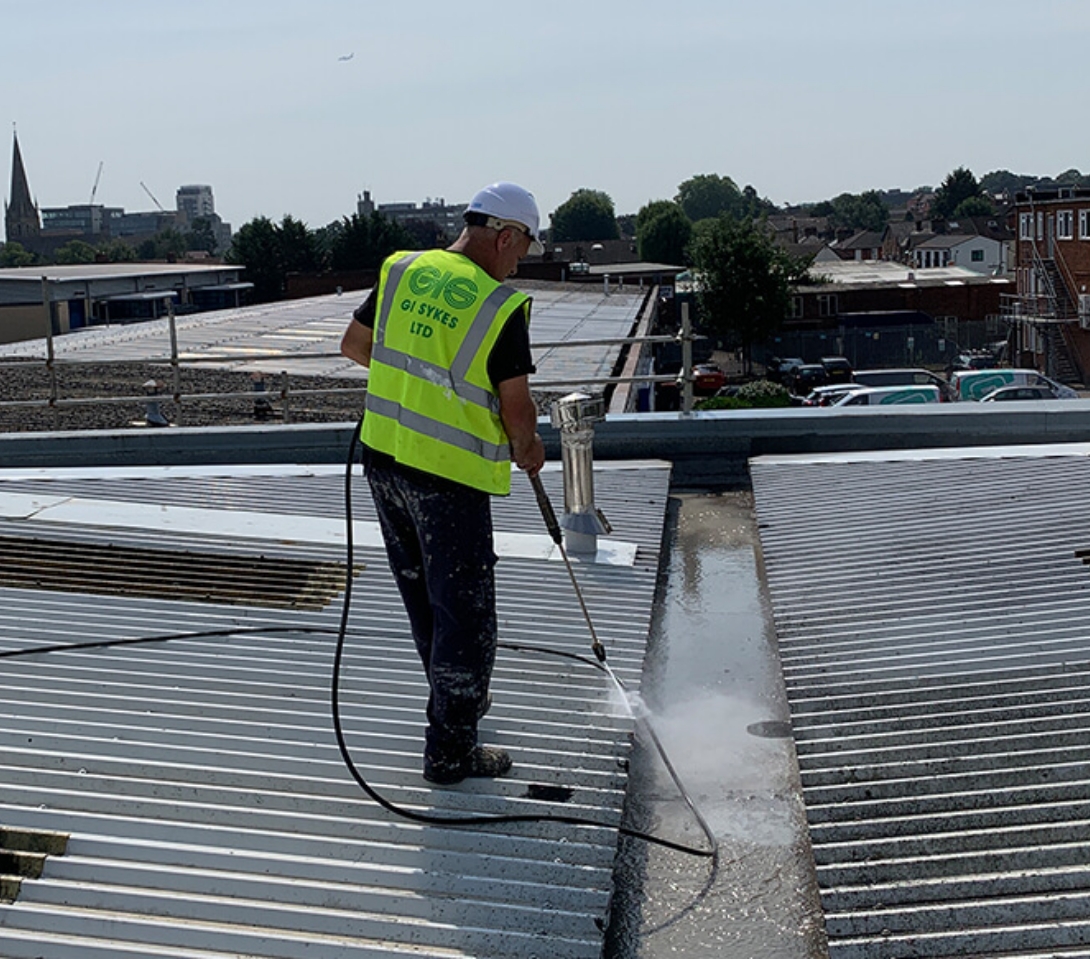
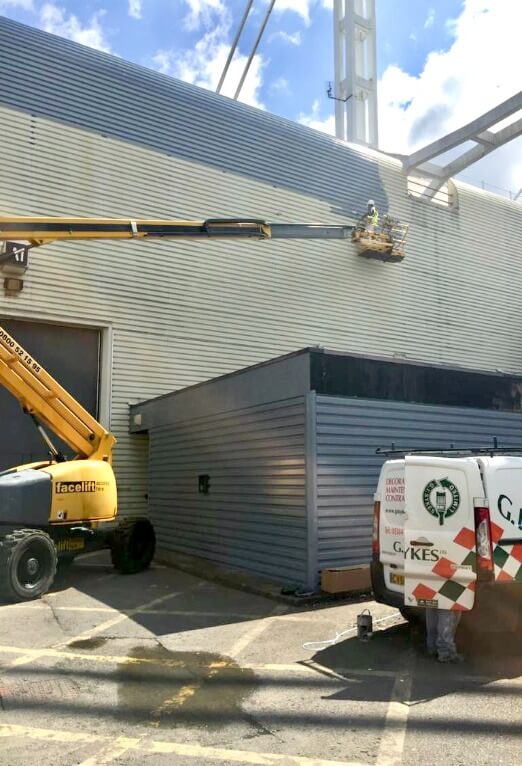
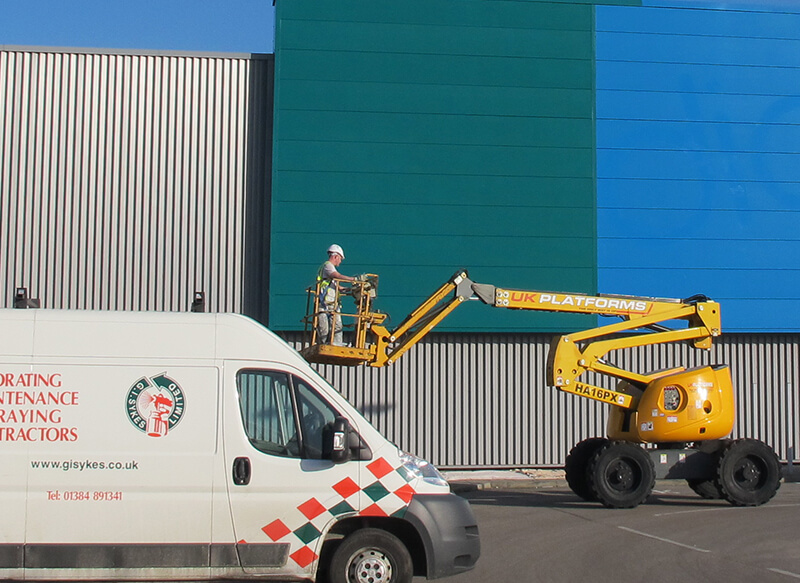
GI Sykes are market-leading commercial cladding maintenance specialists, and we’re experts at spraying it, too.

Long-lasting and perfect for protecting your building from the weather, cladding is a feature of many commercial properties UK-wide. But when it looks dull and dirty or has been damaged, it can become a risk to the structure of the building, not to mention give a poor impression of your corporate image. 

To transform your exterior, get commercial decorators to apply a fresh coat of specialist paint, fix any parts suffering from the usual wear and tear and organise routine, annual maintenance checks to ensure your cladding remains in good nick.

Your cladding is an integral part of your property; not only does it protect your building from the worst of the weather, but it also serves as a visual representation of your business. Dull, damaged and dirty cladding is a risk to both your structure and your corporate image. Update the colour with our onsite spraying and maintain it with our commercial cladding maintenance service. This will ensure that the condition of your cladding is protected and preserved as time goes on. 


External Walls

Paintwork, inside and out, can suffer in busy commercial and industrial environments. External walls can become marked and unsightly, even to the point where it begins to devalue your property, not to mention your reputation.

With over 100 years of combined industrial and commercial decorating, GI Sykes can quickly and expertly refresh external walls, improving the appearance of your premises, protecting it against graffiti and giving them a professional flourish that will impress clients and improve your corporate image. 

What Makes A Commercial Decorating Company Professional?

We knew you’d ask.

When you bring in a commercial decorating company, you can spot the signs of professionalism through these four main areas:

Experience

Professional commercial decorators will have extensive experience in all areas of their trade and be able to prove it. 

GI Sykes is a fourth-generation family-owned and operated contracting business with a strong team of over 65. Between us, we have over 100 years of experience doing what we love, and doing it well – you can read all about the exceptional work we do in our case studies. 

Training

Extensive and appropriate training and development for all workers is a crucial part of running a commercial decorating business, and GI Sykes doesn’t take this element of professionalism lightly.

Not only does every contractor and technician we bring on board hold exceptional ability and skill at protecting your building, but ongoing training and development in their areas of expertise also keep our standards high and our minds engaged.  

Accreditations

Professional commercial decorators will hold extensive and up-to-date qualifications and accreditations that are recognised in the industry.

GI Sykes has been delivering excellence for 55 years and is fully insured and qualified. A few of the organisations we are approved by and registered with include:

  • CHAS, the UK leader in compliance and risk management
  • Constructionline, a register for pre-qualified contractors and consultants in the construction industry
  • The FMB, a UK trade association that protects small and medium-sized building firms
  • The NHBC, an organisation that provides consumer protection for homebuyers through its 10-year Buildmark warranty

To find out more about us, head to our website.

Why Invest In Commercial Decorating?

When you fork out for commercial decorating for your property, you’re ensuring any work carried out is completed to the highest level, leaving you with a professional finish.

Quality Products

Commercial decorators like GI Sykes will use professional quality paint and other materials that aren’t available to the public. This stuff is far superior to the off-the-shelf equivalent you’d find in a hardware store, meaning your money is well spent, and the work will last.

Speed 

Need to schedule a partial or whole school revamp? Book us in for the holidays, and we’ll be sure to transform your space before the kids are due back.

With a team of over 65 expert contractors at our disposal, any jobs we’re hired to do – no matter their complexity – happen fast and leave our customers smiling. 

Insurance 

Insurance is a must, no matter the project, and it protects both the contractor and the client.

Any competent and professional building contractor should have insurance that covers the type of work you’ve booked them for, including public liability insurance. GI Sykes are insured to the highest standard, giving you peace of mind that should anything go wrong, you, your property and your people are protected. 

Complex Jobs

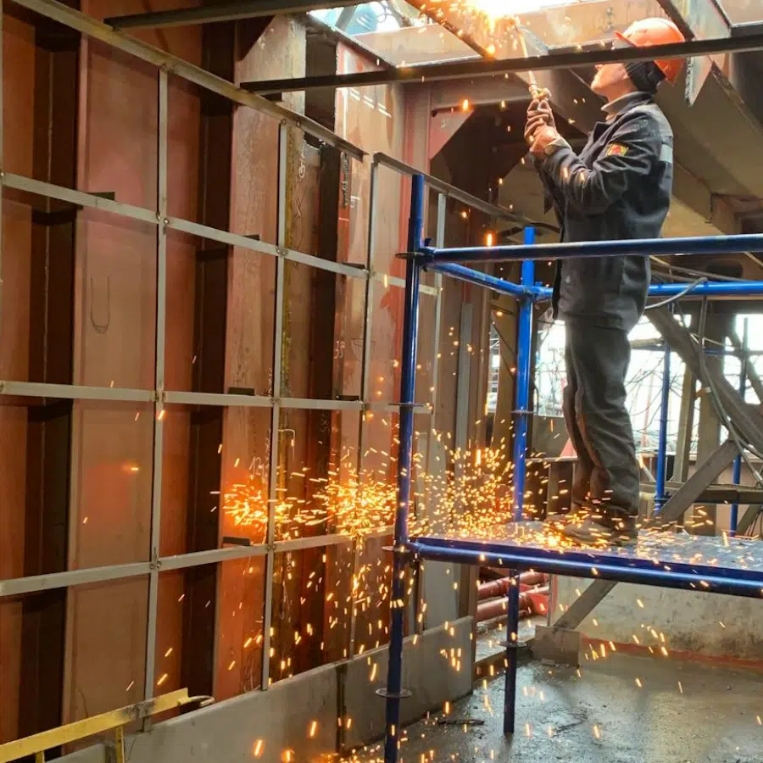
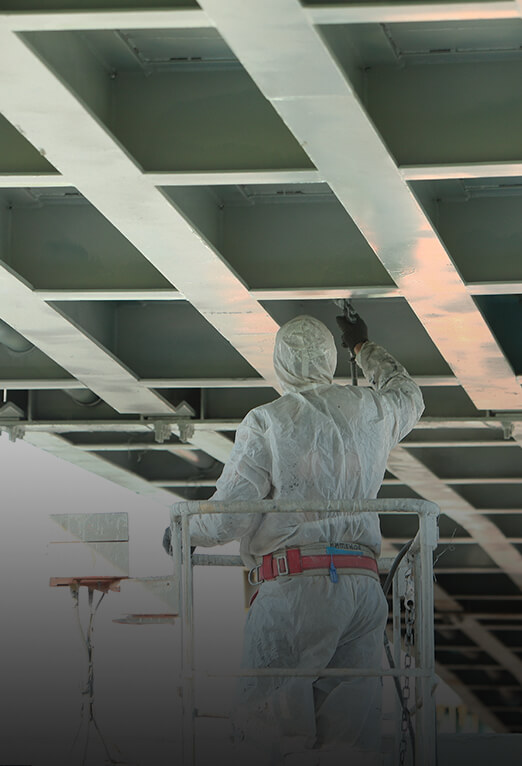
Professional commercial decorating contractors are highly skilled at carrying out complex jobs, like painting stairwells, spraying cladding – even at height – and treating the steel structure of your building with intumescent paint to protect it against fire. 

Professional Service And Minimum Disruption

When a commercial decorating company carries out a job in your building, they cover and protect all exposed equipment and fixtures like radiators, carpets and machinery. 

With GI Sykes, your satisfaction is our top priority. You won’t find us cutting corners! We turn up when we’re supposed to and work as quickly and quietly as possible without compromising the quality of the finish. 

Quality Customer Service

GI Sykes hold many an accreditation, including ISO 9001 and ISO 4001, which ensure quality customer service and environmental management systems respectively. 

If you choose to work with GI Sykes to transform your property, you’ll experience the values of a family-run business alongside the capabilities of a large commercial contractor. 

Safety-Conscious

Whether it’s steel fireproofing or epoxy resin floor treatments you’re after, our contractors are qualified, trained and insured – and have everyone’s safety front of mind. 

What Do We Decorate?

GI Sykes are award-winning commercial decorators with a competitive pricing structure and outstanding customer service. We have been providing quality workmanship nationwide since 1965.

As for what sort of buildings we decorate, the sky is the limit. So far, we’ve transformed…

  • Schools
  • Offices
  • Hotels
  • Retail units
  • Industrial buildings
  • Warehouses
  • Offices, and
  • Public buildings.

(And, not to brag, but some of the names we’ve worked with include Tesco, McDonald’s, Starbucks, Audi and the NHS).

Commercial Decorating Emphasises The Value Of Your Business

Getting in professional commercial decorators to enhance the look and protect the structure of your building isn’t just about saving time; it’s about increasing value.

A freshly decorated workspace can increase employee engagement and productivity, impress new and existing clients and even save lives if disaster strikes.

Have you been looking into commercial decorating for your property? Click this link for a free, no-obligation quote and take the stress out of commercial decorating today.

Latest Articles

Previous
Next

Does Your Building Have The Right Fire Protection?

Building Construction 14.05.23
commercial spraying done

Request a FREE QUOTE

If you’d like to discuss a project you have we’d love to help.

Contact us today for a free no-obligation quote.

Get a quote

Fire protection is an important issue. Fire safety regulations can feel overwhelming, but it’s not enough to simply ignore them as if they’re an added expense. 

While it costs money to get fire protection right, it could save lives. And hopefully, you’ll never need to use it.

What Is Fire Protection In A Building?

Fire protection in a building refers to the safety features and systems in place to limit or stop the effects of a fire. You will encounter two categories of fire protection in a building, so let’s take a look at both. 

Active Fire Protection

This term refers to methods of fire protection that kick into action in response to a fire. They are the systems that we generally associate with fire protection and tend to be highly visible within a building. 

Examples of active fire protection include:

  • Sprinklers. Sprinkler systems use water to suppress fires by raining down on the flames.
  • Alarms. These products detect heat, smoke and flames and alert the building’s occupants to emergencies.
  • Suppression systems. Extinguishers and fire hoses are both types of fire suppression systems that use foam and inert gases to put a fire out or prevent it from escalating.

Passive Fire Protection

Passive fire protection describes measures taken that minimise potential fire damage. It is a crucial part of any building’s fire safety strategy because it helps to slow the spread of fire and reduce its intensity, protecting the people in the building, as well as the building itself. 

There are many passive fire protection systems, including fire-rated coatings for ceilings and walls, specialist flooring and other structural elements like the reinforcement of columns and beams to withstand the intense heat of a fire for longer.

It’s this element – the ability of the building to take the devastating effects of the fire and hold steady for a longer period – that gives you more time to complete a full evacuation. And a slower spread of fire means not only are your people safer, but your belongings are too. 

Let’s take a closer look at passive fire protection options.

Intumescent Coatings

Intumescent coatings are specialist paints and sprays that a specialist contractor can apply to the steel structure of your building to protect it against fire. When steel gets to a certain temperature, it begins to fail. When a building’s steel structure falters, the integrity of the entire building is jeopardised, and this places the inside people at a far greater risk. 

Because intumescent steel coatings enable the steel structure of a building to remain intact for much longer, emergency services have enough time to evacuate anyone inside it and stop the spread of the fire. 

How It Works

Intumescent steel coatings react to extreme heat. So, in the event of a fire, the specialist paint swells up to a whopping 50 times its thickness, and this protects the steel aspects underneath for up to two hours of full fire protection. 

Fire Protection Coatings

Where intumescent steel coatings specifically protect the steel aspects of your building’s structure, fire protection coatings are an umbrella term for paints and sprays that protect your walls and ceilings.

How It Works

As with all passive fire protection systems, the aim is to save lives, reduce business losses and protect the building itself. When fire hits, walls and ceilings can crumble and fall, posing a severe risk to anyone and anything inside and potentially hindering evacuation.

Fire protection coatings can be applied to the walls and ceilings of your building to form a protective layer against the fire, prolonging their integrity and preventing structural failure. The coating expands when exposed to extreme heat, defending the building against fire from 60 minutes to 120 minutes while evacuating. 

Suspended Ceilings 

You’ll likely have come across suspended ceilings at some point without knowing what they’re called, or why they’re used.

A suspended ceiling is a false ceiling that sits below the existing ceiling of a room, often found in commercial settings like offices and shops. It is constructed from tiles and a metal framework that hangs from the structural ceiling above and can be installed to easily hide pipes and wires. 

Not all suspended ceiling tiles are fire-rated, but the introduction of fire-safe ceiling tiles can play a crucial role in the event of a fire. 

How It Works

Not only does a suspended ceiling mean you can unobtrusively run pipes for a sprinkler system, but fire-rated ceiling tiles can help to slow down a fire in action. 

Fire-rated ceiling tiles are made from materials that are less ignitable and have been rigorously tested to check their performance at various stages of a fire. When you install a fire-rated suspended ceiling, you’re ensuring your ceiling system won’t contribute to both:

  • The development or growth of a fire and reduce the time available for evacuation and put the building and its contents at higher risk.
  • The production of smoke that could seriously impair people inside the building. 

Fire Doors

The main role of a fire door is to provide a safe route out in the event of a fire. But it also helps to compartment a building. 

Compartmentation is a fire protection strategy that involves splitting a building, or part of a building, into multiple spaces or storeys to prevent the spread of fire through it. 

How It Works

Treating compartment walls and floors with fire-resisting paints and sprays, as well as fitting the appropriate doors, compartment lines and ductwork, for example, ensures their structure isn’t compromised during a fire and that it is not allowed to spread easily.  

Fire doors themselves are a key element of compartmentation and usually feature intumescent strips or a cold smoke seal. This prevents smoke from seeping from room to room.


What Is The Law On Fire Protection?

Every business should appoint a ‘Responsible Person’ for all things fire safety, but it’s a great idea to get everyone up to speed on UK fire safety legislation. Here’s the low down:

Fire Risk Assessment

If you have fewer than 4 employees, your fire risk assessment doesn’t need to be written down – but we recommend you do. It’s just easier. It’s also best practice to use a professional fire risk assessor to help your Responsible Person complete the document unless they are confident in the area.

Your fire risk assessment must be reviewed regularly and kept up-to-date, and it’s one of the first things an inspecting officer will expect to see.

Fire Safety Log Book

A fire safety log book is a resource dedicated to recording the location and state of fire safety equipment in the building, as well as specifying any actions that need to be taken to maintain fire safety. This enables procedures and equipment to be kept within the realms of safe and stringent legislation here in the UK.

It also means this vital information is all stored in an easy-to-digest format for anyone who reads it, including your inspecting fire safety officer. 

Fire Fighting Equipment

In the UK, it’s the law to provide appropriate fire-fighting equipment. Usually, this legislation refers to the usual portable fire extinguishers, but it might be necessary for higher-risk businesses like restaurants to install sprinklers or hose reels because they are more likely to experience the threat of a fire. 

There are varying types of fire extinguishers, so the one you’ve got must be correct, and it must be maintained by way of an annual test, completed by a competent person, to ensure it’s in good working order. Some extinguishers may even need to be certified. 

Signage

This might not be front of mind when we’re talking fire safety, but correct and proper signage plays a big role in fire safety compliance for your business. 

Not sure what we mean? Here are some of the fire safety signs your business might need to put into place:

  • Fire extinguisher ID sign. This is a mandatory sign that locates each extinguisher and explains what they are for.
  • Fire alarm call point signs. Another mandatory sign (if you have an alarm). This sign identifies where you can activate the fire alarm itself.
  • Fire action notice. This sign is crucial, and mandatory for all premises because it explains what to do in the event of a fire. 

Fire Detection System

All premises must have a fire detection system in place, and it must be tested weekly to ensure compliance with UK legislation. 

To ensure the system works well, it must also be maintained monthly by a competent person and serviced at least every 6 months. 

There are two types of fire detection systems:

  • Automatic fire detection systems are required if an active fire could go undetected or block routes out of the building. These kick in by detecting smoke in the air and immediately sounding an alarm. 
  • Manual fire detection describes simpler systems that require human intervention to work. You might remember being tempted to break into these at school. They are positioned strategically throughout a building and are often triggered by breaking a glass screen.


Emergency Lighting

When a fire occurs, normal lighting commonly fails, making it harder for people to evacuate and emergency services to fight the fire. Emergency lighting is, therefore, a mandatory fire protection feature for UK business properties. 

The three main types of emergency lighting are as follows: 

  • High-risk area lighting, to help workers of high-risk processes and tasks, like operating machinery or handling dangerous goods, shut down potentially dangerous processes.
  • Open area lighting, to highlight the communal areas of the building and reduce panic.
  • Escape route lighting, to illuminate exits and fire fighting equipment.

The Right Fire Protection Can Save Lives 

The UK legislation surrounding fire safety and protection is stringent because it needs to keep people and properties as safe as possible in the event of a fire. 

Understanding your obligations can be confusing, but we are here to help. GI Sykes can help make your building as safe as possible so that you know your people are protected if catastrophe strikes.

Not sure if your building or property is fire-ready? Contact us to discuss fire safety and protect your people.

Latest Articles

Previous
Next

5 Things That Can Go Wrong With Building Renovations

Building Repairs 28.04.23
window spraying 2

Request a FREE QUOTE

If you’d like to discuss a project you have we’d love to help.

Contact us today for a free no-obligation quote.

Get a quote


Planning on renovating a property? Looking into building renovations? Sometimes things don’t go to plan…

Uncovered ground might need resurfacing, a room might be painted using the wrong colour, a foot could go through a ceiling… Or, a new kitchen could be installed in completely the wrong property. 

Yep, you read that right. A newspaper reported that builders recently began renovating a kitchen in the wrong house – the very same property that also experienced uninvited gardeners beginning work the year before. It’s quite a read!

Whether you’re new to commercial building renovations or an old hand, it can be a stressful and time-consuming process. So to avoid a building renovation disaster, it’s wise to plan for the project by being fully aware of what could go wrong. 

Here are 5 of the most common issues that come up during building renovations.

1 – Uncovering Existing Problems 

Not everything is highlighted on a building survey, and the uncovering of further problems happens more often than not. Knock down a wall, and you might stumble upon a bad damp situation. A suspended ceiling is great at concealing cracks. Or you might think you’re replacing a dodgy light switch, and before you know it the whole property needs rewiring. 

Once you start taking things apart, you begin to uncover what’s lurking underneath. And what you find can cause big delays and even blow your budget. The situation can be especially catastrophic when you’re renovating an old property that has been sitting untouched for years. 

Be prepared for the worst, just in case, with a hefty contingency budget. Somewhere between 10% and 20% of the overall build budget is a healthy amount, but the more, the better. This way even the nastiest of surprises can be sorted as quickly as possible, avoiding delays and getting your project completed on time.


2 – Weather Delays

You only have to watch the news to understand how troublesome weird weather can be in the UK.

Some building renovations rely on a stretch of good weather to get the bulk of it underway. This is all well and good until you hit a spate of bad weather that doesn’t seem to be shifting… Suddenly, your project is months behind where it should be.

And we don’t necessarily mean rain and snow, either. The intense temperatures of recent summer heat waves have led to water shortages and even buckling railways, meaning construction work can end up being extremely unsafe. Whatever the season, weather can be an issue.

It’s inherently frustrating, but there isn’t much you can do if this happens during your building renovations. If you’re planning building renovations such as an extension, or a new flat roof, all you can do is protect the property as best you can whilst you wait for the adverse weather conditions to blow over. 

3 – Material Shortages

Covid, Brexit and industrial strikes have all contributed to some intense material shortages in the construction industry. 

High demand for building materials, alongside shipping problems and labour shortages, meant that even throughout 2022, prices were higher than ever. Whilst materials are more readily accessible now, the butterfly effects of the initial shortages are still a very real problem; one you’re likely to come up against if you’re planning building renovations for your property. 

When you’re considering who to use for building renovations, bear in mind that a bigger contractor has a more robust supply chain and overall better relationships with merchants. They can call in favours left, right and centre, meaning that they can leverage their position to get the materials you need at a better price and faster. Smaller contractors and one-man-bands are less likely to access everything you need in good time. 


4 –  Bad Workmanship

You could have access to the best quality products and materials in the world… but in the wrong hands, it’s still a disaster waiting to happen. 

Cowboy contractors are rife, and they’re good at pulling the wool over your eyes. It’s a sad fact, but a fact all the same. These professional imposters are true experts, doing a slapdash job and charging you through the teeth for it before ghosting you and avoiding your attempts to contact them. 

Usually, this means time and money spent chasing them for what they owe you, plus the cost of re-doing the shoddy and potentially unsafe building renovations they left you with. The whole thing is devastating, and hearing stories from the victims of cowboy contractors is painful, to say the least. 

To prevent this from happening, it’s on you to do your homework. Perform extreme due diligence. Check all available reviews, read as many case studies as you can get your hands on and ascertain what qualifications, certifications and professional memberships they hold. 

5 – Contractor Pile Up

Large-scale building renovations rely upon many trade professionals working together.

If you choose to use different contractors, you run the risk of things going awry because the completion of each and every stage is dependent on the completion of the step before… 

If the carpenter you’ve brought on board isn’t finished with his current job in time for yours, the electrician that’s supposed to be coming next Monday won’t be able to get his work done. Or if the electrician is delayed, this will hold up the plasterer.

There are lots of moving parts when you’re undertaking building renovations, and project management is a full-time job. Not to mention an exhausting one. Using a contractor that encompasses all trades means you can hand the reins of responsibility to someone else. 

And, as an added bonus, you can rest assured that each trade worker is a professional, sailing you swiftly past the issues raised in point 4. 

Reduce The Stress Of Your Building Renovations


There are no two ways about it. Renovations are stressful, and renovations are complicated. There are so many, but you can make it a whole load easier if you work with an experienced contractor with a professional, intensively trained and extensively certified team. 

Are you in the throes of planning a renovation for your commercial or industrial building and worried about managing the project? Take the stress off and get the whole job done professionally. Contact us today to discuss your building renovations. 


Latest Articles

Previous
Next

Do You Need Fireproof Cladding?

Cladding 28.01.23
cladding coatings 1

Request a FREE QUOTE

If you’d like to discuss a project you have we’d love to help.

Contact us today for a free no-obligation quote.

Get a quote

We can’t stress the importance of fireproof cladding enough. If you own or maintain a building, then understanding what fireproof cladding is, how it can prevent a disaster and what you should do in an emergency is your responsibility.

It was in June 2017 that a heart-stopping tragedy shook the country. 72 people died in the fire at Grenfell Tower, and the cladding that had been recently installed on the building was at the heart of the investigation into what caused the disaster.

Suddenly, tenants and building owners were starkly aware of the significance of cladding; until then, it had previously been considered an aesthetic choice with insulating benefits.

If you’re still unsure about cladding and whether your property needs fireproof cladding or not, read this blog to arm yourself with vital information. 

Cladding vs Fireproof Cladding

You might have thought cladding was cladding – that there’s no distinction between types. But you’d be wrong. There are 7 types of cladding, some are combustible, and some aren’t. Here’s a brief overview of the types and their main benefits.

Timber

Timber cladding sounds like a recipe for disaster, doesn’t it? Well, thankfully, the timber used in cladding is treated with chemicals to make it flame retardant. 

Wood has natural insulating properties, making it a good choice for improving a building’s energy efficiency, and it has a lovely natural look to it. However, timber cladding isn’t suited to buildings over 2 stories – and given the increases in the cost of lumber recently, it’s also not the most cost-effective solution.

Glass

Glass cladding has a sophisticated, modern look to it – perfect if you’re after a high-end finish to your building. There are two types of glass cladding; rainscreen and curtain walling. 

Rainscreen is one of the most popular cladding choices in the UK and provides excellent insulation to a building. The glass panels are fixed to a frame which leaves a cavity between the wall of your building and the cladding – and while the glass cladding itself is fire resistant, the cavity poses a risk. 

At the Tall Building Fire Safety Conference, held in May 2022, professor of fire science Guillermo Rein, revealed that his study had shown that rainscreen systems had a more substantial fire risk. 

Rainscreen’s risks can be reduced with proper installation, the use of fire-resistant materials in the cavity, as well as fire-stopping courses.


uPVC

uPVC is an appealing cladding option because it’s so easy to maintain and is the most affordable on the market. In addition, it has brilliant thermal capabilities that can help reduce your energy costs.

While uPVC cladding is considered combustible (quickly catches fire), it doesn’t add to the spread of flames. The panels will warp and melt but ultimately don’t contribute to the fire. 

Stone

Stone cladding is often chosen based on its aesthetic appeal. Like glass, it denotes a particular ‘look’ that some building owners want. The type of stone cladding that you can have depends on several factors, including the structure of your building and its height. 

Stone is a natural insulator, so it will keep your building warm during cold weather. However, it’s also the most expensive cladding type on the market. 

And if you’re wondering if it’s a fireproof cladding option, the answer is yes. Stone cladding is 100% non-combustible.


Fibre Cement

Fibre cement cladding is one of the most used cladding types. This fireproof cladding combines cement and cellulose fibres to create a sturdy, durable surface that’s widely used in both domestic and commercial cladding projects. 

It’s very low-maintenance, is a brilliant moderator for the temperature in your building and best of all, it is fire resistant so it will not burn in a fire.

Metal

Metal cladding is usually seen on commercial buildings as it’s easy to install, cheap to maintain and adds a layer of protection to your building.

The different types of metal used are;

  • Aluminium
  • Zinc
  • Steel
  • Copper

Metal cladding is non-combustible and resists ignition, even in high temperatures. 


Composite

Composite cladding is made from recycled wood and polymers, which bond to form a strong weather-resistant material that’s suited to prolonged use outside. Composite cladding comes in many different colours and provides excellent insulation for heat and sound. 

And despite the plastic content of composite decking, some cladding brands are treated with specialist fire-retardant additives.

What Are The Fire Regulations?

So now you know the general information about the types of cladding, it might be helpful to understand the fire regulations and ratings that are used. 

Building regulations in relation to cladding changed in 2018 when the Government banned the use of combustible cladding on public buildings like schools and hospitals, as well as care homes, student halls and refurbs over 18m (over 2 stories, roughly). The changes to the regulations are still an ongoing conversation, with some suggestions that the height restriction may be lowered to 11m in the future. 

Understanding the requirements of fireproof cladding can be tricky, and often is a stipulation of your building insurance. If your building has the wrong type of cladding, your insurer can refuse cover.

The materials used in your cladding will each have a fire rating, which is used to determine their safety value.

Fire Ratings Explained

In the UK, we use the British standard for testing, BS EN 13501-1: Fire classification of construction products and building elements. 

Materials are categorised using three factors; 

  • The reaction to fire, which is shown as a letter from A – F.
  • Smoke propagation (how much smoke it produces in the first 10 minutes of burning), which is shown with the letter s and a number between 1 – 3.
  • The likelihood of dropping particles, shown by the letter d and a number between 1 – 3.

So the rating of your cladding will be displayed like this: B, s2, d1.

Reaction To Fire

A1, A2 – Materials that are non-combustible.

B, C, D – Limited contribution to a fire.

E, F – Significant contribution to a fire

Smokiness

S1 – Little to no smoke

S2 – A small amount of smoke

S3 – Lots of smoke

Falling Embers & Particles

D1 – No dropping particles

D2 – Some falling particles

D3 – Many dropping particles

Fireproof Cladding: Getting It Right

It’s a lot to understand and take in, isn’t it? And when the risks are so high, you’ll want to get it right. At GI Sykes, we have over 55 years of construction experience and can help you understand fireproof cladding. We provide both intumescent steel coatings and certified fire protection coatings to enhance the fire safety of your building. 

Latest Articles

Previous
Next

Is It Time For Building Maintenance?

Building Repairs 14.01.23
commercial spraying done

Request a FREE QUOTE

If you’d like to discuss a project you have we’d love to help.

Contact us today for a free no-obligation quote.

Get a quote


The start of the year is always a good time to check to see if you require any building maintenance. It’s not necessarily the time of year, but more the mindset of getting things up to standard for the next 12 months. 

An annual review of your property means that you can see what needs doing immediately, what needs doing soon and what can wait. You can plan your building maintenance budget and schedule accordingly rather than letting things take you by surprise. It pays to be proactive with repairs. 

So, what should you look for to see if your premises needs a little TLC?

The Roof

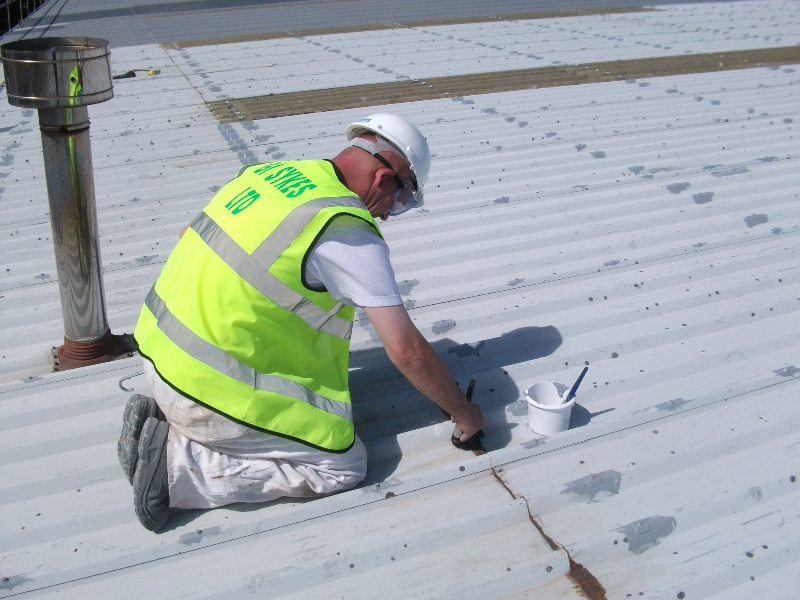
A good building maintenance check takes account of every aspect of your property, including the roof. You’re firstly looking for obvious signs of damage or disrepair – leaks, holes or missing parts. If all looks in good order, you need to look a little closer to be sure. 

Blisters

If you see raised bumps in your roof membrane, you may have roof blistering. It’s where a pocket of air forms between the layers of your roofing materials, usually because the membrane has lost its adhesion. They might look harmless enough, but if left, these blisters can split and let in moisture which can compromise the integrity of the roof.

Pooling Water

If you see standing water on your flat roof, it may be an indication that there’s a problem with the surface of your roof. Puddles, or pools, form when the rain rolls into a sunken area on your roof. If you’re checking your roof after a period of sunshine, look for circles of dirt and debris, as these show the areas where water pools.


Tears & Cracks

Rips in the membrane covering your roof can allow water, dirt and organic matter to get into the structure of your roof. Over time, even a small leak can mean considerable water ingress that can rot wood, damage ceilings and result in the need for much larger repair work.

The Exterior

Your building maintenance will include examining the outside of your property. In the first instance, you’re looking for things that can affect the structure of the building – cracks in the walls, patches of mould, rusting metalwork. Beyond that, you want to keep an eye on the aesthetic stuff too. Dull, faded cladding and signage can negatively impact the perception of your business, so getting that looking neat and tidy will deliver great rewards.

Unkempt Cladding

Check your cladding for dinks or cracks. Small knocks are fine, but more serious ones will need attention. If the coating on your cladding is compromised, you run the risk of rust forming and weakening your protective cladding.

There are a few options available to you if you decide that your cladding needs repairing. Cladding cleaning will remove all the dirt and grime that has accumulated on it, leaving it looking bright and clean. If the colour is looking faded or you fancy a change, cladding spraying is a quick and effective way to restore vibrance to your exterior.

Lastly, if you spot rusty edges to your cladding, then cut-edge corrosion repair will help prevent more significant damage from occurring.


Gutters

Your gutters will collect all sorts of matter over the months. Clearing them is an essential building maintenance task because if they get too compacted, water will begin to overflow down the sides of your premises.

Gutter cleaning for a commercial building is very different from clearing your gutters at home. The height and length of the gutters mean the job carries some risk and is usually best left to those with the right equipment, training and experience.

Graffiti

Sadly, an expanse of clean wall, shutter or cladding is too much temptation for some, and graffiti is the result. 

Unless it’s a Banksy, you probably don’t want to keep your new ‘art’ in place, so scrubbing it off will form part of your regular property maintenance. But did you know that we can treat your surface with an anti-graffiti coating that means future street art won’t be a problem?

The Interior

Now to the inside of your property. Your building maintenance regime should include all aspects of the inside of your warehouse, office or retail unit. 

Check that all the electrical sockets are safe, that your furniture isn’t broken and that your windows are in good working order. You probably already have scheduled fire drills, but check your fire alarm system, check the dates on all extinguishers and fire blankets and go through the First Aid kit to get rid of out-of-date medical supplies. Now, that’s not technically building maintenance, but it goes hand-in-hand with a safety check, so it works as a great reminder.

Dated Decor

While you’re pottering around, ensuring your building is safe and secure, you might notice that the paintwork looks a little tired. A spruce-up of common areas can do more than just improve the look of your building, it can boost morale too. Showing that you care about the environment that your staff or tenants work in makes them feel valued and cared for.

Commercial painting and decorating is a simple way to elevate your business profile while demonstrating your positive attitude to your workforce. 

Missing Tiles

Inspect your suspended ceiling for damaged or missing tiles. They are cost-effective and easy to replace, so you can have a lovely-looking ceiling in no time. 

However, if there’s extensive damage or you think your ceiling needs replacing, it’s worth doing sooner rather than later. If there is a risk of falling tiles, speak to a professional suspended ceiling contractor who can advise you on the best course of action.

The Floor

Lastly, we’re looking down at our feet and checking over the floor. Building maintenance includes all of your floor space, including outside. Look for potholes in your car park, missing anti-slip tread on steps, and fraying or worn carpet. Anything that presents a slip hazard needs to be at the top of your to-do list.

Poor Flooring
If your flooring isn’t holding up to the high traffic that it’s enduring, then switching to an Epoxy resin floor will save you time and money in subsequent building maintenance checks. The durable resin coats your concrete floor and lasts for up to 10 years. It’s impact resistant, repels chemicals and, as it’s so smooth, it is incredibly easy to keep clean.

Epoxy floors come in many colours, so you can even match your flooring to your branding!

Missing Markings

Check that all of your safety markings are still visible. Line markings are essential in warehouses and environments where there are vehicles and pedestrians, so ensuring they’re intact and clear is vital. If not, book a contractor to come and redo the lines as soon as possible.

Building Maintenance: Your Annual Responsibility

If you’ve not planned a building maintenance check for the next year, now is the time. Get yourself a clipboard and start looking closely at all of the things we have outlined – we promise that by being proactive with repairs and maintenance, you’ll save yourself stress and cash in the long run. 

And if you want to pass the obligation onto a professional team who can ensure every aspect is thought of, then talk to us about our property maintenance services. We can create a package that spreads the cost, so you get high-quality maintenance without a huge bill.

Latest Articles

Previous
Next

Building Renovation: How To Plan Your Project

Building Repairs 14.10.22
Warm roof cold roof installation

Request a FREE QUOTE

If you’d like to discuss a project you have we’d love to help.

Contact us today for a free no-obligation quote.

Get a quote

If you’re thinking about building renovation, you’re probably overwhelmed with all the things you need to consider and plan. Renovation work can be more stressful than building from scratch, thanks to the aspects you must include. But if you go into your project fully informed, you’re more likely to find the process easy to manage. 

So to help you, we’ve written a guide to getting started with your building renovation work.

Building Renovation vs Building Restoration

To begin with, let’s establish what we mean by renovation and how that compares to other construction work, like restoration. 

A building renovation project usually entails improving a property, as well as repair and remedial work. Renovation tends to take a property and enhance it by adding to the structure or smartening it up.

Building restoration typically involves returning a building to a prior state. Lots of buildings invest in restoration work if they have historic features that may have been covered up or fallen into disrepair. 

Another type of restoration work happens when a building has been affected by a disaster, like a fire or flood. We wrote a blog about fire and flood restoration, and you can read it here.

Starting Your Building Renovation

Getting started on your building renovation is the most daunting stage. This is when you map out your objectives, research planning permissions and source a reliable team of professionals to help you achieve what you’ve set out to do.

Your Objectives

What’s the reason for your building renovation? Are you updating the decor? Adding new floors to make space? Overhauling a building so it matches your brand profile? Whatever your motivation, you need to be clear about your goal. As your project unfolds, you may be distracted by things that come up – having a clear strategy helps keep you focused.

Planning Permission

If you are hoping to extend your commercial building, change the exterior dramatically, or your building is a listed building, you will need to find out if your plans require you to apply for planning permission. Commercial planning permission can be fairly complex, so enlisting the help of a professional is advised – we’ve heard of cases where new buildings have had to be razed to the ground because they didn’t comply with planning conditions.

Sourcing Professionals

To avoid serious mishaps like not complying with planning permission, you should use a reliable and trustworthy team of professionals to help you navigate your building renovation. When it comes to construction work, GI Sykes has decades of experience that can help complete your project quickly and within budget.

And it’s not just our expertise that means our building renovation projects are fast and efficient, it’s also our network of suppliers that prioritise our orders (thanks to our large order book!). We often get the best rates and a good supply chain so we can keep your costs within your budget and avoid delays caused by the supply issues that have plagued the construction industry for the past couple of years.

What You Need To Consider

You may have an idea of the work your building renovation needs, but there are some questions you need to ask yourself or a professional before you start booking contractors. These are; 

  • Do you need to get permission from your landlord?
  • Does your lease or tenancy agreement allow the scope of your project?
  • Will you need to change the category classification of your building?
  • Does your building renovation plan need an architect?
  • Will you need planning permission?
  • Who will do the work?
  • What are your timeframes, and what happens if you have a setback or delay?

Once you have answers to these questions, you’re in a great position to start getting quotes from contractors. We recommend getting a few quotes from professionals and comparing their different aspects. Price is often the first consideration, but going with the cheapest quote doesn’t mean you’re making a good saving. Equally, the most expensive doesn’t guarantee quality. You should also look at things like reviews, case studies and accreditations. 

What Your Project Needs

Building renovations cover a broad range of services, from simple painting and decorating to adding a mezzanine floor. But even with a ‘simple’ reno, the organisation can be tricky to manage. It takes time and consideration, from booking your preferred contractors to clearing the space. That’s why using a company that includes a project manager is highly beneficial – particularly on large-scale projects.

GI Sykes has a vast team of professionals, each specialising in their respective fields. We’re able to tackle multi-skilled projects without the hassle of having to manage different contractors and timescales. Some of the services we provide are; 

Extensions
Extensions come in all shapes and sizes, and your type of building may require specialist skills. Our team of 65 skilled building contractors have worked on pretty much any type of extension you can think of, from industrial unit to retail to hospital. 

We meticulously plan your extension to ensure that we minimise disruption to your business and keep to the timeframe. Your dedicated project manager keeps the team to task and means you only have one point of contact to deal with.

Rendering

If your building renovation includes smartening up the exterior, then rendering might be on your list of required services. We use the most durable and quality silicone rendering systems, so you know that your investment will look as good in years to come.

Partitioning

Partitioning is one of our most frequently requested building renovation services since many clients want to customise their premises to suit their business. We can quickly create boardrooms, offices, break rooms and other sectioned-off areas with quality partitioning that helps to insulate your property.


Cladding

If your cladding looks worse for wear, we can clean and repair it so it looks bright and well-cared for once again. We can even respray it if you fancy a colour change or want to cover up faded areas.

Cladding Cleaning

GI Sykes: Your Building Renovation Specialists

So, if you’re looking into building renovation and don’t know where to start, hopefully, you’ve picked up some pointers from this article. But if you’re still unsure how to proceed, call us. We’re more than happy to talk to you about your project and get your renovation project underway.

Latest Articles

Previous
Next

Is Commercial Painting And Decorating Worth It?

Building Repairs 31.08.22
residential painting decorating 2

Request a FREE QUOTE

If you’d like to discuss a project you have we’d love to help.

Contact us today for a free no-obligation quote.

Get a quote


Commercial painting and decorating is one of our most popular services at GI Sykes, but is it worth it? In this blog, we explore why getting a professional team to decorate your commercial property is a good idea and what you can expect from us. 

No Cutting Corners With Cutting In

If you have ever painted a room yourself, you know that the worst bit is cutting in. No matter how careful you are, there’s always a splodge of paint where you don’t want one. At home, you can probably live with the annoyance, but in a commercial environment, you want to portray a professional, sleek identity – so perfection is the only option. 

Commercial painting and decorating will always deliver a pristine finish. Our team of experienced decorators have been hired based on their skill and excellence, so your premises will get the five-star treatment.

Not Just Slapping Paint On

When you contract out your commercial painting and decorating, you can have a higher expectation of the finish you’ll get. Whether you want a uniform colour throughout your property, or you want something a little more adventurous, you’ll be impressed with what we do. 

Want your walls in your brand colours? No problem – we can get bespoke paint mixed in exactly the right shade. Want a pattern or design in your lobby? Happy to oblige! With a pro team, you can rely on us to ensure your new decor enhances your building and reputation. 

No Watching Paint Dry

As a busy business owner or property manager, you definitely have better things to do than watch paint dry. A full redecoration of a building can take days to complete, and you quite literally have to watch each coat of paint dry. Why give up your time to this arduous task when the pros can get it done more efficiently and to a higher standard?

Our team have systems in place to make quick work of commercial painting and decorating, so any disruption is minimised. They can even carry out the redecoration at times when you aren’t there, like weekends or holiday shutdowns.

We Have Better Kit

It’s not a brag; it’s just the truth. Commercial painting and decorating is one of our core services, and we believe in investing in the best products and materials. We don’t get our rollers and brushes from the big orange DIY store; we use specialist equipment that’s only available to those in the trade.

It means that we can rely on the finish of the job being impeccable. No wayward bristles embedded in the paintwork, no uneven texture – just smooth, clean walls and ceilings that give your building a fresh lease of life.

And that goes for the paint we use too – we use paint that has been battle-tested in commercial settings. It’ll withstand the daily grind that a busy work environment will put it under so your building will look good for years to come.


Better Value, Better Look

It might surprise you to know that our better workmanship is also better value. At the outset, it might seem like professional commercial painting and decorating is more expensive than grabbing a brush and tackling it yourself, but let’s just examine what costs are involved in the DIY approach.

  • Brushes, rollers, spray paint machines 
  • Dust sheets and protective clothing
  • Ladders and platforms
  • Specialist cleaning fluid for your equipment
  • Filler for any holes or cracks you uncover
  • Solution for prepping your walls and ceiling
  • A good quality undercoat
  • Highly durable paint suitable for high-traffic environments
  • Hours of your time

As you can see, the real cost of painting your property yourself is far higher, especially if you factor in any touch-ups or repairs you may need in the future (our work is guaranteed, so we’ll be back to fix any issues if needed).


No Risk, All Reward

When you book commercial painting and decorating services, you know that they are covered by insurance. Should someone fall or trip there’s no liability for you. If paint gets spilt on a laptop or carpet – they’ll replace it. But if it’s you or one of your staff up that ladder when it tips? That’s a big problem. 

Safety is a crucial issue, and it is one we take seriously. All of our team are trained to use our equipment safely and support each other while we operate. All of our work is fully insured and guaranteed, giving you peace of mind.

No Cleaning Up

Once you’ve done the back-breaking work of redecorating your office or warehouse, you then have to face the mammoth task of cleaning up. Unless you outsource, that is. Commercial painting and decorating means that not only do you get an impressive new look to your property, but it’ll also be left spotlessly clean. Think of it as a bonus!

So, Is Commerical Painting And Decorating Worth It?

Well, unless you like to lose time and money while standing up a ladder – then yes, commercial painting and decorating IS worth it. At least we think so. 

Like any service, the professionals just deliver a better quality result. So if you’re decorating because you want a slick, fresh appearance for your business, why would you take a chance on a bodged DIY job? Let the GI Sykes team loose on your commercial building and come back to an immaculate, superior finish that will stand the test of a bustling workplace.

If you would like to talk to us about our commercial painting and decorating service, including exterior painting, industrial painting and cladding spraying just give us a call on 01384 891 341 or request a quote here.

Latest Articles

Previous
Next

Building Repairs – Damp Disasters And How To Avoid Them

Building Repairs 28.02.22
roof spraying 3

Request a FREE QUOTE

If you’d like to discuss a project you have we’d love to help.

Contact us today for a free no-obligation quote.

Get a quote

Building repairs are an expected part of owning or managing a building, but there are some building repairs that fill you with dread – not only because of the cost but because of the impact on your business or tenants. Damp is one of these. 

Damp in a building doesn’t always mean disaster. In some cases, rather than building repairs you just need to educate yourself and anyone using your building on how to avoid it. However, worst-case scenarios do need interventions – luckily at GI Sykes, we have a team of experts who can make the process simple with minimal disruptions. 

So, if you suspect damp problems in your building, read on to see what practical things you can do to avoid or fix it…


What is Damp?

According to the font of knowledge that is Wikipedia, ‘structural dampness is the presence of unwanted moisture in the structure of a building’. We’re yet to come across wanted moisture in the structure of a building, by the way! 

Damp can be categorised into two types; penetrating damp and rising damp. 

Penetrating damp is a result of water infiltration through an external wall into the property through a defect in the building or the external brickwork that has become porus. 

Rising Damp is the name given to the process of water in the ground climbing vertically through pores in the brickwork.


There is some controversy over the legitimacy of the term ‘rising damp’ (we know, the trade is overflowing with excitement). One expert, Stephen Boniface, once said ‘true rising damp is a myth’ which caused a bit of stir in the industry – although he did later clarify that he’d made the comment as a way to open up a seminar stating the opposite opinion with a big impact. 

Sadly his statement, while creating a buzz, was taken out of context and even now, more than a decade later, there are still blogs and articles citing this remark as evidence that rising damp doesn’t exist! (There’s probably a lesson in here about making sure your message is clear, but that’s for another day!)

Signs Of Damp

Some signs that you are in need of building repairs are obvious; cracks, uneven surfaces, dripping leaks – but what are the signs that your building has a damp problem?

A Musty Smell
Damp has a particular scent, it smells earthy like old mushrooms. If you notice a change in the aroma in your building, it is worth investigating further. 

Wet Walls And Windows

Condensation is a key indicator that building repairs are needed. Condensation happens when warm moist air inside your building comes into contact with a colder surface. Most properties will have a little condensation, bathrooms and shower rooms are notorious for it. But if you are seeing large patches of mould on your walls, ceilings or around the windows, you probably have a larger issue that needs resolving. 

If your walls look wet but don’t have water on the surface, there’s a chance the moisture is inside the wall itself. This is a sign of rising damp and will need urgent attention.


Warping Furniture

Damp particularly affects wood so, in cases of serious damp, we expect to see skirting and wooden furniture take in some of the moisture. This can result in bending and warping of the wood, and if left untreated, eventual rotting.

Causes Of Damp

So, now you can identify whether or not you have damp, what’s caused it in the first place?

Hot Air

The primary cause of superficial damp is too much moisture in the air. Hot showers, cooking and dry clothes on radiators are the usual culprits.

Drips

Small leaks from pipes can go on to create huge areas of damp. And as they’re small, the problem can go undetected for some time which means that by the time you notice, you may have a significant issue on your hands.


Gutter Defects

Damaged or wrongly installed guttering allows water to run down the walls, which over time, can lead to water ingress in your roof space and walls. While easily fixed with simple building repairs to the guttering, getting on top of this issue quickly is vital in reducing the larger problem of the damp.

Damp Course Problems

A missing, bridged or eroded damp proof course is usually the reason for rising damp. Groundwater is absorbed by the brickwork of your building, working its way upwards.


How To Avoid Dump?

Penetrative damp is fairly simple to remedy since the causes are environmental. Some changes to your habits and some building repairs, and your damp should be a thing of the past. To reduce the chances of damp problems or to prevent it from reoccurring, try the following:

Ventilation 

A flow of air around your building means that humid air is removed. You can start by opening your windows for a short while each day, but if that’s not enough to shift your damp ventilation systems can be installed to keep moisture at bay. 

Ensuring that furniture is away from the wall prevents moisture from getting trapped between the surfaces. This reduces the likelihood of damp and any building repairs that arise from that.

Keep The Property Warm

In an ideal world, you’d be able to keep a low heat in your building throughout the colder months as this keeps the walls warm so condensation can’t form. But with the way the energy market is, it’s not likely that anyone can afford round the clock heating. Instead having the heat on at intervals can achieve the same outcome – you just need to avoid the building becoming too cold. 

Building Repairs

Keeping on top of your building’s maintenance is essential if you want to avoid bigger problems in the future. If your guttering is damaged, wrongly fitted or even just clogged, getting that resolved is simple. At GI Sykes, we offer gutter maintenance that not only prolongs the life of your gutter but also protects against issues like damp. The same goes for roof repairs – a little investment in ongoing care means that you’re less likely to encounter costly problems down the line.

For rising damp issues, you’re going to need specialist help in inspecting the cause of the damp. While there are some temporary measures you can put in place to reduce the effects of rising damp, you will need to resolve the root cause. We’re happy to help you understand your damp problem better, just give us a call to arrange a no-obligation chat.

Got Damp?

If you suspect that you need building repairs to stop damp, then get in touch. We have a specialist team of contractors who can identify the causes of your damp and provide quick, efficient solutions.


Latest Articles

Previous
Next

Got a Project in mind?

If you’d like to discuss a project you have we’d love to help.

Contact us today for a free no-obligation quote.

Get a quote