3 Things To Consider When Choosing Your New Industrial Flooring

Building Construction 14.02.23
walkways 2

Request a FREE QUOTE

If you’d like to discuss a project you have we’d love to help.

Contact us today for a free no-obligation quote.

Get a quote

Many businesses don’t realise they’ve got the wrong industrial flooring fitted until something goes wrong. Wear and tear, damage and uneven surfaces create a hazardous working environment. Leaving you and your business exposed to risk.

Whether your industrial space is a factory, manufacturing unit or engineering facility, your floors will be subjected to heavy footfall bringing with it dirt, bacteria and dust. As well as accidental spillages of liquids, such as oil, can be difficult to clean and cause irreversible damage.

That’s why your industrial flooring needs to match the specific requirements of your business. The correct flooring should be tough, hygienic and safe. Ensuring your investment lasts for longer, creating an easy-to-clean space and helping to prevent slips, trips and falls.

The 3 Most Important Things To Consider When Investing In Industrial Flooring


1. The Function Of Your Space

What happens within your space will have a direct bearing on the type of industrial flooring you should choose. Does it need to prioritise hygiene? Will it be supporting the weight of heavy machinery? Do lots of liquids get used?

The types of industrial flooring available are


  • Epoxy Resin (including self-levelling)

An epoxy floor will give you exceptional durability, is easy to maintain and can be enhanced with non-slip and decorative finishes. Epoxy resin has incredible strength and can withstand high impact, making it a brilliant choice for busy and hygienic working environments.

  • PU Resin

Polyurethane resin is a softer substance than epoxy, but it is still extremely heavy-duty and hard-wearing. PU resin flooring has great chemical and organic acid resistance to corrosion, and is a superb choice for spaces where leakage or spillage of these substances might be expected.

  • Polished Concrete

Often used in areas where there is heavy equipment, polished concrete flooring is almost impossible to damage because of its incredible strength. The sealed finish is resistant to chemical corrosion, and its smooth surface makes it easy to keep clean.

  • Vinyl

Vinyl flooring comes in many designs, colours and finishes enabling you to add some character and style to your industrial flooring. It’s easy to install, durable, waterproof and slip-resistant. Making it a good option for commercial safety flooring where footfall is high and regular cleaning products are used.

  • Rubber

The properties of rubber flooring make it more cushioned than other options and an ideal industrial flooring solution if people are standing for long periods of time. It’s easy to clean, antimicrobial, sustainable and offers a good grip to help people stay on their feet.


2. How Much Maintenance Will Your New Industrial Flooring Need?

Every type of industrial flooring will need regular maintenance to keep it in tip-top condition. Helping to ensure they remain safe, functional and looking great.

The type of maintenance required will depend on the flooring you’ve installed, but all flooring will benefit from regular sweeping and mopping, using the recommended detergent, to keep dirt and debris at bay.

If your flooring had a sealant or anti-slip coating applied, it’s important this is reapplied as advised to prevent corrosion and staining, and potential safety risks.

Regular upkeep of your industrial flooring will help it last for longer, but on average


  • PU resin flooring lasts 10 years.
  • Epoxy resin flooring lasts 10-20 years.
  • Vinyl flooring lasts 10-20 years.
  • Rubber flooring lasts 20 years.
  • Polished concrete flooring lasts up to 100 years!

3. Do You Need Zones?

The large open space of industrial spaces often needs to be divided into different zones, and depending on the use of a zone you may require different types of industrial flooring.

For example, if you have a manufacturing zone with heavy machinery, you might consider polished concrete for its super weight-bearing strength. Whereas, softer rubber flooring may be a better choice for a packaging zone where employees stand beside a conveyor for long periods of time. Or a bright-coloured vinyl could illuminate an area with little to no natural light.

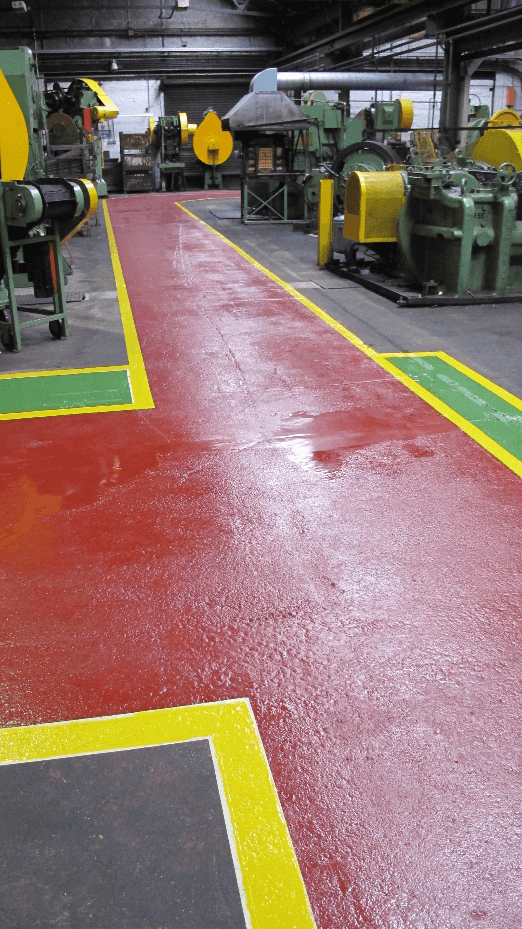
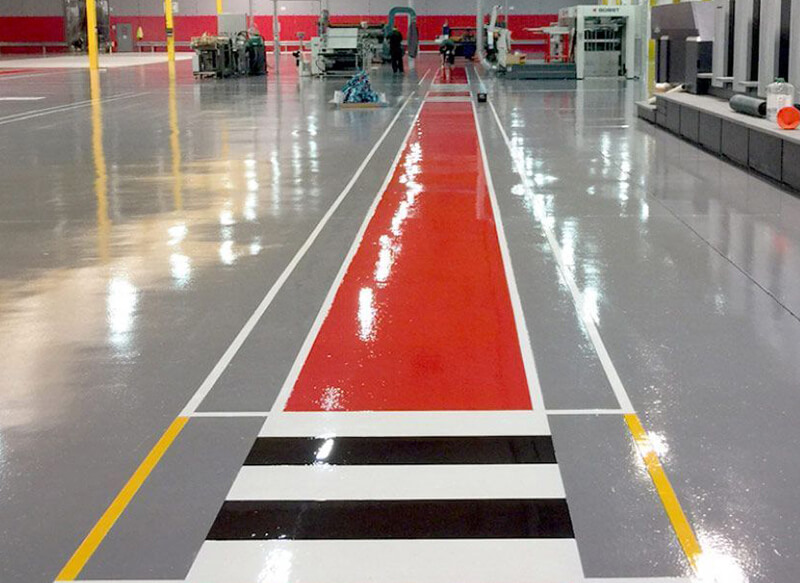
Industrial flooring can also be used effectively to make a clear visual definition between zones, highlight hazardous areas and create walkways. You can read more about that in our blog post about walkways and internal line marking here


Other Things To Consider

Affordability

The cost of your industrial flooring will depend on the type you choose and the space it has to cover. If you’re on a tight budget vinyl flooring is a cost-effective option, however it’s worth remembering that it may need to be replaced sooner than more expensive flooring solutions such as rubber or polished concrete.

Disruption

If your industrial space is a new build, this shouldn’t be an issue, but when business is already up and running, you probably won’t have the option to shut down for long in order to have your new flooring installed. To overcome this rubber and vinyl could be laid in sections, whereas polished concrete, epoxy and PU resin flooring should be poured in its entirety to prevent joint lines.

How quickly your industrial flooring will take to be able to walk on depends on its type


  • Epoxy and PU resins – typically 12-24 hours.
  • Vinyl and rubber – approx. 24 hours.
  • Polished concrete – up to 48 hours after the concrete pour.

Health & Safety

When you’re selecting your industrial flooring, you need to ensure that it meets the necessary health and safety standards and requirements. This will help to protect you should anything go wrong.

Non-slip options or additional coatings are a fantastic choice to help prevent avoidable accidents, and antimicrobial solutions can help to keep nasty bugs and bacteria from spreading. Ensuring a happy, healthy and productive workforce.

For more information on antibacterial coatings click here


Selecting Specialist Flooring Experts Will Ensure Your Industrial Flooring Is Up To Standard

Don’t be floored by flooring!

We’re here to help.

With over 50 years of commercial contracting experience, knowledge and skills, GI Sykes knows a thing or two about industrial flooring.

We’ll make sure that you select the right product for your property, and our expert team of flooring specialists will install it to the highest standard to give you total peace of mind for years to come.

For a FREE consultation and quotation for your industrial flooring, please get in touch.

Latest Articles

Previous
Next

The Pros & Cons Of Epoxy Floor Coating

Building Construction 27.07.22
Floor coatings 2

Request a FREE QUOTE

If you’d like to discuss a project you have we’d love to help.

Contact us today for a free no-obligation quote.

Get a quote

Weighing up the pros and cons of epoxy floor coating? Then this is the best blog for you. We’re going to take a close look at all of the benefits and drawbacks of this popular floor treatment.

As epoxy floor coating specialists, we have vast experience and there isn’t much that we haven’t dealt with or come across! So read on to see what we think makes it the ideal solution for many floors – and why it might not be for you


What Is Epoxy Floor Coating?

Before we get to the good stuff, let’s first make sure you know what exactly epoxy floor coating is and what it’s commonly used for. 

In simple terms, epoxy is a type of resin floor system that hardens to create a solid coating, much like plastic. This coating bonds well to appropriate base layers, making it well suited to high-traffic areas.

Where Is Epoxy Floor Coating Best Used?

Industrial and commercial flooring benefits most from the durability that epoxy offers. The common floors that we treat are; 

  • Warehouses
  • Factories
  • Areas for machinery and vehicles
  • Walkways
  • Public buildings
  • Care homes
  • Showrooms

But this is not an extensive list – at GI Sykes, we have used epoxy floor coating in so many locations, we can’t list them all.

The Pros Of Epoxy Floor Coating

We’re not going to pretend that we’re not huge epoxy flooring fans – we even have it in our own facilities. But we do like to make sure we give an unbiased overview of the product so you’re more informed. We’re going to start with the key advantages of using epoxy coating on your floors.

Protection For Your Floor

While a little obvious, it’s the main reason people opt for epoxy as a floor coating. The thick layer of resin protects your floor like nothing else. 

Extremely Durable

There are different types of epoxy, and as with anything, the quality of the product plays a large part in its longevity. We only use trusted brands that deliver exceptional results and many of the epoxy floors we have applied are still going strong many years later. With the correct base, careful application and ongoing maintenance, your epoxy floor coating can last up to ten years.

Easily Applied

Epoxy flooring is one of the most convenient flooring solutions in terms of downtime for your property. Our team of professionals can quickly apply the coating and once it’s cured – you’re back in business.

No Skidding
Despite its glossy appearance epoxy floor coatings can reduce skidding if the right type is used – so fewer slips and trips!

Hygienic

One of epoxy resin’s superpowers is that it can be made to be antimicrobial. This makes it ideal for buildings that work with food, medical facilities or places where bacteria and germs need to be kept to a minimum. Even standard epoxy flooring offers a high level of hygiene and it’s non-porous and smooth, making it easy to keep clean.

Affordability

Epoxy floor coating is one of the most affordable flooring options on the market. Compared with alternative flooring choices, such as rubber, concrete or PVC, epoxy flooring is the best value.

Colour Options

You can even have your flooring coloured to match your company brand – epoxy floor coatings can be custom coloured if you are looking to reflect your brand or environment. Many businesses, particularly warehouse and industrial ones, colour code their flooring to denote areas of hazard or safety. Red flooring is ideal as an additional warning of hazards like moving vehicles, chemicals or other dangers, while green or blue work well for marking out walkways and safe zones.


The Cons Of Epoxy Floor Coating

With such a long list of benefits to epoxy flooring, you might be wondering what the disadvantages could possibly be! And although it is a shorter list, it’s important to know the drawbacks so you can make an informed decision for your building. 

Slippery When Wet
Ok, we know we said it’s anti-skid, but some epoxy coatings can be more slippery when they’re wet. If you know that your floor is going to be frequently wet, then you can take a couple of approaches. You can use a different floor covering in that area or, if you still want the benefits of epoxy, you can either have an additive mixed in, like grit, that creates a rough surface or we can use a specialist roller that leaves the surface textured.

Preparation Plays An Important Role
The durability and longevity of your flooring depend heavily on the quality and reliability of your base. Making sure that the floor that is being covered is clean, damage-free and prepared for the coating is one of the most important jobs. If damage is discovered or if the floor needs a deep clean to remove grease or oil, then this can extend the project. 

Maintenance Required

You can leave your epoxy floor coating to its own devices – but it’s not recommended. Ensure that your floor is regularly cleaned – but don’t reach for the Flash just yet. Epoxy flooring can build up a ‘haze’ over time when soap-based cleaners are used, there are specialist liquids you can buy to ensure your floor keeps its shine. A weekly vacuum and dust are also advised as this keeps grit to a minimum and prevents scratches and gouges. 

Hard To Remove

This is a big one to consider. If you think that you might want to remove your epoxy flooring in the future, then think carefully about having it installed in the first place. Epoxy floor coating is tricky to remove once applied and may even require a whole new floor!

Want To Know More About Epoxy Floor Coating?

So now you’ve heard the pros and cons. Hopefully, this has helped you come closer to deciding if an epoxy floor coating is right for your property, but if you’re still left with questions, then our team are more than happy to help. You can call 01384 891 341 or  click here to arrange a call-back.

Latest Articles

Previous
Next

Are Tor Coatings Worth The Cost?

Spraying Services 20.04.22
commercial spraying done

Request a FREE QUOTE

If you’d like to discuss a project you have we’d love to help.

Contact us today for a free no-obligation quote.

Get a quote


Tor Coatings has long been the gold standard in commercial-grade coatings, providing the most effective and reputable coatings in the industry since 1975. But are Tor Coatings worth the investment? That’s exactly what we’re going to discuss in this blog


Who Are Tor Coatings?

Tor Coatings was created in response to a gap in the market for a forward-thinking company that was focused on innovation and development. Bringing together decades of experience, the founders used their expertise to formulate coatings that would revolutionise the market.

At GI Sykes, we strive to deliver the most durable and long-lasting solutions to our clients, which is why we chose to use the industry’s foremost materials and products. And as Tor Coatings have a catalogue of awards under their belt, becoming an approved Tor Coatings specialist seemed a logical and intelligent choice for us to make.

What Makes Tor Coatings So Good?

You’re probably wondering why Tor Coatings has such an outstanding reputation. Well, we think it’s all in the innovation. Tor Coatings has invested a whopping ÂŁ17.4 million in their facilities and employ some of the best chemists in the sector – this results in ground-breaking formulas that are backed up with solid support from manufacturers and distributors. 

And why does that matter to you, the end-user? Well, when we use Tor Coatings products for your property, you can be assured of the cutting-edge protection it provides, the speed of application (which means a quicker turnaround on your project) and no delays with material supply since all Tor Coatings products are made here in the UK.

What Are The Tor Coatings Brands?

Roofing

Your flat roof needs to have robust protection from weathering and age-related damage and a roof coating provides that. This added layer means that you can prolong the lifespan of your building’s roof, making a vast saving on replacement costs. 

At GI Sykes, we have a specialist team of roof coating experts who deal with all types of roofs, day in and day out. So when they spot a product that they think will make a significant difference to our clients, we listen. 

That’s why we recommend that our clients use Tor Coating’s Elastaseal Z. Its ingenious technology makes it one of the most effective roof coating products available. The ‘Z’ stands for zero odour, zero leaks and zero disruption – basically, all the downside to many traditional roof coatings have been eliminated!

Your roof will be fully waterproof, with no fumes – ideal for public buildings and buildings in built-up areas. And not to mention the thermal benefits – something you can’t underestimate as energy prices climb ever higher.


Fire Protection

If you own or manage a commercial building, it’s your responsibility to ensure that there is adequate fire protection to the walls and ceilings. This simple step has saved countless lives, which is why it’s an aspect of our services that we take very seriously. 

When it comes to the safety of our clients and their staff or tenants, there’s no compromise. We will only ever provide the most effective and resilient results, which is why we use Tor Coatings for our fire protection coatings. 

For new, stripped or bare walls and ceilings, Tor Coatings have created Torlife. This coating achieves a class 0 fire rating when applied to bare walls. It is also incredibly effective as an anti-graffiti coating, so if you have areas that suffer from repeated graffiti attacks, Torlife gives you a double-whammy of protection. 

For maximum fire protection, the Torrex range is our go-to. Tor Coatings are Certifire recognised, a third party accreditation for fire performance. This coating delays the burn time and spread of flames in a fire, allowing more time for safe evacuation. 

Using these Tor Coatings products, GI Sykes can upgrade your building’s fire protection quickly, with minimal disturbance but with maximum results.

Flooring

Nothing in your building is going to undergo tougher daily use than the floor. If you have high traffic walkways, balconies or external landings, you’ll notice how quickly they can become worn and damaged. 

As the floor wears, it can become smooth and slippery, which poses a real risk of slips and falls. You could spend hours trying to make the area safe using various untested methods
or you could ask us to use Tor Coatings Elastadeck to restore and protect your floor. 

Elastadeck not only makes your floor anti-slip, but it also completely waterproofs the area – ideal for spaces that are outside and exposed to the elements. 

Now, for protection of your internal floors, Tor Coatings has one of the most innovative solutions. Tortread. Tortread is a slip-resistant resin flooring system that has been developed to allow us the deliver incredibly fast installation – without impacting the longevity and quality of your floor protection. The Tortread range is vast, and enables us to make a recommendation that’s tailored to the needs of your floor.

Tortread is easily the most comprehensive flooring coating solution, which is why we find it so popular with our clients.


Tor Coatings vs Other Products

So, are Tor Coatings worth the cost? It’s a resounding yes from us. 

We see the aftermath of shortcuts and cheap materials, and trust us, the saying ‘buy cheap, buy twice’ has never been more true. It pays to use real quality, and with the guarantees that Tor Coatings provide, you’re not just buying robust floor, roof or wall coatings now – you’re buying coatings that will see you through the next decade and beyond.

That’s not to say there aren’t other brilliant products on the market, we have a full and extensive product catalogue, but we know that when a client chooses a Tor Coatings product, they’re making a worthwhile investment. 

Got a Roof, Floor Or Wall That Needs Coating?

If you are wondering if Tor Coatings are the best solution for your commercial property, then give us a call or drop us a message. We’re happy to advise you on the ideal products, Tor Coatings or otherwise, that will deliver an outstanding result.

Latest Articles

Previous
Next

5 Benefits Of Roof Coating

Roofing 13.01.22
commercial roof maintenance 2

Request a FREE QUOTE

If you’d like to discuss a project you have we’d love to help.

Contact us today for a free no-obligation quote.

Get a quote

Roof coating is one of the most effective ways to reduce your business’s environmental impact and increase your building’s efficiency. In recent years, businesses have been increasingly investing in the preservation of their commercial spaces, which, for many, has helped to lessen the impact of recent economic stress.

If you’ve been considering roof coating for your commercial property, then read on to see why it is such an incredibly beneficial route to go.


What Is Roof Coating?

Before we get to what makes roof coating so good, we’re going to briefly outline what it is. Roof coating is quite literally, coating your roof with a substance to provide enhanced protection from weathering and ageing. At GI Sykes, we use the industry’s most respected and trusted brands such as Giromax, Tor Coatings and Cromapol because we know that these products, along with our expertise, will give you the most long-lasting protection.

So, why opt for roof coating?

It Saves You Money

Top of the list is the one that can have the greatest direct impact on your business. Roof coating saves your business money in a variety of ways. It acts as insulation for your building, so your space stays warmer for longer. In winter, you’ll be able to drop the thermostat a couple of degrees without making your staff and customers feel the chill. With the coming energy cost price hike, this could be very welcome news!

In summer, a roof coating can also help to deflect UV rays which can keep your space cooler. If you find that your building gets stuffy and hot, a huge heat-attracting roof is certainly going to add to the discomfort. By adding a roof coating, you can help to bring the ambient temperature down.

Longer Life Span

It shouldn’t come as a surprise that a protective roof coating will extend the lifespan of your roof. Not only will that reduce your annual maintenance budget, but it will also mean that you can stave off expensive roof replacement by some stretch.

The cost of adding a roof coating is insignificant when compared to that of replacing your roof, but it is something that needs to be done before age-related damage and weathering sets in. If you have a relatively new roof you may think that it’s all good for a few years – but the best time to take preventative action is at the start. There’s never a ‘too early’ for roof coating, but there can be a ‘too late’!

In the UK, our weather is diverse – winters are often frosty, we have year-round rain, as well as periods of dry, hot sun in the summer and early autumn. Your roof will bear the brunt of these extremes, often suffering minor damage and problems as a result. Roof coating will give you peace of mind that your roof will be resilient to corrosion, rust, bubbling, sagging and other common issues.

Innovation in the roof coating industry has led to some of the most durable and effective roof coating products on the market. The brands we use have a proven track record in adding many years of life to a roof, some for up to 20 years. They provide multiple levels of roof protection and greater resistance to the variation in climate.


Be More Green

Reducing your environmental impact is a key focus for many people. There’s a responsibility on businesses to set an example and do all they can to become more sustainable – in fact, it’s thought that 81% of people prefer to buy from or use businesses that are more sustainable and green.

Roof coating helps you achieve this. By adding insulation, you’re increasing your building’s energy efficiency. The same goes for the summer too – a cooler building means you don’t need to crank up the air conditioning or blast many fans around the space. 

Not to mention the very act of elongating the lifespan of your roof means that over the course of its existence you need fewer repairs and therefore fewer materials. And since your roof is lasting longer, you won’t require replacement as often, meaning less waste ends up in landfill.

A Good Impression

In business, you probably know that there’s nothing so powerful as a good impression. If your property is in disrepair, then the impression your clients and employees are given can be a negative one. No one wants to be known as ‘that shabby building on the corner’. 

By having a roof coating, you will be left with a pristine and seamless look to your roof. Coating also comes in different colours so if you want a smart black roof or a modern grey one, talk to us about how we can help.


Safety

One hazard with some roofs is the risk of degradation over time. Poorly maintained roofs and old roofs carry a risk of pieces becoming loose or unstable, which can end up falling to the ground where passers-by are endangered. By adding roof coating, you secure your roof and prevent future debris.

Roof Coating: The Wise Choice?

You may call us biased, but we think roof coating is the wisest choice for commercial property owners. We have roof coating at GI Sykes HQ because we know the value of prevention over cure. Our roof, and the roofs that we coat, will last longer, be more energy-efficient and look smarter for many years to come.

It’s a fast and easy process. Unlike having your roof removed and replaced, our team can prolong your current roof without any hassle. And if you’re worried about having to close while we apply your new roof coating, don’t be. Our expert contractors can work around your opening hours to minimise disruption to your business, and if the work can be carried out while you’re open, our team of professional roof coating specialists will ensure that it’s seamless and stress free for you and your business. 

Still on the fence? If you’re not sure if roof coating really is the right investment for you, give the team a call. We can talk in detail about your roof and how we can help.


Latest Articles

Previous
Next

Industrial Painting – Why Does Paint Bubble?

Spraying Services 30.12.21
Services3

Request a FREE QUOTE

If you’d like to discuss a project you have we’d love to help.

Contact us today for a free no-obligation quote.

Get a quote

Bubbling paint can make your building look run down, dilapidated or scruffy. When it comes to industrial painting, damaged paint is frustrating, especially when you can’t find the reason for it. 

But when it comes to large commercial buildings, paint bubbling, cracking or peeling is incredibly common. 

Why does this happen – even to high-quality paints?

Blistering and bubbling is something most painters and building owners experience, sadly. But there are a few causes for paint damage, which you can learn here in the hopes of avoiding it altogether.


It Starts With Painting Mistakes

Paint is pretty strange when it comes down to it. It reacts to different temperatures and moisture levels differently. Paint blisters and peels if there’s too much moisture in your air or if it gets too hot. 

If you’re unlucky enough to get both of these together your paint might even start pulling away from the surface and crumbling off.

That’s obviously something you want to avoid, so what situations cause paint to react like this?

Damp and heat are huge contributors to paint damage. Your best option if you’re painting in these conditions is to allow the surface to become dry and cool before you begin painting. Painting onto a hot or damp surface is just going to end in a paint bubble disaster.

The same applies if you’re painting outdoors. Let the paint dry completely before being exposed to heat or damp, or you’ll see cracks appear almost instantly.

Another big mistake to watch out for in industrial painting and residential painting alike is using an alkyd paint over the top of a latex paint. This also ends in peeling, and your only choice will be to remove the paint and start again. 

These are the biggest mistakes that can be at the root of obvious paint damage, but there are plenty of types of paint damage with different causes.

How Is Paint Damage Caused?

The way your paint finishes can be affected by a lot of factors. Usually, damage happens because it wasn’t prevented in the first place.

If you’re seeing bubbling, blistering, peeling, cracking or flaking it’s probably because of the way it was painted. Different issues cause different types of damage.

Here are the types of damage you’re most likely to want an explanation for


  • Bubbling And Blistering – This happens when the top layer of paint comes away from the layer below or the wall surface itself. Most often you’ll experience this in humid or damp rooms or otherwise on building exteriors. The biggest culprit for bubbling is painting during damp conditions or extreme heat.
  • Flaking – Paint can begin to flake and crumble after long term exposure to UV rays. You’re more likely to see flaking on older buildings or on paint that is very old. 
  • Cracks – For cracks specifically the likely cause is that you either used too many layers of paint or the surface you painted was dirty. This doesn’t allow the paint to solidify properly, making it unstable. 


If you’re having trouble keeping up with all of these varieties of paint damage and how to avoid them, consider getting the help of a professional in industrial painting. But if nothing else, the one thing you can do to prevent paint damage altogether is to be prepared.

How To Stop It

To stop your paint from bubbling or worse, make sure you’re taking the obvious steps to avoid damage. 

If you’re in a rush or trying to DIY your painting, then it might be tempting to skip these things, but do these simple things and you’ll be glad when your surface is bubble-free.

Firstly, prepare your surface! Ensure it’s dry, clean, and not extremely hot or cold. 

Secondly, don’t forget your primer. Apply a coat of this to begin with for a better finish, and use primer to touch up any staining before your main coat of paint.

Lastly, be aware of the elements – if you’re painting an exterior then don’t expose your paint to the elements before it’s fully dried. Follow these basic steps and you’re much less likely to face blistering, flaking, and cracks.


Repairing Paint Damage

Of course, your other option is to repair the damage already appearing in the paint. Ideally, bring in the help of an industrial painting contractor to properly repair your commercial building. 

The process of repairing paint damage of any kind can be quite involved and time-consuming, so having a professional on hand is your best option.

Bubbling paint can be concerning, but ultimately it’s avoidable by ensuring the surface is dry, clean and cool. Avoid mistakes like layering certain paint types and not letting the paint dry before exposing it to harsh conditions. Get the help of a professional in industrial painting to make sure paint damage problems are avoided and prevented properly. 

At GI Sykes we’re the first choice for industrial painting for factories, warehouses and all commercial buildings. With over 100 years of industrial painting experience, we can help with old, marked walls or damaged paint. Get in touch today for a free quote.

Latest Articles

Previous
Next

Cladding Spraying: 7 Questions To Ask Your Contractor

Spraying Services 18.11.21
industrial painting

Request a FREE QUOTE

If you’d like to discuss a project you have we’d love to help.

Contact us today for a free no-obligation quote.

Get a quote

Considering cladding spraying for your commercial property? There’s some things you need to know


Cladding spraying is an affordable and effective way to revive your building and prolong the life of your cladding. It can protect your property from the elements, freshen up the appearance of your building and improve the lifespan of your cladding. 

Common issues it can help with include: 

  • Discolouration or fading – Changes in the colour of your cladding, often caused by the weather, UV light and moisture in the air. 
  • Chalking – Lifting, flaking or worn away paint. 
  • Delamination & Separation – moisture damage that creates rust, which can split the top layer from the metal of the cladding. 

But before you instruct a contractor, there’s some important questions you need to ask. 

1: Should I Spray Or Replace My Cladding? 

While cladding spraying is a great way to smarten up your property’s appearance, it’s important to know the difference between when your cladding should be coated or replaced. If your cladding is discoloured, the paint is flaking or chalking or rust is starting to appear, then cladding spraying is an appropriate treatment. However, if your cladding is badly damaged, broken or corroded beyond repair then spraying may not be suitable. 

A good spraying contractor will assess the condition of your cladding and give you impartial advice on the best approach for your property. 

2: Will You Clean My Cladding Before Spraying? 

Cladding is your first line of defence against the elements. Because of this, over time your cladding will collect dirt, grime and even moss. Spraying over dirt will impact the quality of your coating, so it’s essential that your spraying contractor fully cleans and prepares your cladding before spraying. 

A good contractor will remove any moss or lichen, clean any dirt and grime and remove any flaking paint before applying the specialist coating. 


3: How Long Will My Cladding Spraying Last? 

Specialist cladding coatings are designed to increase the lifespan of your cladding, protecting your building from the elements and improving the aesthetic of your building. Not all coatings are created equal, so be sure to ask your contractor how long the coatings they intend to use will last. 

A good contractor will be happy to advise you on what you can expect from the treatment, as well as any potential issues they can see that may arise from your specific building. 

4: What Type Of Spray Coating Do You Use? 

There are many different brands of specialist cladding coatings, and as with all things, some are better than others. Professional brands such as PPG Johnstone’s, Giromax and Tor Coatings have been specially designed to be long lasting, durable and to give an excellent finish. 

A good spraying specialist will be able to tell you which coatings they intend to use for your project and why they consider them to be the best choice. Avoid cheap coatings or “off-brand” options, as these may not give you the best return on your investment in the long run. 

5: How Much Will The Project Cost? 

Your building is unique, so the price for your cladding spraying project should be too. It’s impossible to price a job accurately when you haven’t seen it, so a good contractor will always do a site visit before providing you with a quote. They’ll give you a written quote, that makes it easy to understand the total cost for your cladding spraying, as well as a pricing breakdown to help you see where your money is going. 

Be wary of a contractor that won’t provide a written quote, bamboozles you with complicated costings or refuses to confirm that there won’t be any hidden costs associated with the project. 


6: How Do I Know You’re A Reputable Contractor? 

The building industry has a mix of experienced, trustworthy contractors and unreliable cowboys who will do a bodge-job. So how can you know who to choose? It can be hard to know who to trust, but looking for the following attributes can help you make the right choice. 

A reputable contractor will: 

  • Have a visible web presence
  • Have many years of experience in the trade 
  • Have verified testimonials for you to view 
  • Be easy to communicate with and happy to answer questions
  • Give you a written quote with all costs included 

7: Will You Colour Match My Paint? 

Cladding coatings aren’t just about protection, they can give your building a facelift too. Getting the best finish for your cladding is important if you want your property to look the best it can be. By colour matching your coating colour to your existing painting or other areas of cladding that are not being treated, you can avoid that mismatched, patchwork appearance and even match your brand colours. 

A good spraying contractor will be able to match your colour, giving you an aesthetically pleasing finish. 

Looking For A Reputable Cladding Spraying Contractor? 

If you’re looking for a cladding spraying contractor for your commercial project, we’d love to hear from you. Here at GI Sykes, we’ve been providing excellent service, competitive quotes and flawless finishes for more than 55 years. To find out more about our cladding spraying services click here or get in touch to arrange a quote. 

Latest Articles

Previous
Next

Got a Project in mind?

If you’d like to discuss a project you have we’d love to help.

Contact us today for a free no-obligation quote.

Get a quote