Why You Should Use A Professional Industrial Paint Sprayer

Spraying Services 14.08.23
Industrial paint sprayer

Request a FREE QUOTE

If you’d like to discuss a project you have we’d love to help.

Contact us today for a free no-obligation quote.

Get a quote

The world of industrial paint sprayers has moved on. Nowadays, you can buy an impressive kit that, if the marketing literature is to be believed, will make your DIY efforts look professional.

Is this the case, or should you stick to hiring a real professional industrial paint sprayer?

Sometimes it can be easy to weigh up the choice of a professional or a DIY job and completely miss some important deciding factors. So here’s what you should know before you splash the cash on your very own industrial paint sprayer.

What Is An Industrial Paint Sprayer?

An industrial paint sprayer can refer to either the equipment used or the person operating it. 

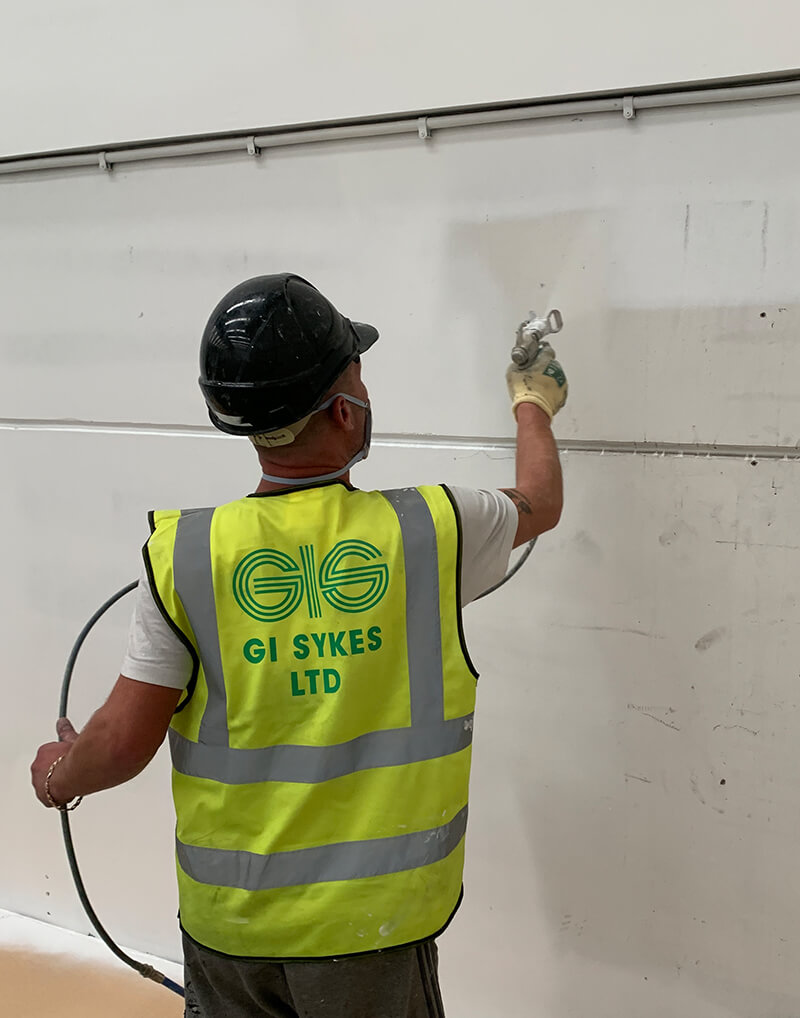
In both cases, the main objective is to achieve a smooth and even application of paint on whatever service you have ready and waiting. The sprayer tools themselves utilise high pressure to create a fine mist of paint. This gives you a more natural and overall seamless finish, as opposed to rollers and paint brushes, which can leave streaks and marks.

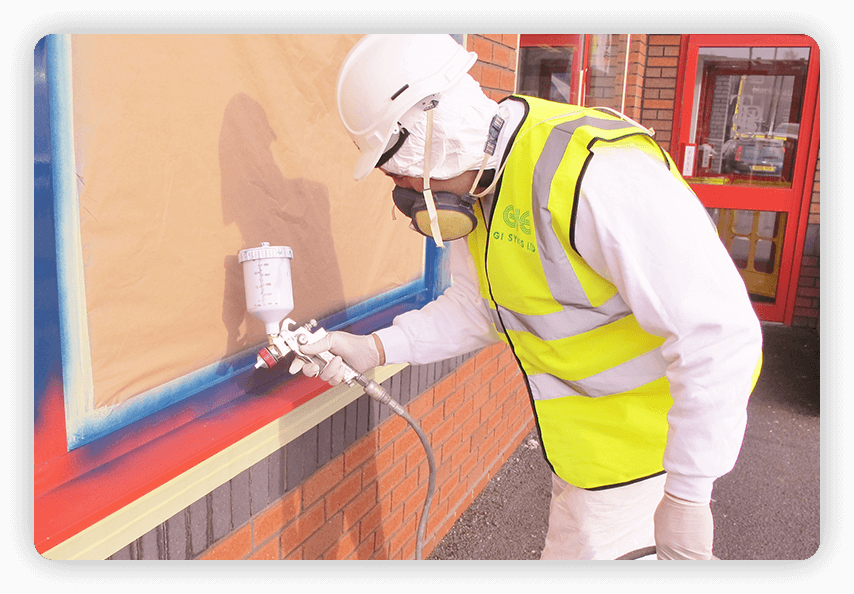
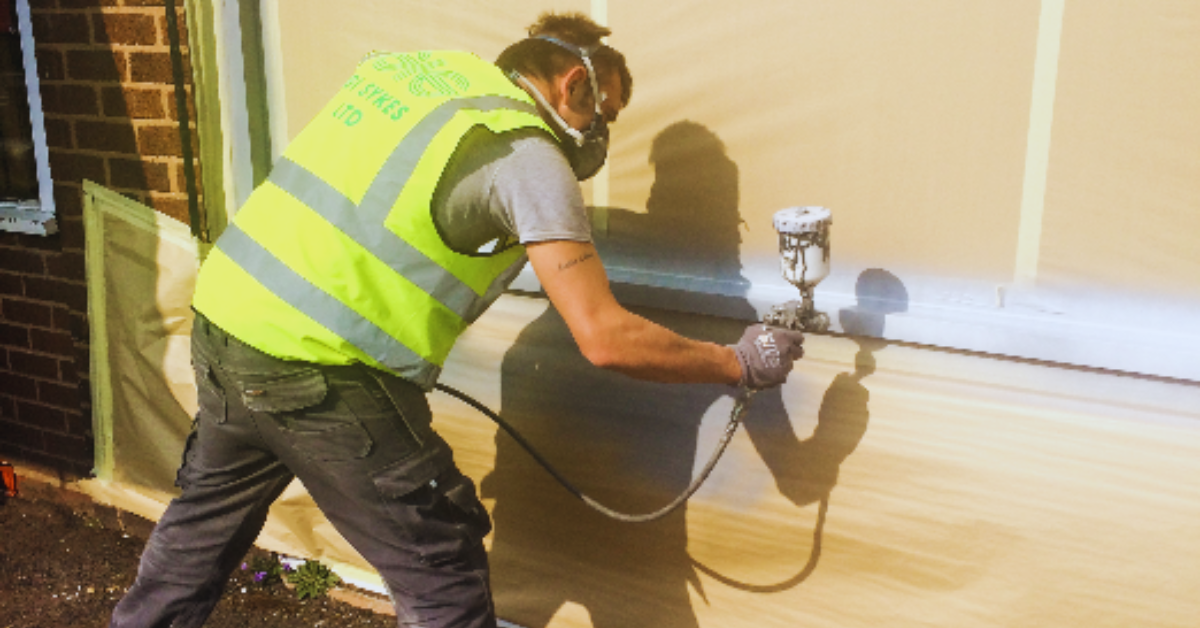
The equipment consists of a spraying mechanism, such as an airless or HVLP (High Volume Low Pressure) system, that can give you a thick and even coating without spraying out and causing a lot of mess. That mechanism is connected to a paint container or larger reservoir. 

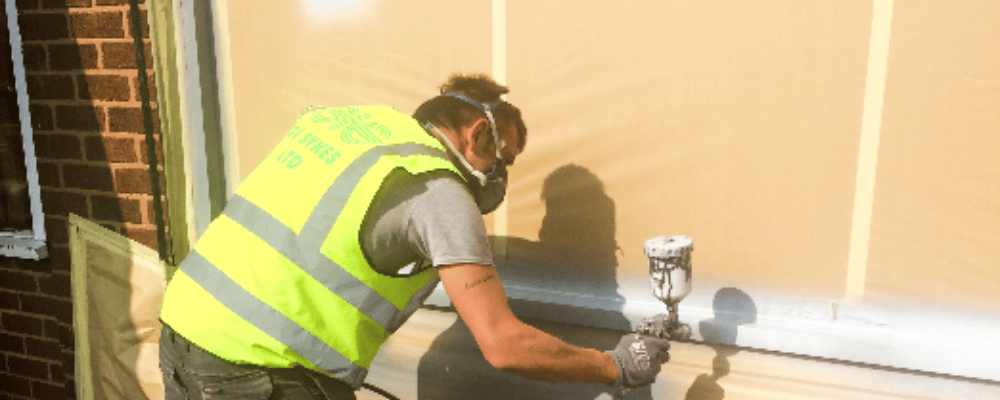
The paint is pressurised and forced through a nozzle (there are several nozzle types), atomising it into tiny particles that form a mist. The operator then carefully applies the mist to the surface using a smooth, back-and-forth technique.

Sounds fairly simple so far? Well, using an industrial paint sprayer is anything but! It requires a certain level of skill and expertise. Professionals who operate these sprayers have undergone special training and have real-life, hands-on experience. They’ve dealt with different surface types and various paint types, all of which would cause the average DIYer problems to begin with.

The professional industrial paint sprayer understands the intricacies of finicky things like adjusting pressure, spray patterns and nozzle sizes – all to get the perfect result you’re going for.

Bear in mind that the process involves careful sprayer control to ensure that the paint is applied evenly without any gaps, streaks or patches. There’s no take-two with paint sprayers of this capacity – once the paint is on, it’s on.

Skilled operators can also adjust the spray width and intensity to efficiently cover even larger areas like commercial walls.

And it goes without saying that professionals are knowledgeable about surface preparation, which is crucial for achieving a long-lasting and flawless finish. They know how to properly clean, sand and prime surfaces to ensure the best paint adhesion and durability. So no peeling walls!
Is Window Spraying Worth The Cost (3)

All The Gear…

And no idea?

Owning professional-grade equipment like an industrial paint sprayer may seem appealing. However, it’s important to recognise that owning the gear is just the first step. Using it effectively and achieving professional results is a different matter altogether.

Imagine being handed a horse and expected to play polo without prior knowledge or experience. In the same way, owning an industrial paint sprayer doesn’t automatically make you an expert in painting. It takes practice, skill and understanding of the equipment to achieve a stunning result.

It’s true that industrial paint sprayers have incredible capabilities, but only if you know how to harness them. Without the necessary knowledge, using an industrial paint sprayer can become an expensive learning curve. Mistakes happen in the application, either through improper technique or a lack of preparation, resulting in a subpar finish and lots of wasted materials.

Professional industrial paint sprayers have honed their skills through training and hands-on experience. They know how to operate the equipment efficiently, adjust settings for optimal spray patterns, control pressure, and select the right nozzle size for different surfaces and paint types. 

Their expertise allows them to navigate challenges like overspray, drips and ensure even coverage. How do you think your painting would fare when faced with these issues? A DIYer can always learn, but a professional gets it right the first time.

Let’s look at the key differences between DIY vs hiring a pro…

The Finish

Professional

When it comes to achieving a flawless finish, professional industrial paint sprayers have the upper hand. They can ensure no gaps, patches, streaks or uneven application. Professionals prioritise surface preparation, leading to long-lasting, impeccable results. 

DIY

On the other hand, DIY efforts often result in messy work, streaky or patchy finishes, and poor or no preparation. You can certainly mitigate the risks of these things happening, but you can’t bring the same level of experience and training to the project as a pro.

The Application

Professional

Professional industrial paint sprayers have extensive knowledge about painting different surfaces. They know the specific adjustments when painting window frames, garage doors, shutters, cladding, internal walls and machinery. They understand the right paint for each surface and know how much paint is needed for the job. And equally important – professionals can skillfully mask the areas that need protection!

DIY

DIY enthusiasts may use the wrong paint for a particular surface, leading to damage or peeling paint that requires additional work before proper coverage can be achieved. The final result is really what it’s all about, so application is key.

The Quality

Professional

Professionals exclusively use professional-grade materials and equipment, ensuring a durable finish that withstands everything weather and environment can throw at it and prevents corrosion. Their work often comes with a guarantee, providing you with peace of mind too.

DIY

DIY projects are limited to store-bought options, offering fewer colour choices and resulting in less durable finishes or even suitable for your application. Of course, DIY projects don’t have any coverage against poor performance and may not meet the same level of quality as a professional job.

DIY It Or Hire A Pro?

Professional industrial paint sprayers take more than just owning the kit; our team’s skill and expertise make our paint-spraying projects so good.

If you’re looking to hire a professional industrial paint sprayer, contact us to hear how we can help.

Book your personalised quote with our industrial painting experts here.

Latest Articles

Previous
Next

Do You Need Fireproof Cladding?

Cladding 28.01.23
cladding coatings 1

Request a FREE QUOTE

If you’d like to discuss a project you have we’d love to help.

Contact us today for a free no-obligation quote.

Get a quote

We can’t stress the importance of fireproof cladding enough. If you own or maintain a building, then understanding what fireproof cladding is, how it can prevent a disaster and what you should do in an emergency is your responsibility.

It was in June 2017 that a heart-stopping tragedy shook the country. 72 people died in the fire at Grenfell Tower, and the cladding that had been recently installed on the building was at the heart of the investigation into what caused the disaster.

Suddenly, tenants and building owners were starkly aware of the significance of cladding; until then, it had previously been considered an aesthetic choice with insulating benefits.

If you’re still unsure about cladding and whether your property needs fireproof cladding or not, read this blog to arm yourself with vital information. 

Cladding vs Fireproof Cladding

You might have thought cladding was cladding – that there’s no distinction between types. But you’d be wrong. There are 7 types of cladding, some are combustible, and some aren’t. Here’s a brief overview of the types and their main benefits.

Timber

Timber cladding sounds like a recipe for disaster, doesn’t it? Well, thankfully, the timber used in cladding is treated with chemicals to make it flame retardant. 

Wood has natural insulating properties, making it a good choice for improving a building’s energy efficiency, and it has a lovely natural look to it. However, timber cladding isn’t suited to buildings over 2 stories – and given the increases in the cost of lumber recently, it’s also not the most cost-effective solution.

Glass

Glass cladding has a sophisticated, modern look to it – perfect if you’re after a high-end finish to your building. There are two types of glass cladding; rainscreen and curtain walling. 

Rainscreen is one of the most popular cladding choices in the UK and provides excellent insulation to a building. The glass panels are fixed to a frame which leaves a cavity between the wall of your building and the cladding – and while the glass cladding itself is fire resistant, the cavity poses a risk. 

At the Tall Building Fire Safety Conference, held in May 2022, professor of fire science Guillermo Rein, revealed that his study had shown that rainscreen systems had a more substantial fire risk. 

Rainscreen’s risks can be reduced with proper installation, the use of fire-resistant materials in the cavity, as well as fire-stopping courses.


uPVC

uPVC is an appealing cladding option because it’s so easy to maintain and is the most affordable on the market. In addition, it has brilliant thermal capabilities that can help reduce your energy costs.

While uPVC cladding is considered combustible (quickly catches fire), it doesn’t add to the spread of flames. The panels will warp and melt but ultimately don’t contribute to the fire. 

Stone

Stone cladding is often chosen based on its aesthetic appeal. Like glass, it denotes a particular ‘look’ that some building owners want. The type of stone cladding that you can have depends on several factors, including the structure of your building and its height. 

Stone is a natural insulator, so it will keep your building warm during cold weather. However, it’s also the most expensive cladding type on the market. 

And if you’re wondering if it’s a fireproof cladding option, the answer is yes. Stone cladding is 100% non-combustible.


Fibre Cement

Fibre cement cladding is one of the most used cladding types. This fireproof cladding combines cement and cellulose fibres to create a sturdy, durable surface that’s widely used in both domestic and commercial cladding projects. 

It’s very low-maintenance, is a brilliant moderator for the temperature in your building and best of all, it is fire resistant so it will not burn in a fire.

Metal

Metal cladding is usually seen on commercial buildings as it’s easy to install, cheap to maintain and adds a layer of protection to your building.

The different types of metal used are;

  • Aluminium
  • Zinc
  • Steel
  • Copper

Metal cladding is non-combustible and resists ignition, even in high temperatures. 


Composite

Composite cladding is made from recycled wood and polymers, which bond to form a strong weather-resistant material that’s suited to prolonged use outside. Composite cladding comes in many different colours and provides excellent insulation for heat and sound. 

And despite the plastic content of composite decking, some cladding brands are treated with specialist fire-retardant additives.

What Are The Fire Regulations?

So now you know the general information about the types of cladding, it might be helpful to understand the fire regulations and ratings that are used. 

Building regulations in relation to cladding changed in 2018 when the Government banned the use of combustible cladding on public buildings like schools and hospitals, as well as care homes, student halls and refurbs over 18m (over 2 stories, roughly). The changes to the regulations are still an ongoing conversation, with some suggestions that the height restriction may be lowered to 11m in the future. 

Understanding the requirements of fireproof cladding can be tricky, and often is a stipulation of your building insurance. If your building has the wrong type of cladding, your insurer can refuse cover.

The materials used in your cladding will each have a fire rating, which is used to determine their safety value.

Fire Ratings Explained

In the UK, we use the British standard for testing, BS EN 13501-1: Fire classification of construction products and building elements. 

Materials are categorised using three factors; 

  • The reaction to fire, which is shown as a letter from A – F.
  • Smoke propagation (how much smoke it produces in the first 10 minutes of burning), which is shown with the letter s and a number between 1 – 3.
  • The likelihood of dropping particles, shown by the letter d and a number between 1 – 3.

So the rating of your cladding will be displayed like this: B, s2, d1.

Reaction To Fire

A1, A2 – Materials that are non-combustible.

B, C, D – Limited contribution to a fire.

E, F – Significant contribution to a fire

Smokiness

S1 – Little to no smoke

S2 – A small amount of smoke

S3 – Lots of smoke

Falling Embers & Particles

D1 – No dropping particles

D2 – Some falling particles

D3 – Many dropping particles

Fireproof Cladding: Getting It Right

It’s a lot to understand and take in, isn’t it? And when the risks are so high, you’ll want to get it right. At GI Sykes, we have over 55 years of construction experience and can help you understand fireproof cladding. We provide both intumescent steel coatings and certified fire protection coatings to enhance the fire safety of your building. 

Latest Articles

Previous
Next

Is It Time For Building Maintenance?

Building Repairs 14.01.23
commercial spraying done

Request a FREE QUOTE

If you’d like to discuss a project you have we’d love to help.

Contact us today for a free no-obligation quote.

Get a quote


The start of the year is always a good time to check to see if you require any building maintenance. It’s not necessarily the time of year, but more the mindset of getting things up to standard for the next 12 months. 

An annual review of your property means that you can see what needs doing immediately, what needs doing soon and what can wait. You can plan your building maintenance budget and schedule accordingly rather than letting things take you by surprise. It pays to be proactive with repairs. 

So, what should you look for to see if your premises needs a little TLC?

The Roof

A good building maintenance check takes account of every aspect of your property, including the roof. You’re firstly looking for obvious signs of damage or disrepair – leaks, holes or missing parts. If all looks in good order, you need to look a little closer to be sure. 

Blisters

If you see raised bumps in your roof membrane, you may have roof blistering. It’s where a pocket of air forms between the layers of your roofing materials, usually because the membrane has lost its adhesion. They might look harmless enough, but if left, these blisters can split and let in moisture which can compromise the integrity of the roof.

Pooling Water

If you see standing water on your flat roof, it may be an indication that there’s a problem with the surface of your roof. Puddles, or pools, form when the rain rolls into a sunken area on your roof. If you’re checking your roof after a period of sunshine, look for circles of dirt and debris, as these show the areas where water pools.


Tears & Cracks

Rips in the membrane covering your roof can allow water, dirt and organic matter to get into the structure of your roof. Over time, even a small leak can mean considerable water ingress that can rot wood, damage ceilings and result in the need for much larger repair work.

The Exterior

Your building maintenance will include examining the outside of your property. In the first instance, you’re looking for things that can affect the structure of the building – cracks in the walls, patches of mould, rusting metalwork. Beyond that, you want to keep an eye on the aesthetic stuff too. Dull, faded cladding and signage can negatively impact the perception of your business, so getting that looking neat and tidy will deliver great rewards.

Unkempt Cladding

Check your cladding for dinks or cracks. Small knocks are fine, but more serious ones will need attention. If the coating on your cladding is compromised, you run the risk of rust forming and weakening your protective cladding.

There are a few options available to you if you decide that your cladding needs repairing. Cladding cleaning will remove all the dirt and grime that has accumulated on it, leaving it looking bright and clean. If the colour is looking faded or you fancy a change, cladding spraying is a quick and effective way to restore vibrance to your exterior.

Lastly, if you spot rusty edges to your cladding, then cut-edge corrosion repair will help prevent more significant damage from occurring.


Gutters

Your gutters will collect all sorts of matter over the months. Clearing them is an essential building maintenance task because if they get too compacted, water will begin to overflow down the sides of your premises.

Gutter cleaning for a commercial building is very different from clearing your gutters at home. The height and length of the gutters mean the job carries some risk and is usually best left to those with the right equipment, training and experience.

Graffiti

Sadly, an expanse of clean wall, shutter or cladding is too much temptation for some, and graffiti is the result. 

Unless it’s a Banksy, you probably don’t want to keep your new ‘art’ in place, so scrubbing it off will form part of your regular property maintenance. But did you know that we can treat your surface with an anti-graffiti coating that means future street art won’t be a problem?

The Interior

Now to the inside of your property. Your building maintenance regime should include all aspects of the inside of your warehouse, office or retail unit. 

Check that all the electrical sockets are safe, that your furniture isn’t broken and that your windows are in good working order. You probably already have scheduled fire drills, but check your fire alarm system, check the dates on all extinguishers and fire blankets and go through the First Aid kit to get rid of out-of-date medical supplies. Now, that’s not technically building maintenance, but it goes hand-in-hand with a safety check, so it works as a great reminder.

Dated Decor

While you’re pottering around, ensuring your building is safe and secure, you might notice that the paintwork looks a little tired. A spruce-up of common areas can do more than just improve the look of your building, it can boost morale too. Showing that you care about the environment that your staff or tenants work in makes them feel valued and cared for.

Commercial painting and decorating is a simple way to elevate your business profile while demonstrating your positive attitude to your workforce. 

Missing Tiles

Inspect your suspended ceiling for damaged or missing tiles. They are cost-effective and easy to replace, so you can have a lovely-looking ceiling in no time. 

However, if there’s extensive damage or you think your ceiling needs replacing, it’s worth doing sooner rather than later. If there is a risk of falling tiles, speak to a professional suspended ceiling contractor who can advise you on the best course of action.

The Floor

Lastly, we’re looking down at our feet and checking over the floor. Building maintenance includes all of your floor space, including outside. Look for potholes in your car park, missing anti-slip tread on steps, and fraying or worn carpet. Anything that presents a slip hazard needs to be at the top of your to-do list.

Poor Flooring
If your flooring isn’t holding up to the high traffic that it’s enduring, then switching to an Epoxy resin floor will save you time and money in subsequent building maintenance checks. The durable resin coats your concrete floor and lasts for up to 10 years. It’s impact resistant, repels chemicals and, as it’s so smooth, it is incredibly easy to keep clean.

Epoxy floors come in many colours, so you can even match your flooring to your branding!

Missing Markings

Check that all of your safety markings are still visible. Line markings are essential in warehouses and environments where there are vehicles and pedestrians, so ensuring they’re intact and clear is vital. If not, book a contractor to come and redo the lines as soon as possible.

Building Maintenance: Your Annual Responsibility

If you’ve not planned a building maintenance check for the next year, now is the time. Get yourself a clipboard and start looking closely at all of the things we have outlined – we promise that by being proactive with repairs and maintenance, you’ll save yourself stress and cash in the long run. 

And if you want to pass the obligation onto a professional team who can ensure every aspect is thought of, then talk to us about our property maintenance services. We can create a package that spreads the cost, so you get high-quality maintenance without a huge bill.

Latest Articles

Previous
Next

Industrial Painting: 3 Reasons To Respray Your Building

Spraying Services 22.02.22
commercial spraying done

Request a FREE QUOTE

If you’d like to discuss a project you have we’d love to help.

Contact us today for a free no-obligation quote.

Get a quote

Is your commercial building fading, peeling old paint or just worse for wear? Industrial painting isn’t just for new buildings. If your paint is over for a few years old and showing signs of ageing, you probably need it repainted professionally.

If you’re not sure whether you need the help of industrial painting experts, imagine that you’re going to a new restaurant. You’re excited to try this place out for the first time, but once you get there the first thing you see is the chipped, dull, peeling exterior of the building. 

What might go through your mind at that point? You might assume a few things about this establishment, like their level of cleanliness or attention to detail. You would wonder why the owners weren’t bothered about making a good impression?

The truth is that looks really do matter when it comes to commercial buildings, particularly when you want to make lasting first impressions and keep your building protected from the elements.


Reason 1 – Protect And Extend The Life Of Your Building

By regularly maintaining your building and ensuring that the site is routinely inspected, you can make huge building maintenance savings. That’s because prevention is the best cure. 

While an average warehouse panel can cost anywhere from £500 and £1500, you can avoid these costs by simply keeping up with things like industrial painting, roof repairs and general wear and tear. Repainting your commercial building means that any small issues can be seen and fixed before they become bigger problems, like leaks.

Industrial painting doesn’t just make your building look good, it serves a practical purpose. Keeping your cladding and trim painted actually seals and protects them from extreme temperature changes, moisture ingress or even infestations of insects. 

As well as this, a well-maintained building is worth more than a slowly degrading one. The market value of your industrial property is higher when it’s painted with suitable paint and has more ‘kerb appeal’. Whether or not you’re thinking of selling your building, maintaining a high market value is a good idea.

Reason 2 – Give A Better Impression

You wouldn’t walk into the supermarket, go to the canned soup aisle, and choose the rusted, dented tin without a label. Of course not – you’d choose the tin of soup that had all the information on the outside that you needed or was the recognisable brand you like.

Making a good impression of your company can be the difference between a sale or a lost customer. Even if you don’t have customers walking off the street to come into your building, it still represents your business, your brand and your ethos. 

Decomposed cladding won’t show passersby that your company is dedicated to all aspects of your business, or that you can be relied on to get things done. Unfortunately, poor building maintenance will tell your customers and team the exact opposite. 

But there’s a way to make an excellent first impression, and it’s as simple as respraying. 

By showing people that you really do care about the little details, you can bring in the kind of customers that share your values and want the same level of attention that you give to every aspect of your company.


Reason 3 – Boost Morale

Industrial painting can give your building a new lease on life, but it can benefit your staff too.

As a business owner, you bought your commercial building for a reason. You probably needed a space where you could grow your company and have room for all of the staff you required. A huge part of that growth with a team of employees is productivity. 

A good example of this theory in action is the effect of colour on mood. For instance, the colour black can give an impression of strength in moderation but can feel oppressive if used excessively. Grey is most often used for commercial buildings because of its connection with feelings of practicality and being a blank canvas to inspire creativity. 

With this in mind, be aware of just how much the appearance of your building can affect your business on a large scale. 

If the space you’ve given your team is hindering their ability or will to be the best you want them to be, then you have a big problem. Deadlines or standards may not be met if your team feels like your company doesn’t care about them as much as they care about doing the job right. 

If your team is forced to walk into a dreary, neglected building every morning, it makes sense that they wouldn’t feel motivated or excited to work for you. On the other hand, if you maintain a clean-looking, cared-for exterior then your business can grow from the inside out.


Industrial Painting Done Right

Now that you know how much a poorly kept painted exterior can affect your business, you can also consider the benefits of a building respray. By repainting the exterior of your industrial premises, you will be protecting the materials, keeping your property market value higher all while keeping on top of your general building maintenance. Give a better impression with a clean, professional-looking exterior that gets customers through your proverbial door if not your literal door. And of course, don’t forget how much your team will value being in an environment that shows them how much you care about the work they do.

The first step to achieving all of that is getting in touch with industrial painting professionals like our experienced team at GI Sykes. As the industrial painting contractors of choice for warehouses, factories and commercial buildings, we can help you maintain your industrial premises. 


Latest Articles

Previous
Next

Industrial Painting – Why Does Paint Bubble?

Spraying Services 30.12.21
Services3

Request a FREE QUOTE

If you’d like to discuss a project you have we’d love to help.

Contact us today for a free no-obligation quote.

Get a quote

Bubbling paint can make your building look run down, dilapidated or scruffy. When it comes to industrial painting, damaged paint is frustrating, especially when you can’t find the reason for it. 

But when it comes to large commercial buildings, paint bubbling, cracking or peeling is incredibly common. 

Why does this happen – even to high-quality paints?

Blistering and bubbling is something most painters and building owners experience, sadly. But there are a few causes for paint damage, which you can learn here in the hopes of avoiding it altogether.


It Starts With Painting Mistakes

Paint is pretty strange when it comes down to it. It reacts to different temperatures and moisture levels differently. Paint blisters and peels if there’s too much moisture in your air or if it gets too hot. 

If you’re unlucky enough to get both of these together your paint might even start pulling away from the surface and crumbling off.

That’s obviously something you want to avoid, so what situations cause paint to react like this?

Damp and heat are huge contributors to paint damage. Your best option if you’re painting in these conditions is to allow the surface to become dry and cool before you begin painting. Painting onto a hot or damp surface is just going to end in a paint bubble disaster.

The same applies if you’re painting outdoors. Let the paint dry completely before being exposed to heat or damp, or you’ll see cracks appear almost instantly.

Another big mistake to watch out for in industrial painting and residential painting alike is using an alkyd paint over the top of a latex paint. This also ends in peeling, and your only choice will be to remove the paint and start again. 

These are the biggest mistakes that can be at the root of obvious paint damage, but there are plenty of types of paint damage with different causes.

How Is Paint Damage Caused?

The way your paint finishes can be affected by a lot of factors. Usually, damage happens because it wasn’t prevented in the first place.

If you’re seeing bubbling, blistering, peeling, cracking or flaking it’s probably because of the way it was painted. Different issues cause different types of damage.

Here are the types of damage you’re most likely to want an explanation for…

  • Bubbling And Blistering – This happens when the top layer of paint comes away from the layer below or the wall surface itself. Most often you’ll experience this in humid or damp rooms or otherwise on building exteriors. The biggest culprit for bubbling is painting during damp conditions or extreme heat.
  • Flaking – Paint can begin to flake and crumble after long term exposure to UV rays. You’re more likely to see flaking on older buildings or on paint that is very old. 
  • Cracks – For cracks specifically the likely cause is that you either used too many layers of paint or the surface you painted was dirty. This doesn’t allow the paint to solidify properly, making it unstable. 


If you’re having trouble keeping up with all of these varieties of paint damage and how to avoid them, consider getting the help of a professional in industrial painting. But if nothing else, the one thing you can do to prevent paint damage altogether is to be prepared.

How To Stop It

To stop your paint from bubbling or worse, make sure you’re taking the obvious steps to avoid damage. 

If you’re in a rush or trying to DIY your painting, then it might be tempting to skip these things, but do these simple things and you’ll be glad when your surface is bubble-free.

Firstly, prepare your surface! Ensure it’s dry, clean, and not extremely hot or cold. 

Secondly, don’t forget your primer. Apply a coat of this to begin with for a better finish, and use primer to touch up any staining before your main coat of paint.

Lastly, be aware of the elements – if you’re painting an exterior then don’t expose your paint to the elements before it’s fully dried. Follow these basic steps and you’re much less likely to face blistering, flaking, and cracks.


Repairing Paint Damage

Of course, your other option is to repair the damage already appearing in the paint. Ideally, bring in the help of an industrial painting contractor to properly repair your commercial building. 

The process of repairing paint damage of any kind can be quite involved and time-consuming, so having a professional on hand is your best option.

Bubbling paint can be concerning, but ultimately it’s avoidable by ensuring the surface is dry, clean and cool. Avoid mistakes like layering certain paint types and not letting the paint dry before exposing it to harsh conditions. Get the help of a professional in industrial painting to make sure paint damage problems are avoided and prevented properly. 

At GI Sykes we’re the first choice for industrial painting for factories, warehouses and all commercial buildings. With over 100 years of industrial painting experience, we can help with old, marked walls or damaged paint. Get in touch today for a free quote.

Latest Articles

Previous
Next

Got a Project in mind?

If you’d like to discuss a project you have we’d love to help.

Contact us today for a free no-obligation quote.

Get a quote