Request a FREE QUOTE
If you’d like to discuss a project you have we’d love to help.
Contact us today for a free no-obligation quote.
Fire protection is an important issue. Fire safety regulations can feel overwhelming, but it’s not enough to simply ignore them as if they’re an added expense.
While it costs money to get fire protection right, it could save lives. And hopefully, you’ll never need to use it.
What Is Fire Protection In A Building?
Fire protection in a building refers to the safety features and systems in place to limit or stop the effects of a fire. You will encounter two categories of fire protection in a building, so let’s take a look at both.
Active Fire Protection
This term refers to methods of fire protection that kick into action in response to a fire. They are the systems that we generally associate with fire protection and tend to be highly visible within a building.
Examples of active fire protection include:
- Sprinklers. Sprinkler systems use water to suppress fires by raining down on the flames.
- Alarms. These products detect heat, smoke and flames and alert the building’s occupants to emergencies.
- Suppression systems. Extinguishers and fire hoses are both types of fire suppression systems that use foam and inert gases to put a fire out or prevent it from escalating.
Passive Fire Protection
Passive fire protection describes measures taken that minimise potential fire damage. It is a crucial part of any building’s fire safety strategy because it helps to slow the spread of fire and reduce its intensity, protecting the people in the building, as well as the building itself.
There are many passive fire protection systems, including fire-rated coatings for ceilings and walls, specialist flooring and other structural elements like the reinforcement of columns and beams to withstand the intense heat of a fire for longer.
It’s this element – the ability of the building to take the devastating effects of the fire and hold steady for a longer period – that gives you more time to complete a full evacuation. And a slower spread of fire means not only are your people safer, but your belongings are too.
Let’s take a closer look at passive fire protection options.
Intumescent Coatings
Intumescent coatings are specialist paints and sprays that a specialist contractor can apply to the steel structure of your building to protect it against fire. When steel gets to a certain temperature, it begins to fail. When a building’s steel structure falters, the integrity of the entire building is jeopardised, and this places the inside people at a far greater risk.
Because intumescent steel coatings enable the steel structure of a building to remain intact for much longer, emergency services have enough time to evacuate anyone inside it and stop the spread of the fire.
How It Works
Intumescent steel coatings react to extreme heat. So, in the event of a fire, the specialist paint swells up to a whopping 50 times its thickness, and this protects the steel aspects underneath for up to two hours of full fire protection.
Fire Protection Coatings
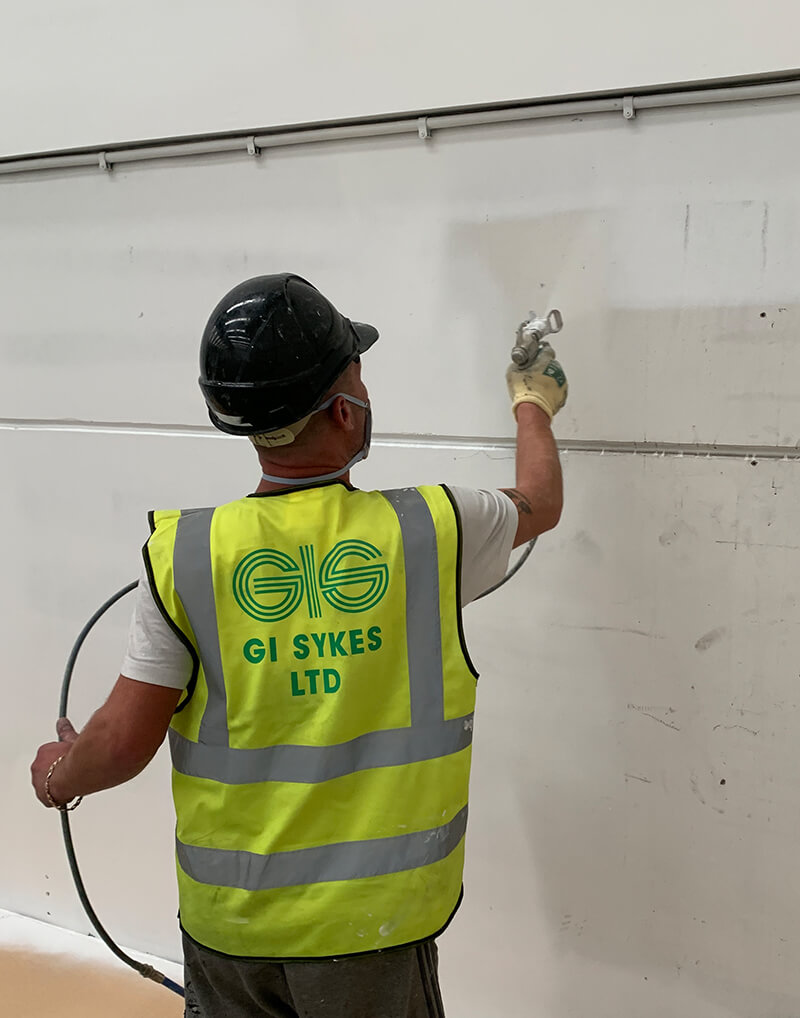
Where intumescent steel coatings specifically protect the steel aspects of your building’s structure, fire protection coatings are an umbrella term for paints and sprays that protect your walls and ceilings.
How It Works
As with all passive fire protection systems, the aim is to save lives, reduce business losses and protect the building itself. When fire hits, walls and ceilings can crumble and fall, posing a severe risk to anyone and anything inside and potentially hindering evacuation.
Fire protection coatings can be applied to the walls and ceilings of your building to form a protective layer against the fire, prolonging their integrity and preventing structural failure. The coating expands when exposed to extreme heat, defending the building against fire from 60 minutes to 120 minutes while evacuating.
Suspended Ceilings
You’ll likely have come across suspended ceilings at some point without knowing what they’re called, or why they’re used.
A suspended ceiling is a false ceiling that sits below the existing ceiling of a room, often found in commercial settings like offices and shops. It is constructed from tiles and a metal framework that hangs from the structural ceiling above and can be installed to easily hide pipes and wires.
Not all suspended ceiling tiles are fire-rated, but the introduction of fire-safe ceiling tiles can play a crucial role in the event of a fire.
How It Works
Not only does a suspended ceiling mean you can unobtrusively run pipes for a sprinkler system, but fire-rated ceiling tiles can help to slow down a fire in action.
Fire-rated ceiling tiles are made from materials that are less ignitable and have been rigorously tested to check their performance at various stages of a fire. When you install a fire-rated suspended ceiling, you’re ensuring your ceiling system won’t contribute to both:
- The development or growth of a fire and reduce the time available for evacuation and put the building and its contents at higher risk.
- The production of smoke that could seriously impair people inside the building.
Fire Doors
The main role of a fire door is to provide a safe route out in the event of a fire. But it also helps to compartment a building.
Compartmentation is a fire protection strategy that involves splitting a building, or part of a building, into multiple spaces or storeys to prevent the spread of fire through it.
How It Works
Treating compartment walls and floors with fire-resisting paints and sprays, as well as fitting the appropriate doors, compartment lines and ductwork, for example, ensures their structure isn’t compromised during a fire and that it is not allowed to spread easily.
Fire doors themselves are a key element of compartmentation and usually feature intumescent strips or a cold smoke seal. This prevents smoke from seeping from room to room.
What Is The Law On Fire Protection?
Every business should appoint a ‘Responsible Person’ for all things fire safety, but it’s a great idea to get everyone up to speed on UK fire safety legislation. Here’s the low down:
Fire Risk Assessment
If you have fewer than 4 employees, your fire risk assessment doesn’t need to be written down – but we recommend you do. It’s just easier. It’s also best practice to use a professional fire risk assessor to help your Responsible Person complete the document unless they are confident in the area.
Your fire risk assessment must be reviewed regularly and kept up-to-date, and it’s one of the first things an inspecting officer will expect to see.
Fire Safety Log Book
A fire safety log book is a resource dedicated to recording the location and state of fire safety equipment in the building, as well as specifying any actions that need to be taken to maintain fire safety. This enables procedures and equipment to be kept within the realms of safe and stringent legislation here in the UK.
It also means this vital information is all stored in an easy-to-digest format for anyone who reads it, including your inspecting fire safety officer.
Fire Fighting Equipment
In the UK, it’s the law to provide appropriate fire-fighting equipment. Usually, this legislation refers to the usual portable fire extinguishers, but it might be necessary for higher-risk businesses like restaurants to install sprinklers or hose reels because they are more likely to experience the threat of a fire.
There are varying types of fire extinguishers, so the one you’ve got must be correct, and it must be maintained by way of an annual test, completed by a competent person, to ensure it’s in good working order. Some extinguishers may even need to be certified.
Signage
This might not be front of mind when we’re talking fire safety, but correct and proper signage plays a big role in fire safety compliance for your business.
Not sure what we mean? Here are some of the fire safety signs your business might need to put into place:
- Fire extinguisher ID sign. This is a mandatory sign that locates each extinguisher and explains what they are for.
- Fire alarm call point signs. Another mandatory sign (if you have an alarm). This sign identifies where you can activate the fire alarm itself.
- Fire action notice. This sign is crucial, and mandatory for all premises because it explains what to do in the event of a fire.
Fire Detection System
All premises must have a fire detection system in place, and it must be tested weekly to ensure compliance with UK legislation.
To ensure the system works well, it must also be maintained monthly by a competent person and serviced at least every 6 months.
There are two types of fire detection systems:
- Automatic fire detection systems are required if an active fire could go undetected or block routes out of the building. These kick in by detecting smoke in the air and immediately sounding an alarm.
- Manual fire detection describes simpler systems that require human intervention to work. You might remember being tempted to break into these at school. They are positioned strategically throughout a building and are often triggered by breaking a glass screen.
Emergency Lighting
When a fire occurs, normal lighting commonly fails, making it harder for people to evacuate and emergency services to fight the fire. Emergency lighting is, therefore, a mandatory fire protection feature for UK business properties.
The three main types of emergency lighting are as follows:
- High-risk area lighting, to help workers of high-risk processes and tasks, like operating machinery or handling dangerous goods, shut down potentially dangerous processes.
- Open area lighting, to highlight the communal areas of the building and reduce panic.
- Escape route lighting, to illuminate exits and fire fighting equipment.
The Right Fire Protection Can Save Lives
The UK legislation surrounding fire safety and protection is stringent because it needs to keep people and properties as safe as possible in the event of a fire.
Understanding your obligations can be confusing, but we are here to help. GI Sykes can help make your building as safe as possible so that you know your people are protected if catastrophe strikes.
Not sure if your building or property is fire-ready? Contact us to discuss fire safety and protect your people.